


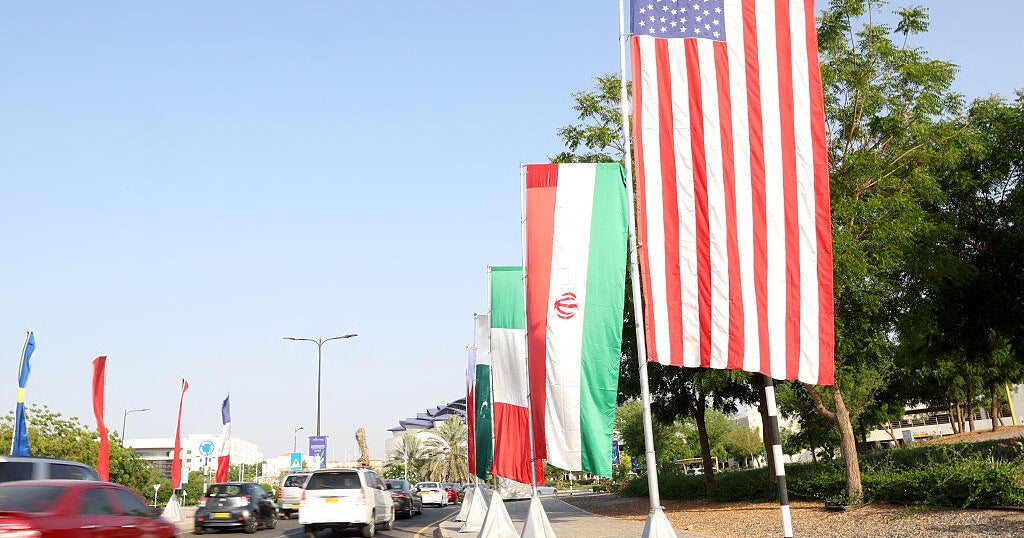
U.S. and Iran Engage in Critical Discussions on Nuclear Advancements
On Saturday, Iran and the United States embarked on crucial discussions in Oman concerning Tehran's rapidly advancing nuclear capabilities, focusing particularly on uranium enrichment.
Iran's state media confirmed these negotiations were initiated in Muscat, the scenic capital located on the Arabian Peninsula's eastern edge. An individual familiar with U.S. Middle East Envoy Steve Witkoff confirmed the commencement of these pivotal, behind-the-scenes talks.
Both parties are maintaining tight-lipped regarding any immediate specifics surrounding the dialogues they are spearheading.
Araghchi reached Oman on Friday, where he conferred with the Omani Foreign Minister, Badr al-Busaidi, a mediator in the previous rounds of negotiations in Muscat and Rome. Following this, Araghchi attended the Muscat International Book Fair, captured by cameras and surrounded by journalists. Footage later depicted him proceeding to the discussions.
Witkoff, who was previously in Moscow meeting with Russian President Vladimir Putin, arrived in Oman on Saturday in preparation for the meetings set to unfold over the ensuing hours, according to a source knowledgeable about Witkoff’s schedule.
These dialogues aim to curtail Iran's nuclear activities in return for relieving some of the hefty economic sanctions imposed by the U.S., a relationship of discord that has persisted for nearly five decades.
President Trump has persistently hinted at potential airstrikes against Iran should negotiations fail to yield a satisfactory agreement. Iranian officials have increasingly signaled their capacity to pursue a nuclear arsenal with uranium levels nearing weapon-grade status.
The 2015 nuclear accord with global powers aimed to regulate Iran’s nuclear program, but Trump’s withdrawal in 2018 initiated a series of hostilities and mounting tension, exacerbated by ongoing regional conflicts, such as the strife in Gaza. The start of talks coincided with a tumultuous event in southern Iran, where a port incident injured hundreds.
While en route to Rome, Trump reiterated optimism for a nuclear deal, while keeping a military option on the table should negotiations falter.
"The situation with Iran appears to be going well," Trump mentioned, foreseeing a potential deal stemming from extensive dialogues, something he regards more favorably than conflict.
Trump noted preferences for peaceful resolutions over adversarial agreements, highlighting his stance against more aggressive deal proposals towards Iran.
Technical Talks and Expectations
While Araghchi and Witkoff will likely communicate via Omani intermediaries, specialists from both countries will also delve into potential agreement details. Iran’s negotiation team is led by Deputy Foreign Minister Majid Takht-e Ravanchi, a veteran of the 2015 talks.
The American technical team, expected to arrive on Friday, is headed by Michael Anton, a senior policy advisor devoid of substantial nuclear policy background, contrary to those who led the 2015 discussions.
Iran remains firm on retaining its enrichment capabilities, despite mixed signals from U.S. representatives on permissible enrichment levels.
Despite these ambiguities, optimism persists in Iran as the national currency rebounds from previous lows.
Tehran resident Farzin Keivan expressed a willingness to compromise, stressing that while a new agreement is welcome, Iran shouldn't capitulate entirely, given the sacrifices made for its nuclear ambitions.
Leave a Reply