


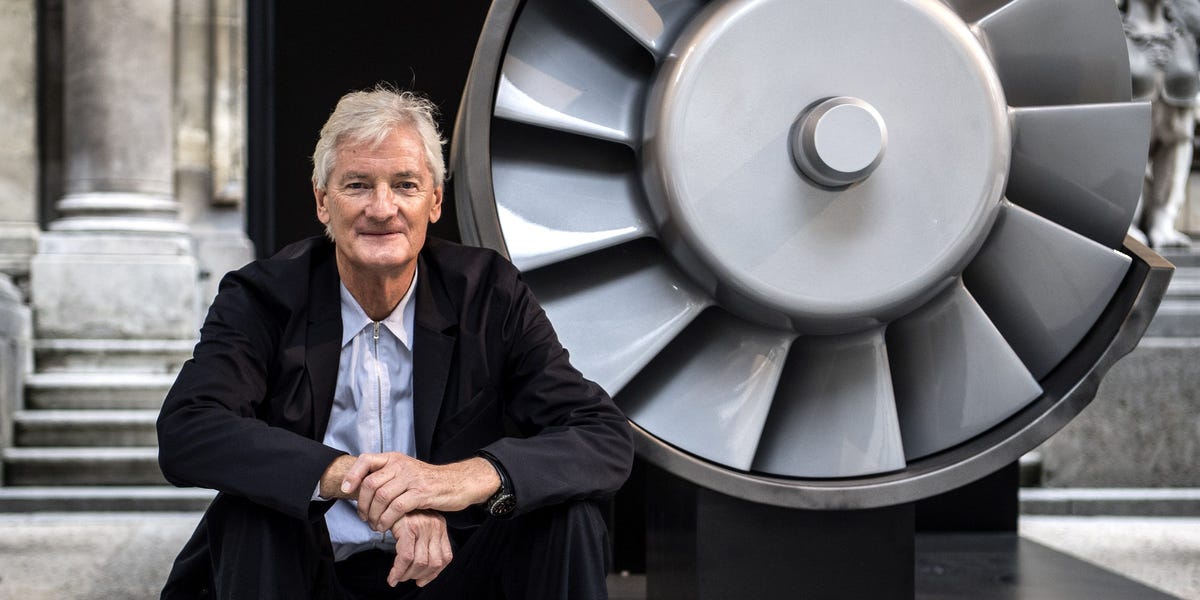
Renowned Inventor Describes a Life Marked by "Failures" and Advocates for Embracing Trial and Error
James Dyson, the innovator best known for the vacuum cleaners bearing his name that incorporate his unique cyclone technology, boasts a net worth of $16.8 billion according to Bloomberg's Billionaires Index.
Despite this success, Dyson reflects, 'My experience has been largely characterized by failures.'
In a recently shared video conversation with The Wall Street Journal, Dyson — who meticulously developed 5,127 different versions over five years before perfecting his revolutionary bagless vacuum in 1993 — emphasized the necessity of learning from failure in life.
He asserted, 'This pattern applies universally, whether to creatives authoring books or filmmakers creating movies. Failures are frequent. Determining what eventually succeeds can be a prolonged endeavor. Adjusting to that reality is crucial.'
At 77, Dyson cherishes the missteps and hurdles he's encountered throughout his endeavors, suggesting genuine insight arises from such experiences.
He remarked, 'Educational systems often encourage immediate correctness. However, rapid problem solvers might lack the depth of understanding that comes from grappling with, and ultimately overcoming, setbacks.'
To Dyson, tenacity and flexibility rank among life's vital competencies. 'Making things functional lies at life's core,' he expressed.
Continuing, he noted, 'That's the approach you must take. Success is built on repeated testing and adjustments. Successfully figuring things out is often less demanding and, subsequently, less intriguing.'
In addition to his extensive trials with the iconic vacuum models, Dyson notoriously terminated a venture into electric vehicles in 2019 after investing over $600 million. He ultimately concluded that the car was not viable for the market.
In his statement announcing the pivot, he remarked, 'The trajectory to prosperity isn’t a straight line. Projects tweak course frequently, and this latest iteration won't be the last.'
Regarding the electric vehicle project, he confessed, 'I recognized that the endeavor posed substantial risks.'
Leave a Reply