


Legal Challenges to Trump's Deportation Practices
Efforts by the Trump administration to swiftly deport numerous Venezuelan and Salvadoran individuals, allegedly associated with international criminal organizations, are under scrutiny.
Legal confrontations have emerged over these deportations, primarily due to the lack of hearings for the individuals, who maintain they're not affiliated with any gangs.
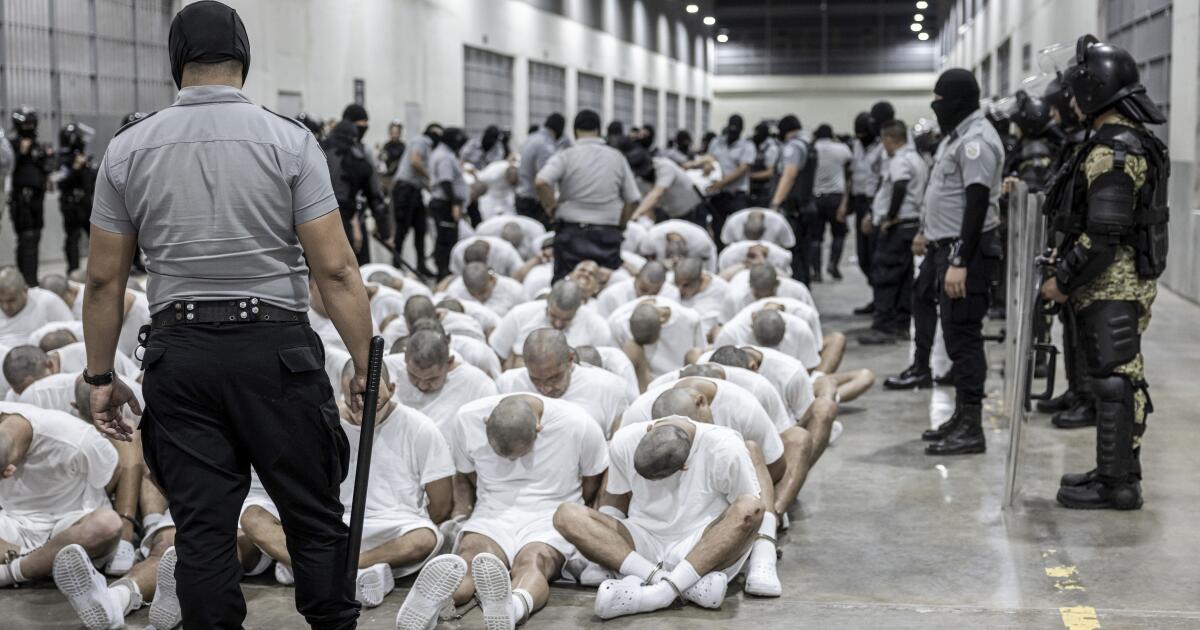
A significant legal hurdle is whether these deportations equate to punitive incarceration. Rather than returning to their countries, the deportees are reportedly being relocated to a high-security facility in El Salvador where indefinite confinement is a possibility.
According to a scholar from UCLA, imprisoning individuals, citizens or not, without formal charges and a fair trial, contradicts constitutional principles. Such practices blur the lines between civil deportation processes and criminal punishments, which is a rare focus of legal discourse.
Recently, an appeal was submitted contesting the government's intentions to send an individual to a notoriously severe El Salvadoran prison without proper judicial procedures.
Prison Conditions Under Scrutiny
Representatives for the Venezuelan detainees have prepared themselves for their clients' likely transfer to a notorious prison in El Salvador, raising alarms about the conditions.
The facility in question is the Terrorism Confinement Center, known as CECOT, labeled by critics as a punitive environment that detains people in large, cramped cells with minimal basic amenities and prohibition of external contact.
The dire living conditions have prompted objections, noting that even El Salvador’s top officials have admitted the harshness of these prisons, comparing them metaphorically to living death.
Government Justifications and Legal Counterarguments
The Trump administration defended its deportation strategy by invoking certain presidential powers and wartime prerogatives for rapid foreign removal, though this rationale is contentious.
U.S. and Salvadoran officials discussed agreements allowing the return of convicted individuals, but reports suggest many deported lack criminal backgrounds, suspected merely due to tattoos.
One case involves Kilmar Abrego Garcia, who has resided in Maryland for over a decade with no criminal past, yet faces deportation based merely on allegations of gang affiliation.
Historically, legal precedents allow for indefinite detention under wartime conditions, notably at Guantanamo Bay by the prior Bush administration. However, critics argue this situation differs as there is no battlefield involvement.
Challenges and Legal Insights
Critics and legal scholars, questioning the justification for using foreign prisons for deportees, highlight a lack of concrete legal basis for these actions.
Robert Garcia, alongside colleagues, sought to investigate these deportations in El Salvador, emphasizing the need for answers on legal grounds and humane treatment.
There is an ongoing debate about the United States outsourcing detention, with concerns over constitutional implications.
Especially contentious is the potential for judicial review on the administration’s deportation practices, as experts anticipate inevitable scrutiny.
Human rights advocates stress the moral and legal crises faced by those deported, underscoring fears of serving unofficial life sentences under dire conditions.
Leave a Reply