


Fresh Insights Raise Questions on 'Biosignatures' on K2-18b
Current debates among scientists question if the data from the James Webb Space Telescope genuinely indicates the presence of biosignature gases in the atmosphere of the distant planet K2-18b.
Excitement buzzed when astronomers initially suggested possible signs of life-related gases around K2-18b—the most compelling suggestion yet of life beyond our own solar system. However, a new independent scrutiny implies the initial declarations might have been overstated.
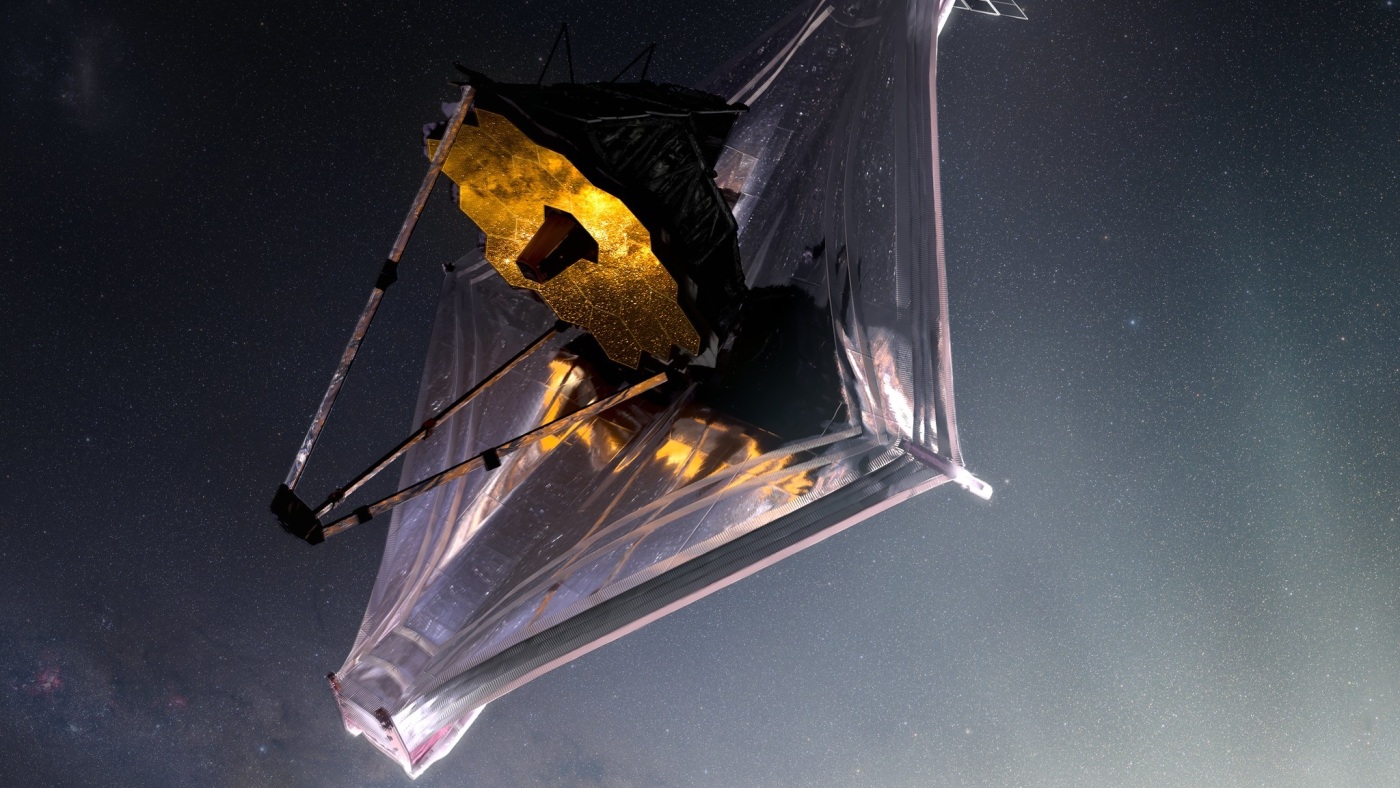
An intriguing reevaluation has been underway by a University of Oxford researcher, who is leveraging the James Webb Space Telescope to study distant planets' atmospheres. By reexamining the starlight passing through K2-18b's atmosphere, he employed a straightforward technique to search for any gas molecule signatures without presuming their nature, including those sulfur-related gases that are signs of life on Earth.
"I didn't want to start with assumptions about which molecules could be found," the researcher mentioned. By analyzing the transmission spectrum, the outcome indicated excessive noise in the data, suggesting unreliable conclusions.
Doubts and Future Verifications
Instead of finding distinct signals, the data appeared largely consistent with no significant variations, suggesting further telescope observations are required for confirmation. If biosignatures are to be claimed, absolute certainty is necessary.
An expert from the Max Planck Institute for Astronomy, uninvolved in the initial research, emphasizes that robust detections should be independent of underlying assumptions about physics and chemistry, which was not the state here.
While some researchers in the initial study maintain confidence in their sophisticated atmospheric modeling, critics argue that the new study uses established first-look methodologies that have previously been effective in identifying planetary compositions.
Looking Ahead
This preliminary reassessment is likely to lead to further studies as astronomers dissect the findings internally on forums like Slack. As is standard practice, researchers get a year to analyze telescope data before it becomes publicly accessible, and this dataset will be open soon for more detailed reviews.
The reanalysis has echoed frustrations within the exoplanet community, as many express that prior excitement was disproportionate compared to the evidence's reliability. These developments underscore the importance of precision in scientific communication, especially concerning the highly sensitive topic of extraterrestrial life search.
It is crucial to communicate accurately in science to maintain public trust, analogous to the cautionary tale of the 'boy who cried wolf.' The scientific community needs to balance enthusiasm with evidence for such groundbreaking claims.
Leave a Reply