


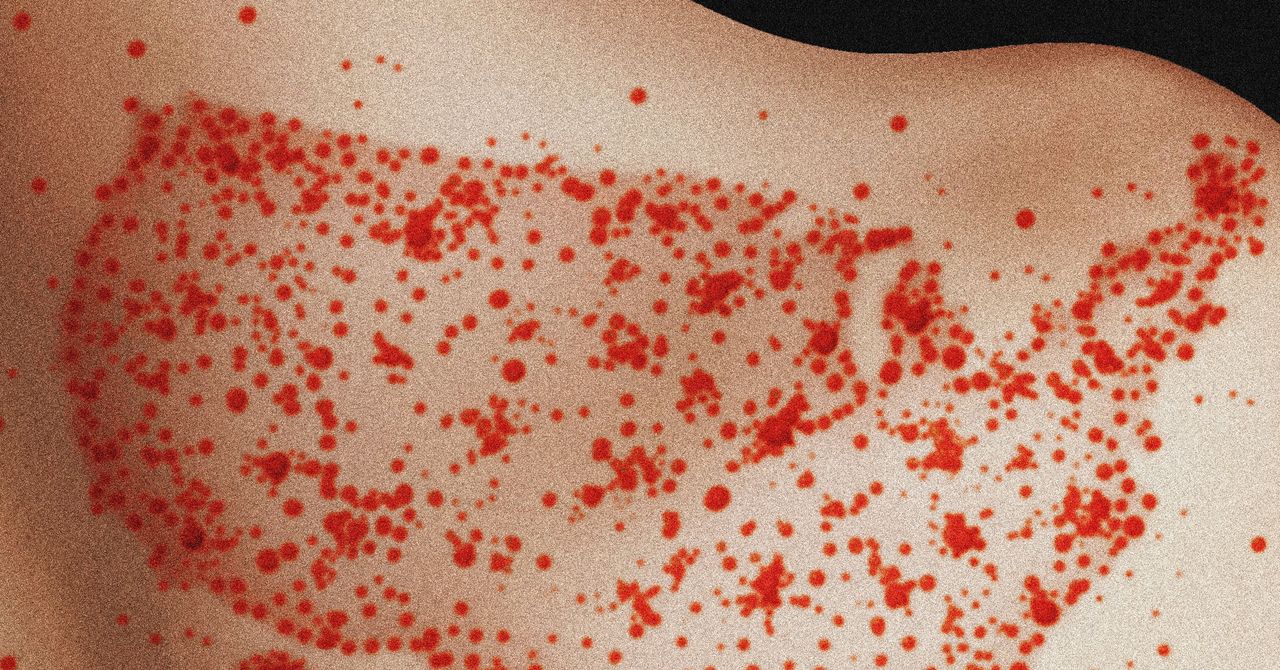
Potential Endemic Status of Measles in the United States Over Coming Decades
The drop in vaccination rates among American kindergarteners, coupled with calls from officials like HHS Secretary Robert F. Kennedy Jr. to reassess childhood vaccination regimes, may lead to a resurgence of once-controlled infectious diseases, including measles. Researchers from Stanford University have quantified these potential outcomes in a recent study.
By employing computational simulations, the study indicates that the measles virus could gain a stable foothold in the US within the next two decades if vaccination rates remain unchanged. Their model shows this occurring in 83% of all simulations, projecting over 850,000 cases, resulting in 170,000 hospital admissions and 2,500 fatalities over the next quarter-century.
"The data should not be viewed as merely hypothetical reactions," comments Jeffrey Griffiths from Tufts University. "The key takeaway is the imminent likelihood of measles becoming endemic if current trends persist."
Measles was effectively eradicated in the US by 2000 due to extensive vaccination efforts. An outbreak in Texas, however, poses a threat to this status, marking the largest since 1992 with over 600 cases. Nationally, the US has seen a surge in measles cases, the highest since 2019.
"We need to focus on increasing vaccination rates thoroughly," urges Professor Mathew Kiang from Stanford University.
Current Trends in Vaccination
Data from the CDC indicates a downward trajectory in child vaccination coverage from 2019–2020 to 2022–2023 school years for required vaccines.
Researchers at Stanford analyzed vaccinations between 88% and 96% for measles, and other diseases, adding factors like demographics, vaccine potency, and contagion pathways into the mix.
Potential Future Scenarios
The study predicts a drastic outcome of 11.1 million measles cases if vaccination reduces by 10%, but possibly just 5,800 cases if rates increase by 5%.
Rubella, polio, and diphtheria were also examined; current vaccination seems sufficient to prevent these diseases from becoming endemic once more.
"Under certain conditions, these diseases could reemerge," warns coauthor Nathan Lo.
Evaluating Model Limitations
Testing with recent vaccination rates showed the model accurately reflected state-level disease occurrences, with Texas being most at risk.
One shortcoming was uniform vaccination assumption across communities, overlooking localized discrepancies which could result in concentrated outbreaks.
The model also did not consider if vaccination rates might improve following outbreaks, a controllable factor that could alter disease spread.
Long-Term Implications
It might take years before the full impact of lowered vaccinations is clear. "A decrease in specific areas might not immediately trigger outbreaks, but eventually, it could catch up with us," Kiang cautions.
Leave a Reply