


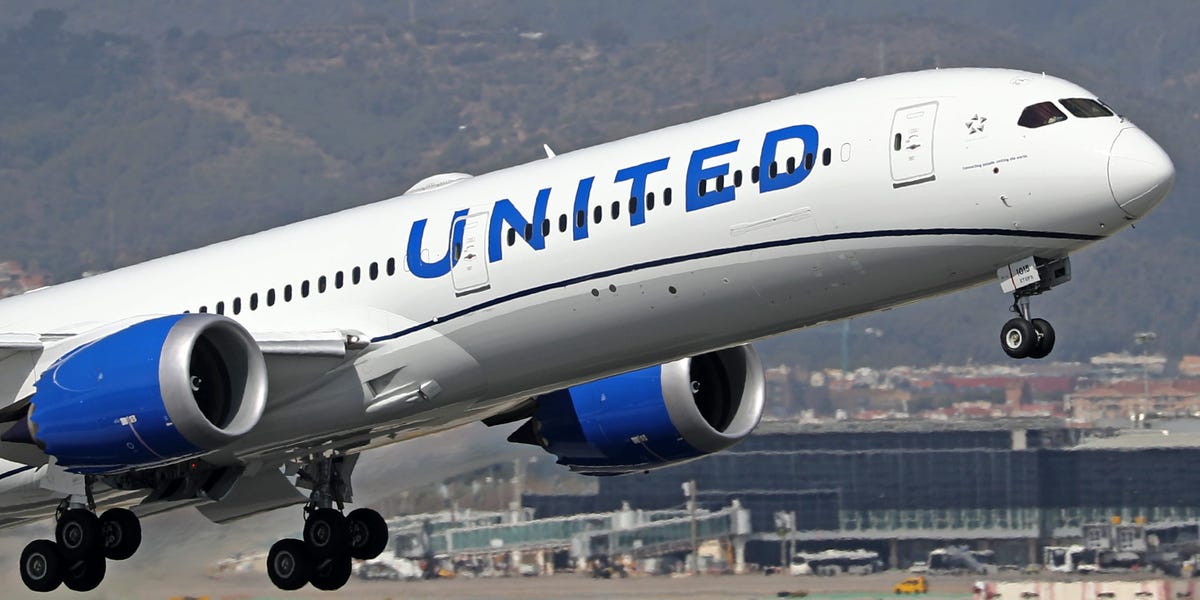
Injuries Occur on United Airlines Flight Amid Severe Turbulence
A turbulent experience last month left five individuals hurt when a flight suffered from intense atmospheric disturbance.
Details of this event surfaced following the issuance of a report by the Federal Aviation Administration earlier this week.
The Flight Route and Incident
United Airlines Flight 1 was on its 16-hour journey from San Francisco to Singapore on March 26 when it was met with severe turbulence in the skies over the Philippines, still 12 hours out from its departure point.
At the time of the disturbance, the Boeing 787 had 174 passengers along with 14 crew aboard.
Injuries and Response
During the turbulence, one passenger and three members of the cabin crew faced minor injuries, while another crew member experienced a more critical injury. Specifics on the nature of these injuries have not yet been disclosed.
Inquiries to United and the FAA for comments have not yet received responses.
Heightened Focus on Turbulence Risks
Concerns about turbulence have been amplified following an incident the previous year involving a Singapore Airlines flight that resulted in a fatality and injured 71 others.
In response to such turbulence hazards, Korean Air announced a temporary halt to serving instant noodles, aiming to reduce the risk of burns during unexpected jolts.
The Impact of Climate on Turbulence
Experts note that turbulence incidents have been escalating, a trend attributed to climate change. The airline emphasized this, pointing out that incidents surged from 2019 to 2024, likely owing to significant temperature variations across different altitudes.
The process behind turbulence involves wind speed discrepancies that heighten friction among air molecules. With climate warming, more energy is infused into the atmosphere, increasing these friction levels.
Clear-air turbulence is particularly prominent along jet streams. As Guy Gratton from Cranfield University explained, climate change is increasingly contributing to both the frequency and severity of such encounters.
Research Findings
A 2023 study conducted by the University of Reading highlighted that turbulence is becoming more prevalent, especially over the North Atlantic, within the domain of the north polar jet stream.
This investigation revealed that occurrences of the most severe types of clear-air turbulence have soared by 55% over four decades, stretching from 1979 to 2020.
Leave a Reply