


Trump's Tariff Strategy: A Turning Point for China's Aircraft Ambitions
China’s nascent aerospace company, Comac, is at a crossroads as it navigates the impact of Trump's tariff policies. The company's future could pivot dramatically depending on how these tariffs unfold.
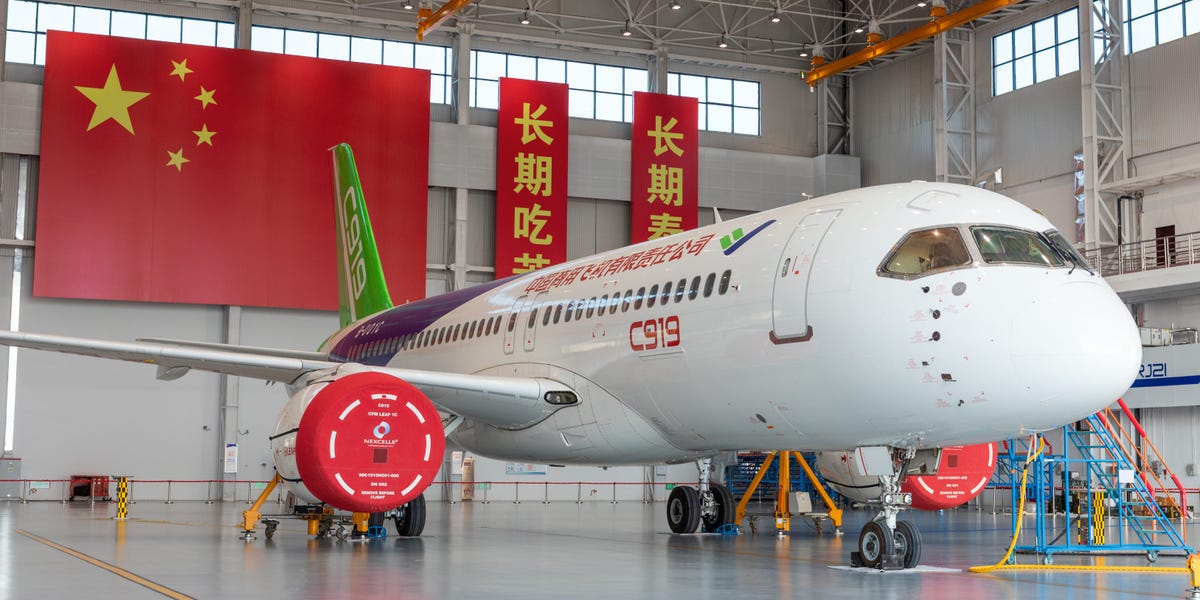
Comac, officially titled the Commercial Aircraft Corporation of China, launched its C919 model in 2023. This aircraft, a narrow-body jet akin to the Airbus A320 and the Boeing 737, poses a potential threat to its more established competitors.
Having delivered only 13 jets last year to Chinese carriers, Comac nevertheless has an impressive backlog, with over 1,000 orders pending. Airbus CEO Guillaume Faury speculates that Comac’s growth might transform the industry from a duopoly to a triopoly.
While tariffs might broaden the appeal of Chinese airplanes on both domestic and international fronts, the C919’s reliance on American parts complicates this potential advantage.
A Chance for Change in a Trade Conflict
The economic tensions between the home bases of major planemakers Boeing and Airbus could provide an unexpected opening for Comac. Initially, Trump declared a 20% increase in tariffs on all European Union imports, a rate he later cut in half amid a 90-day reprieve.
Delta Airlines CEO Ed Bastian has expressed his intent to postpone receiving Airbus planes that have tariffs imposed on them. Similarly, Ryanair’s CEO, Michael O’Leary, has considered delaying Boeing orders under similar conditions.
Despite this temporary relief from retaliatory tariffs, the situation remains unresolved, leaving room for strategic shifts.
A New Contender on the World Stage
Analysts from Barclays have recently suggested that imposing tariffs on Airbus and Boeing could serve as a launching pad for the C919, propelling it into international markets.
Ryanair, which traditionally uses Boeing 737s but operates some Airbus-equipped subsidiaries, might reconsider the C919 should Boeing Max deliveries face setbacks and additional levies.
O'Leary seems open to adding the C919 to the fleet if its price significantly undercuts comparable Airbus models.
Navigating the Complex Supply Chain
However, tariffs threaten to undermine Comac’s cost structure, as the C919 is heavily reliant on imported components. Trump’s tariffs impose a 145% rate on Chinese goods and face 125% reciprocal tariffs on US imports to China.
Data from Bank of America show the C919 relies on 48 principal suppliers from the US, 26 from Europe, and only 14 within China. Disrupting this supply line could critically hinder Comac's operations.
Chinese airlines have limited alternatives, with flight logs showing a number of Boeing 737 Max jets returning stateside to the manufacturer.
Even with significant delays, Boeing would likely find other buyers, possibly in markets like India, as analysts predict. Malaysian Airlines has indicated interest in acquiring jets potentially redirected from China.
Conversely, this situation might allow Airbus to solidify its foothold in China, where it expects to dominate aviation services by 2043, projecting 20% share of global aircraft deliveries.
Future Uncertainties and Opportunities
Despite criticisms directed at Boeing over delays, particularly with projects like the new Air Force One, the likelihood of significant punitive measures from Trump seems remote given Boeing's export importance.
A trade conflict between the US and China could severely disadvantage Comac while enhancing Airbus's market position. Yet, should tariffs ensnare Airbus and Boeing alike in a US-EU standoff, the C919 may gain traction globally.
For now, Comac's path remains fraught with challenges. As Trump's tariff strategy is unpredictable, the eventual outcome for this ambitious Chinese manufacturer is far from certain.
Leave a Reply