


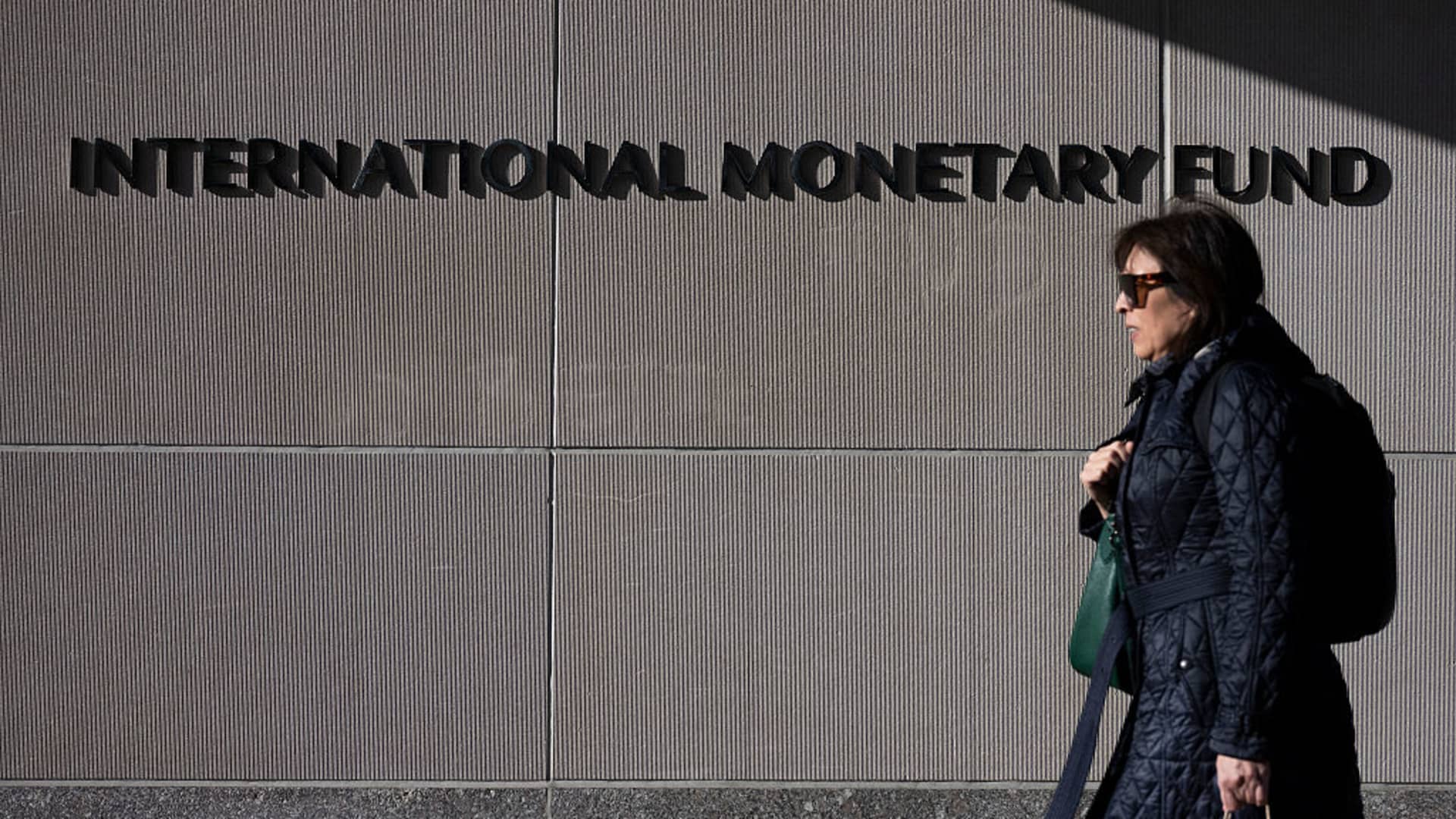
IMF Lowers U.S. Economic Growth Forecast for 2025 to 1.8% Amid Trade Conflicts
Trade tariffs are creating significant challenges for both the U.S. and global markets, prompting the International Monetary Fund to revise its growth prediction for 2025 downward.
In early April, President Donald Trump announced new "reciprocal" tariffs, which have not only triggered a near 9% drop in stock indices but also led to retaliatory moves from global trading partners.
The International Monetary Fund described this as a considerable adverse impact on economic expansion in the executive summary of its World Economic Outlook released in April 2025.
The updated forecast includes a 'reference scenario' for worldwide growth and inflation trends, informed by data up to April 4 and incorporating the newly introduced tariffs while excluding later events. This alters their previous projections shared in January.
The IMF's recent forecasts anticipate U.S. economic growth will slow to 1.8% in 2025, marking a decline of 0.9 percentage points from earlier predictions.
Globally, the growth forecast was also reduced, now set at 2.8% in 2025, reflecting a 0.5 percentage point decrease from prior estimates.
Chief Economist Pierre-Olivier Gourinchas explained, 'The announcement on April 2 required us to abandon our almost complete projections and squeeze a usually two-month process into under 10 days.'
He further stated, 'Tariffs serve as a negative supply shock to any country implementing them.'
Revised Inflation Expectations for Developed Nations
The IMF has also adjusted its price inflation projection for developed regions, including the U.S., the U.K., and Canada, to 2.5% for 2025, which is an increase of 0.4 percentage points from what was anticipated in January.
Specifically for the U.S., inflation forecasts have been revised up by one point from the January outlook, situating it above the 2% mark.
This rise reflects entrenched price dynamics within the services sector, combined with a recent climb in core goods prices outside of food and energy, influenced by the new tariffs, as highlighted in the IMF April report.
Notably, while inflation rates across major global economies have been adjusted upward, certain emerging and developing markets have seen downward revisions.
The pressure these tariffs place on monetary policy efforts to control inflation hinges "on whether tariffs are perceived to be a permanent or temporary measure," as per the IMF report.
Historically volatile markets have contributed to a stronger U.S. dollar, thus increasing inflationary effects in other nations. However, the recent market downturn has reversed this trend in the dollar's performance.
According to Gourinchas, the impact of tariffs on currency valuations is complex, noting, 'In a medium-term view, the dollar could depreciate if tariffs lead to reduced productivity in the U.S. compared to its trade partners.'
Leave a Reply