


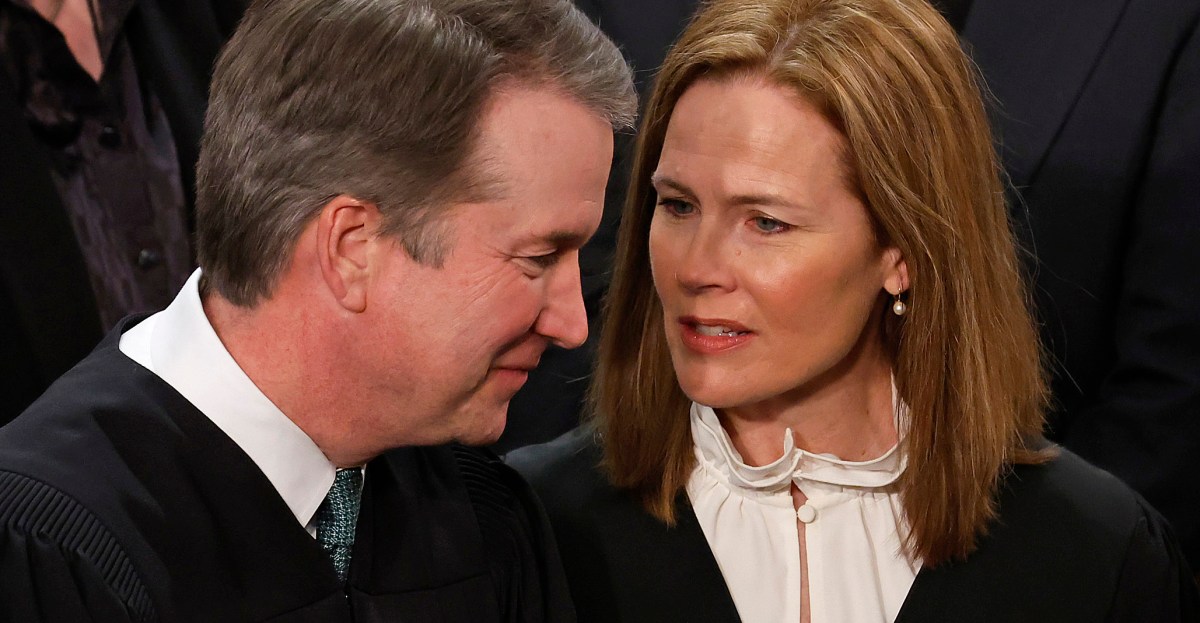
Possible Lifeline for the ACA: Kavanaugh and Barrett's Influence
During Monday's session, the Supreme Court revisited a crucial case questioning the scope of health coverage mandates. This litigation, dubbed Kennedy v. Braidwood Management, challenges the authority of a particular entity under the US Department of Health and Human Services to demand certain preventive care services from insurers.
This entity, the US Preventive Services Task Force (PSTF), has been crucial in mandating insurance for diverse healthcare needs, including cancer screenings, HIV prevention medications, and infant eye treatments. Empowered by the Affordable Care Act, this body has often been a target for those seeking to dismantle Obama's legacy healthcare reform.
The Judicial Tug-of-War
The challengers, led by former Trump legal counsel Jonathan Mitchell, seek to revoke the PSTF’s powers. Should they succeed, health insurers could start refusing to cover procedures they are presently obligated to include in their plans.
However, current sentiments suggest Mitchell's victory faces significant hurdles. Justices Clarence Thomas, Samuel Alito, and Neil Gorsuch expressed their opposition to the PSTF. They appear as potential allies for Mitchell's cause within the Court. Yet, the support seems limited to these three.
Swing Votes: The Role of Kavanaugh and Barrett
Interestingly, Justices Brett Kavanaugh and Amy Coney Barrett seem poised to protect the PSTF despite initial impressions. Their inquiries during the session signaled potential skepticism toward Mitchell's arguments, increasing the likelihood of a vote preserving the status quo.
Democratic justices universally favor maintaining the PSTF's authority, suggesting a probable five-vote majority for sustaining the ACA's provisions concerning preventive care.
The Underlying Legal Question
At the core of Kennedy v. Braidwood Management lies a nuanced discussion about government appointments. The Constitution mandates that key government officers, known as ‘principal officers,’ must be chosen by the president and confirmed by the Senate. Conversely, ‘inferior officers’ are typically appointed by higher-ranking agency officials like cabinet members.
The PSTF's members, appointed by the Secretary of Health and Human Services, are under scrutiny to determine if they are appropriately classified as inferior officers. This categorization requires their tasks be overseen by a principal officer, as interpreted in the Edmond v. United States case.
Arguments from Both Sides
The government’s stance is that PSTF members fit the criteria of inferior officers. These roles should be removable by the health secretary according to current interpretations, with the PSTF operating under the Health Service’s broader organizational control.
On the flip side, Mitchell leans on a federal statute granting the PSTF a degree of independence, arguing that this independence is incompatible with oversight by the Health Secretary.
Justice Sotomayor and Barrett challenged this logic, noting that seeking independent judgment doesn’t negate the possibility of supervision or removal, thus countering Mitchell’s argument.
Potential Legal Resolutions and Uncertainties
Justice Barrett highlighted constitutional avoidance principles, suggesting that statutory interpretations should favor constitutional consistency, potentially guiding a decision that upholds the PSTF's structure.
Kavanaugh's line of questioning seemed initially open to Mitchell's perspective but later suggested a preference for maintaining standard government frameworks, potentially indicating an eventual leaning towards preserving the PSTF.
However, ambiguity remains as neither Kavanaugh nor Barrett has definitively indicated their stance, with Chief Justice Roberts' position also unclear due to his silence during oral arguments.
Possible Outcomes
Justice Gorsuch introduced the notion of sending the case back to lower courts to further clarify the Health Secretary's powers over the PSTF, a decision that could delay the final resolution but imply short-term adversity for the Task Force if the Fifth Circuit courts take up the case.
Yet, a remand doesn’t conclude the issue, as any Fifth Circuit decision contrary to current interpretations could be contested in the Supreme Court.
Therefore, at this juncture, the Supreme Court might either delay definitive judgement on the PSTF's role or decisively secure the PSTF against Mitchell's claims, with possible impacts on future insurer obligations under the Affordable Care Act.
Leave a Reply