


Dozens Dead in U.S. Airstrikes on Houthi-Controlled Yemen Oil Port
Dozens have perished and more than 100 have sustained injuries following U.S. airstrikes that targeted an oil port in Yemen held by Houthi rebels, according to statements from the group.
The attack on Ras Isa oil terminal reportedly took 58 lives and left 126 injured, the Houthis announced on Friday. This incident is emerging as the deadliest attack under President Trump's administration.
Gathering precise casualty figures from Trump's military operation that began on March 15 has been challenging. The U.S. Central Command has not provided specific details about targets or casualties, while Houthi-controlled regions are tightly restricted, limiting the sharing of strike details.
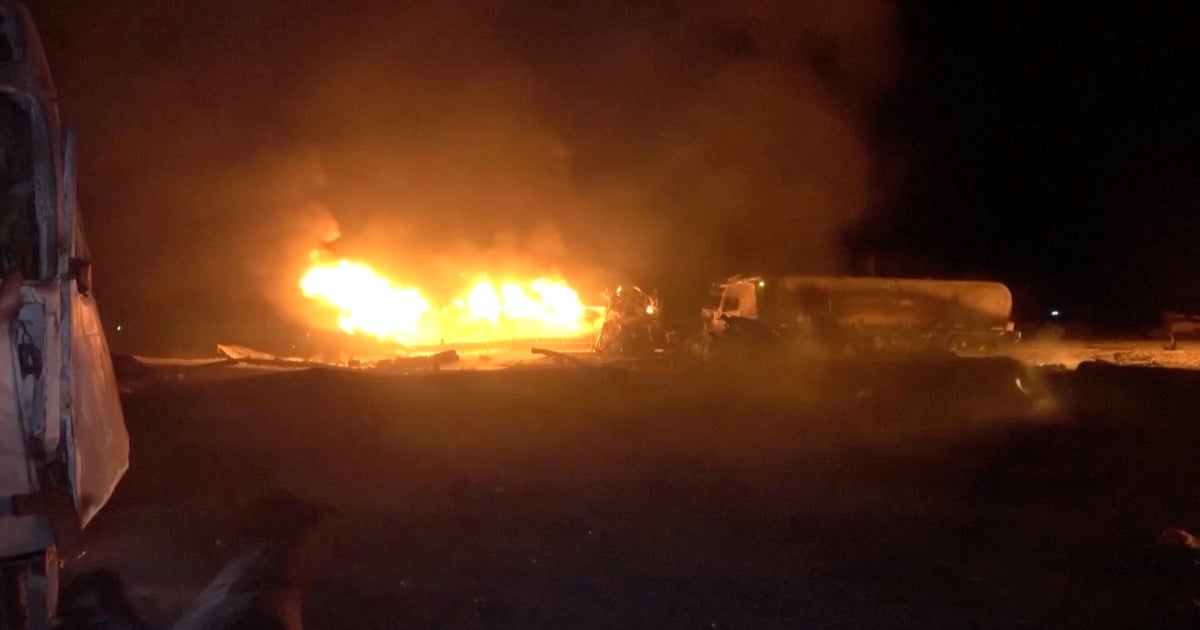
The targeted attack at Ras Isa, igniting colossal fireballs in the dark sky, signifies a dramatic escalation of U.S. military engagement. The Houthi group quickly released graphic video evidence showing the human toll of the airstrikes.
The conflict in Yemen continues to involve international players, with the U.S. accusing a Chinese satellite firm of aiding Houthi offensives, although China has not formally commented on these allegations.
Impact of U.S. Military Action
Footage aired by the Houthi-operated al-Masirah channel exposed the post-strike devastation at Ras Isa, featuring lifeless bodies scattered on-site. It reported that both emergency personnel and civilians lost their lives amidst the extensive explosion and ensuing fires.
The U.S. Central Command outlined their rationale, stating the airstrikes aimed to cripple a major fuel supply supporting Iran-aligned Houthi operations, thereby disrupting their region-wide terrorist activities spanning over a decade.
Central Command emphasized that the assault was not aimed at harming Yemenis, who aspire to break free from Houthi oppression for a peaceful existence. The Command did not comment further on civilian casualties when questioned by news agencies.
The Ras Isa facility, located in Yemen's Hodeida province near the Red Sea, comprises three oil tanks and refining equipment. Satellite surveillance via NASA indicated a significant blaze early Friday at the target site, hit by consecutive U.S. assaults.
This port acts as the endpoint for an oil conduit from Yemen's resource-rich Marib area, still under control of the exiled Yemeni government. The Houthis took the capital, Sanaa, in 2015, ceasing oil exports due to prolonged conflict, but utilizing Ras Isa for inbound oil supplies.
Both the Houthis and Iranian authorities strongly criticized the American air attack.
The Houthis released a statement condemning what they described as an unwarranted breach of Yemen's autonomy, accusing the U.S. of targeting a key civilian structure essential for numerous Yemenis over the decades.
Iran's Foreign Ministry denounced the U.S. action as a barbarous crime, flagrantly undermining U.N. Charter principles, according to Tehran's official statements disseminated through AFP.
Warnings and Broader Implications
Earlier, the U.S. State Department warned about oil transfers to Yemen, stating no nation or commercial entity should support foreign militant groups like the Houthis by supplying oil or unloading ships at their ports.
Recent Israeli strikes on the Houthis, affecting similar infrastructure, followed their violent acts targeting Israel, underscoring escalating tensions in the region.
Allegations of Chinese Involvement
U.S. representatives have accused China's Chang Guang Satellite Technology Company of facilitating Houthi activity against American interests by providing satellite imagery, potentially enabling attacks on U.S. vessels and commercial shipping in the Red Sea.
The U.S. previously imposed sanctions against the company, which is associated with China's military, for supplying satellite data to Russian forces involved in the Ukraine conflict.
U.S. officials criticized Beijing for its continued support of this entity, considering it a contradictory stance to their self-proclaimed peace advocacy.
Leave a Reply