


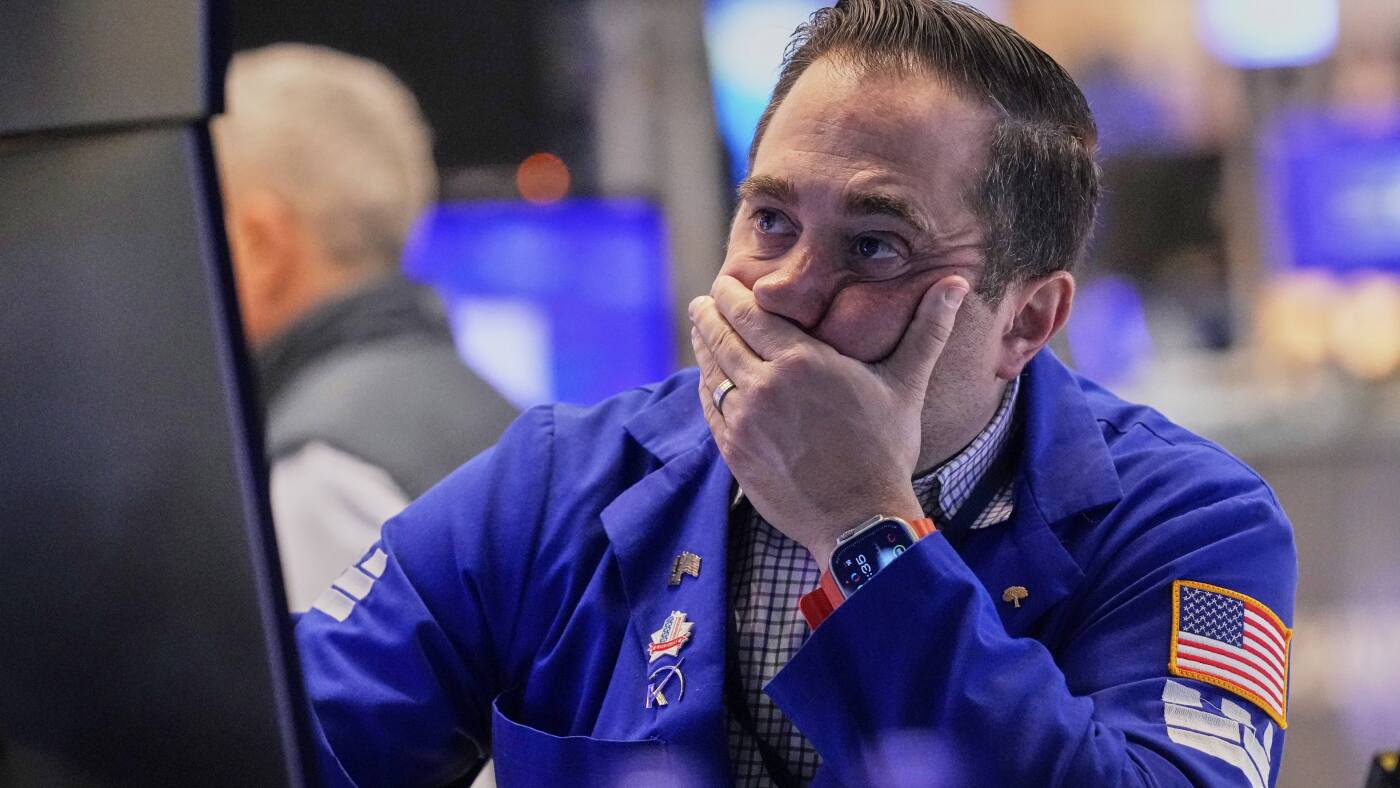
U.S. Stock Market Takes a Hit Amid Nvidia Setback and Trade War Uncertainty
On a challenging Wednesday, the U.S. stock market witnessed a decline as Nvidia cautioned that new U.S. export restrictions on its sales to China could significantly impact its financial outcomes. Meanwhile, international corporations are grappling with vague predictions due to President Trump's trade tensions.
The S&P 500 concluded the day down by 2.2%, having faced a drop of up to 3.3% earlier, which could have ranked as one of its substantial losses in recent times of market disorder.
The Dow Jones Industrial Average fell by 699 points, a decrease of 1.7%, whereas the Nasdaq composite declined by 3.1%, marking a pronounced downturn.
Federal Reserve Observations and Market Reactions
Market declines intensified after Federal Reserve Chairman Jerome Powell reiterated that the repercussions of Trump's tariffs might exceed initial projections, potentially slowing the economy while raising inflation levels beyond previous estimates. Nevertheless, Powell mentioned that more time is needed to decide on interest rate adjustments, as the Fed weighs the prospects of supporting economic growth against controlling inflation.
Powell remarked, "We're in a phase of significant uncertainty, essentially contemplating the potential economic impacts before the tariffs fully manifest. We're adopting a wait-and-see approach to better evaluate the effects once the policies are clearer."
Corporate Impacts and Industry Forecasts
Nvidia's stock took a 6.9% hit following revelations that U.S. export controls on its H20 chips to China could reduce their first-quarter revenues by approximately $5.5 billion. Advanced Micro Devices announced a similar predicament with a 7.3% decline after forecasting potential losses up to $800 million due to restrictions on chip sales.
ASML, based in Amsterdam, saw its shares decrease by 5.2%. The company expects its demand for AI technology to continue growing, but CEO Christophe Fouquet noted the heightened macroeconomic uncertainties stemming from recent tariff news, signaling a volatile outlook ahead.
Broader Economic Concerns
Trade war unpredictability has disrupted company strategies globally, leading entities like United Airlines to issue two separate performance forecasts for the year, anticipating scenarios both with and without an economic downturn.
United Airlines managed to keep its stock stable despite exceeding profit expectations for the recent quarter, illustrating the pervasive uncertainty in the market.
Anticipations of Economic Slowdown
Investor sentiment is troubled by fears of a potential recession induced by the tariffs, purposed to restore U.S. manufacturing competitiveness and address trade imbalances. A Bank of America survey of global fund managers revealed recession expectations are at their peak in two decades.
The World Trade Organization anticipated a 0.2% contraction in global merchandise trade for 2025 under current tariff conditions, which could worsen to a 1.5% decrease if the trade dynamics deteriorate further, as cited by WTO Director-General Ngozi Okonjo-Iweala.
U.S. Corporate Repercussions
J.B. Hunt Transport Services witnessed a sharp 7.7% fall in its stock price despite posting slightly improved quarterly profits, reflecting the broader impact of trade frictions.
The S&P 500 concluded at 5,275.70, and the Dow Jones Industrial Average and the Nasdaq composite suffered further declines, highlighting the uneasy market climate.
Inflation Concerns and Consumer Behavior
Tariffs tend to fuel inflation as importers pass on increased costs to consumers, leading to heightened consumer spending recently as Americans rushed to purchase items ahead of projected price surges.
Economists warn that persistently negative consumer sentiment driven by the tariffs may eventually curb spending, potentially triggering a recession independently.
Bond Market Movements
U.S. Treasury yields decreased, with the 10-year yield dipping from 4.35% to 4.28%, as Powell’s remarks spurred investor cautiousness. This counters last week's unusual yield spikes, which had alarmed markets and policymakers.
Generally, Treasury yields drop amid economic concerns, with last week's rise sparking fears about the trade war’s impact on the stability of U.S. government bonds.
International Market Response
Global markets reacted variably, with Asian indices mostly declining—Hong Kong dipped 1.9%, Tokyo by 1%, and Seoul by 1.2%. In Europe, markets presented a mixed performance, with Paris seeing a minor 0.1% drop while London’s FTSE 100 gained 0.3%, buoyed by declining UK inflation driven by lower gas prices.
Leave a Reply