


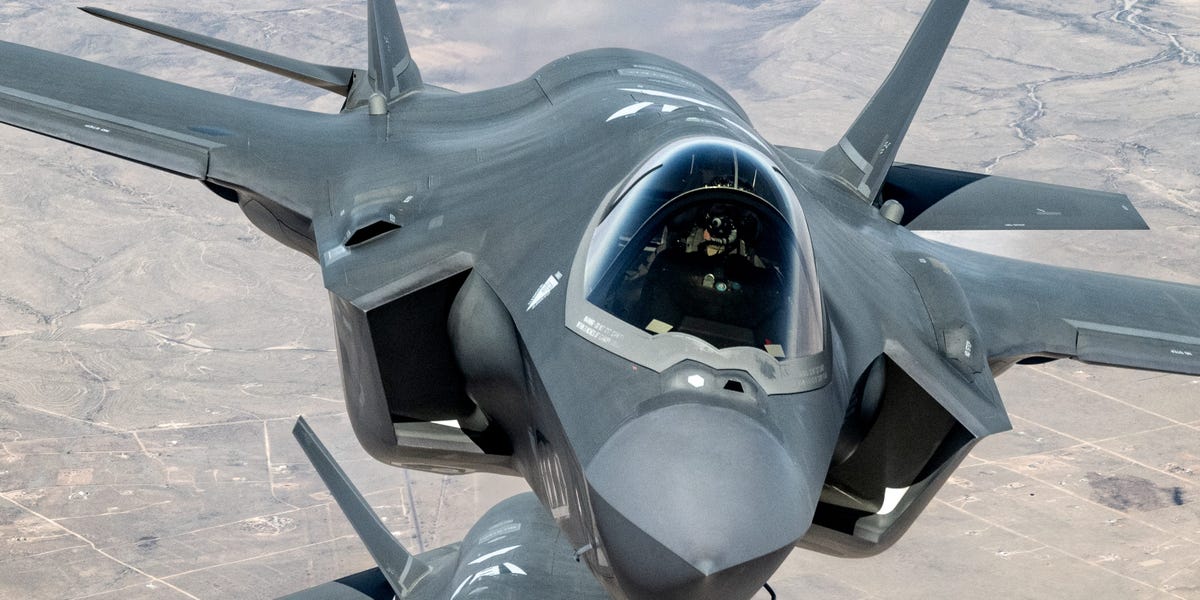
Trump Shakes F-35 Program, Allies Remain Steadfast for Now
The Trump administration introduced some instability to the F-35 stealth fighter initiative. However, despite a few allies showing hesitancy, there hasn't been an exodus from the project so far.
US Allies and the F-35 Dilemma
During Trump's tenure, strained relations with Europe and other geopolitical tensions led countries like Canada and Portugal to reevaluate their interest in the F-35, a state-of-the-art jet developed by Lockheed Martin. This has sparked discussions about potential alternatives, including Saab's JAS 39 Gripen, which is being considered as a possible replacement.
Despite these discussions, various nations operating the F-35 informed Business Insider that they currently have no intentions of abandoning the aircraft. Many emphasized their ongoing dedication to the fighter jet and the importance of maintaining strong defense ties with the US.
Commitment Amid Challenges
Lockheed Martin clarified that any sales related to the F-35 are matters between the US administration and purchasing countries. The fighter jet, with its two decades of extensive military use, is among the world's costliest weapon systems, continuing to face issues related to upkeep and long-term viability.
Recently, Portugal's defense minister suggested reconsidering the F-35 as a replacement for existing jets due to unsettling signals from the US on security matters. Meanwhile, Canada's defense leader acknowledged the need to evaluate alternative options in light of recent trade disagreements with the Trump administration.
NATO's Mixed Stance
Portugal and Canada, both NATO members, are currently considering their next steps. While Portugal is not an official F-35 user yet, Canada has been involved since the project's inception, positioning it uniquely among NATO allies.
A representative from Canada's defense ministry assured that the country's F-35 procurement plans remain intact, with deliveries expected to commence next year. They emphasized the review process would be both comprehensive and efficient.
Apart from these two, other participant countries such as the UK, Australia, Denmark, and the Netherlands have reiterated their support for the jet. The UK aligns the F-35 with its fresh defense industrial strategy, while Australia, Denmark, and the Netherlands affirmed their sustained investment and collaboration with the United States.
Reasons for Retention
Experts point to the complexities and commitments already made by countries, which make switching from the F-35 impractical. Many nations have advanced purchase orders nearing completion, making any shift in plans both costly and logistically challenging.
Richard Aboulafia, from AeroDynamic Advisory, highlighted the superior combat prowess of the F-35 over its competition and emphasized the lack of compelling motives to abandon it. Additionally, with newer fighter technologies like the sixth-generation aircraft still in development, the F-35 remains a strategically sound choice.
Aboulafia also noted that apart from new aircraft projects, the technology level of current drone systems doesn't yet match the capabilities of piloted fighter jets.
The Versatility of the F-35
The F-35 is uniquely designed to fulfill various operational needs. It boasts advanced stealth, cutting-edge avionics, and superior sensor and networking technologies. These allow it to perform diverse roles, ranging from aerial combat to strategic strikes, alongside coordination and leadership missions.
There are three variations: the F-35A with a mounted cannon, the short-takeoff/vertical-landing F-35B suitable for smaller carriers, and the F-35C tailored for US Naval operations. Internationally, allies utilize both the A and B versions, witnessing their utility in various combat scenarios.
Global Applications and Future Prospects
The aircraft's combat successes have been demonstrated, notably by Israel in missions against Iranian targets. Mark Cancian from the Center for Strategic and International Studies emphasized the extensive logistics and investment involved in maintaining the F-35, making abrupt changes costly and challenging for most countries.
Currently, no alternative fifth-generation fighter competes with the F-35's comprehensive package. Any future shifts would require significant advancements elsewhere, potentially through joint ventures such as the Global Combat Air Programme or South Korea's KF-21 initiative.
Leave a Reply