


Chinese Soldier's Tale of TikTok Inspiration to Join Russian Army
In Ukraine, a Chinese POW disclosed that captivating Douyin, the Chinese equivalent of TikTok, videos led him to enlist with Russia's forces.
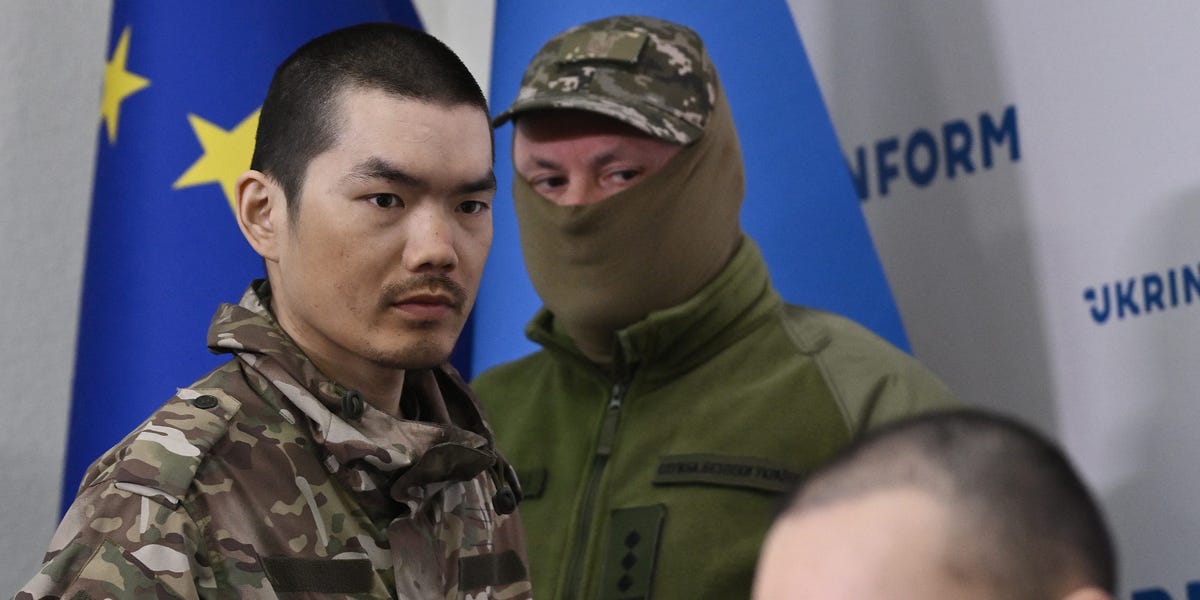
Identified as 34-year-old Wang Guangjun, he recounted his experience at a press event that saw him and another Chinese captive narrating their involvement in the Russian military and their move to the combat zones.
Captured in Donetsk, these narratives, although unverified by Business Insider, aligned with visible trends on Chinese social platforms.
Wang, speaking in Mandarin, depicted himself as a typical worker in China, previously employed as a rehabilitation therapist.
"My family led a peaceful, typical life with my spouse, children, and parents," Wang stated. "The pandemic turmoil cost me my livelihood, prompting my relentless job search, which culminated in my current predicament."
While in China, he encountered eye-catching Douyin clips showcasing Russian soldiers and armaments.
"In China, the admiration for soldiers is substantial, embedding a sense of esteem," Wang explained. "Males in China often cherish the aspiration to succeed in such roles."
He added, "When soldierly duties seem unattainable at home, and such prospects arise, it's hard to resist participating. That became my drive."
ByteDance, the parent company of Douyin and TikTok, offered no comments on BI's inquiry.
Therapist's Frontline Shift
Wang recounted a particular video advertising a position within Russia's army aimed at rehabilitating injured personnel.
"The content suggested demand for therapy experts in light of years of conflict," Wang explained, pointing out that warfare wasn't part of the supposed duties.
He continued, "Upon arrival and reporting in Moscow, the job description confirmed no combat, leading me to enroll. But once training began, control slipped beyond my grasp."
Chinese platforms often host pro-Russia clips, from showing off captured NATO gear by Chechen forces to youthful Russian warriors praised as "charming siblings." Official media regularly highlights the boundless bond between Moscow and Beijing.
Despite advisories against going to Russia for employment, as relayed by Wang, both he and fellow prisoner, 27-year-old Zhang Renbo, insisted they were not connected to any Chinese military entities.
After a brief training stint in Moscow, Wang shared being dispatched to Russian locales like Kazan and Rostov and later to northern Donetsk by early April, where Ukrainian troops apprehended him.
The Vacation Turned Battlefield
Zhang detailed how a leisure trip to Russia in December turned into a hunt for supplemental funds, encountering what initially seemed like a construction job, only to discover it was within the combat zone.
"The sustained portrayal of Sino-Russian camaraderie in Chinese media perhaps obscured risks, potentially leading to exploitation," Zhang surmised.
He shared how, after just under a week of training in early January in Rostov, he was moved to Donetsk. There, he served over a month in trenches before being captured following front-line advancement orders.
Wang and Zhang jointly expressed hopes that publicizing their situation might prompt Chinese authorities to negotiate their freedom.
Wang offered advice to fellow countrymen, "If Iraq entices you, abstain from this conflict."
President Volodymyr Zelenskyy previously mentioned existing intelligence suggesting over 150 Chinese combatants join Russian forces in Ukraine.
He stated, "While North Koreans oppose us near Kursk, Chinese forces challenge us within Ukraine."
China's foreign ministry spokesperson Lin Jian deemed these allegations "carelessly false," underscoring ongoing guidance dissuading Chinese civilians from entering combat zones or joining military actions.
Leave a Reply