


Confronting Uncomfortable Realities
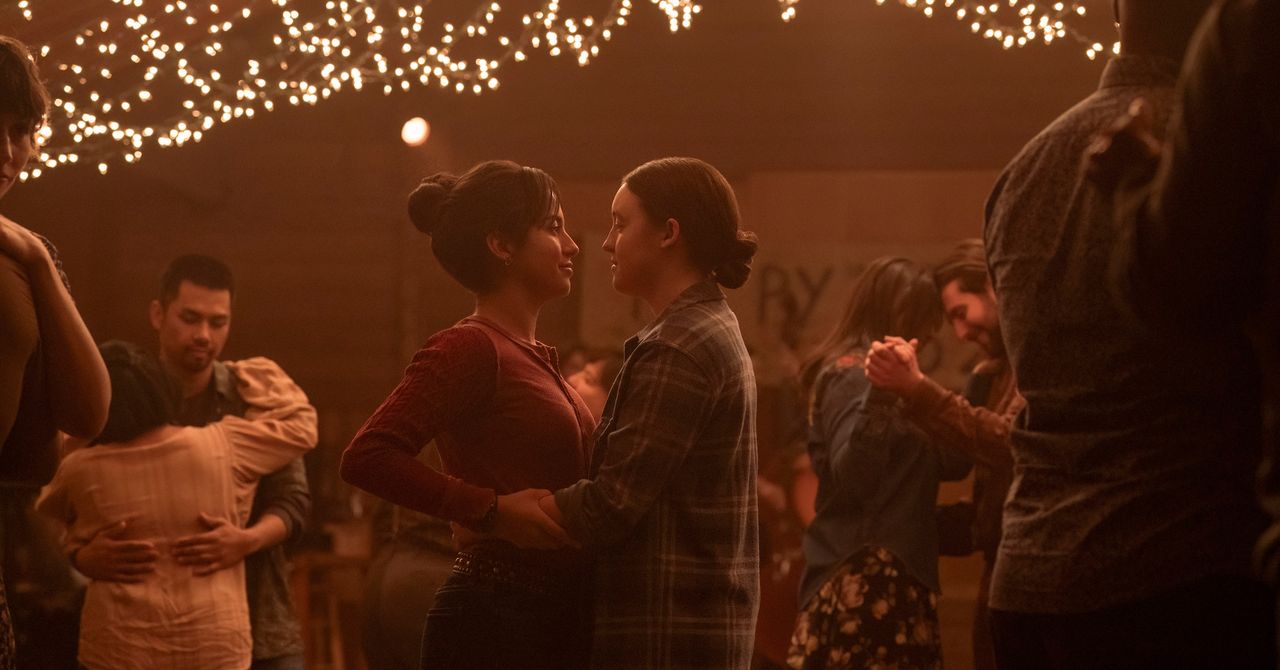
In the inaugural episode of the second season of 'The Last of Us,' the character Ellie, portrayed by Bella Ramsey, encounters a sobering incident many LGBTQ individuals know all too well. There is a unique sort of fear that accompanies public displays of affection among queer people—an apprehension that someone might object to what they see. This happened in the show when Ellie faced a homophobic remark from a character named Seth.
Reflecting a World Frozen in Time
Craig Mazin, the creator of the series, shares with WIRED that this interaction encapsulates a central theme of the show: humanity halted in its tracks around 2003 due to an apocalyptic event. This has trapped societal attitudes in the past. While some individuals cling to old prejudices under these dire circumstances, others are attempting to reconstruct familial bonds and open up to new connections in a desolate world.
Mazin expresses the importance of retaining historical accuracy in the narrative, acknowledging moments that provoke discomfort as reminders of societal norms of that era. These elements are intentionally included to provoke contemplation rather than being excised for convenience.
Queerness in a Developing Cultural Landscape
Portraying LGBTQ themes remains controversial in media today. While 'The Last of Us' is a reflective piece of its time, its narrative is broadcast in a contemporary American backdrop, notably distinct from the era when the initial game was launched in 2013, or even when the first season aired in 2023.
Neil Druckmann, co-creator with Mazin, addresses the intricate balance between storytelling that remains anchored in 2003 and current societal debates around issues such as trans rights. According to Druckmann, external societal pressures do not sway the authenticity of their story-telling. Their focus is on the narrative's integrity, whoever the audience's response might be.
Bridging the Gap Between Past and Present
Based on a series of popular video games developed by Naughty Dog, the TV adaptation experienced both praise and critique for its representation of LGBTQ+ characters. The series was even recognized with a GLAAD award for its groundbreaking portrayal. Still, some online critics argued against expanding these narrative threads beyond what is shown in the games.
Naughty Dog's games have faced similar scrutiny over their portrayal of LGBTQ+ characters, with some fans seeing progress while others criticized certain creative choices. These depictions continue to stand out in a video game universe not typically known for diverse representation.
Adapting to a New Normal
In a shattered America, 'The Last of Us' presents queerness as a fundamental part of forming new communities. The show illustrates how queer typologies can offer fresh methods to cope with collective trauma, positing that chosen families created by LGBTQ individuals could serve as a model for rebuilding society.
In the show's first season, this was epitomized by the relationship between Bill, portrayed by Nick Offerman, and Frank, characterized by Murray Bartlett—two unlikely lovers whose paths cross in a post-apocalyptic setting. Their relationship highlights openness and adaptability essential for survival and connection.
Navigating Tensions in Representation
The settlement in Jackson, Wyoming, embodiment of this new societal order, serves as a microcosm of early 21st-century America, complete with both progress and regression. Safety is a temporary illusion as old biases resurface, including prejudice-driven outbursts at social gatherings.
Mazin notes the episode featuring such homophobic backlash wasn't devoid of controversy, though it served to expose residual biases. Yet, amidst critiques, the show's intention is to boldly address and sometimes unsettle its audience by presenting complicated character stories and dynamics.
Ultimately, 'The Last of Us' embraces complexity and generates dialogue—be it in personal couches or public domains, consistently pushing its audience to reevaluate and deeply understand the world it mirrors.
Leave a Reply