


Mental Health Professionals Resort to Hunger Strike for Improved Compensation
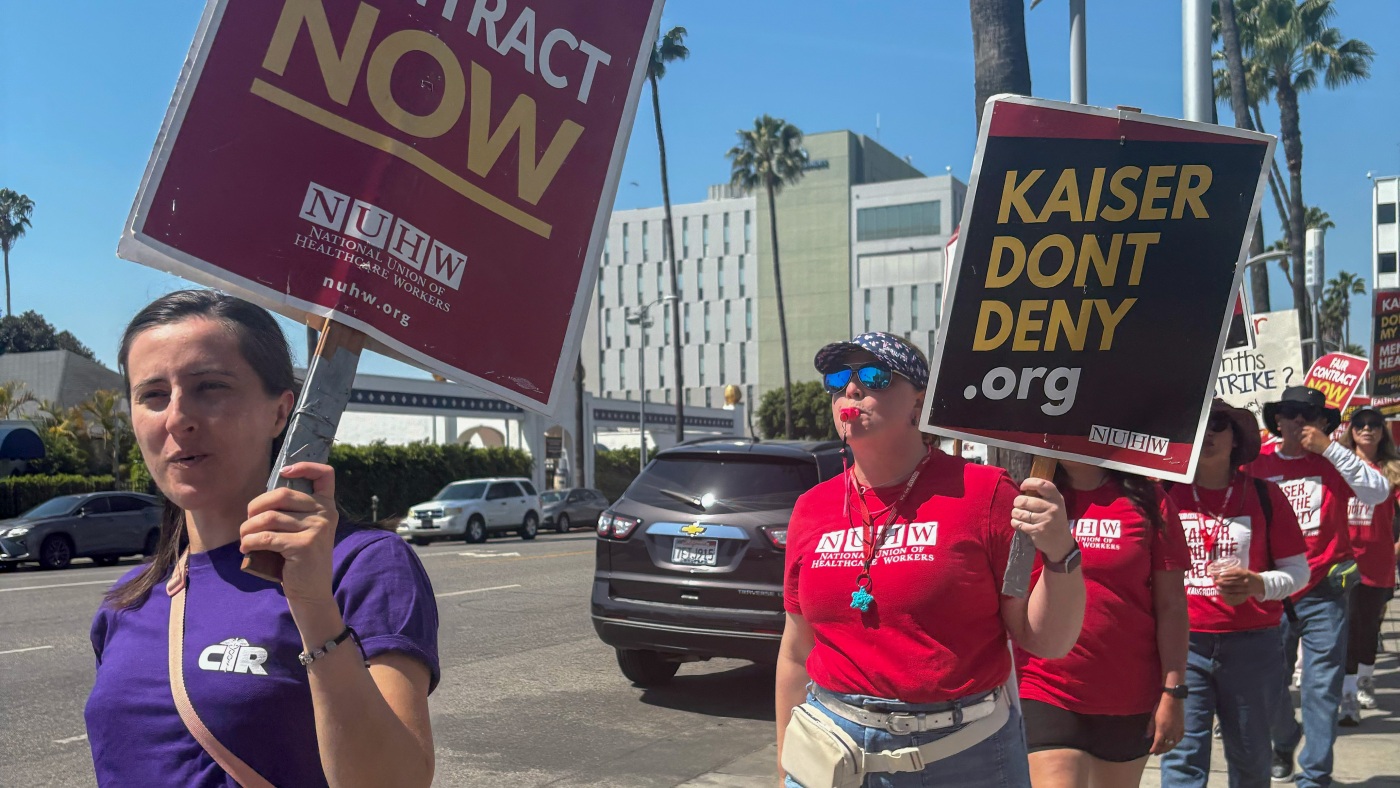
A group of mental health practitioners is staging a demonstration outside Kaiser Permanente's Los Angeles facility along Sunset Boulevard. They are entering their sixth month of protest, advocating for better compensation, benefits, and rest periods between patient sessions.
The protest was typical in some ways, featuring a multitude of mental health care professionals marching and chanting outside a Kaiser Permanente center on the bustling Sunset Boulevard stretch in Los Angeles. Motorists honked in solidarity, and participants displayed handmade signs with enthusiasm.
Yet, under a canopy, several of these workers gathered silently, conserving their strength and sipping on electrolyte mixtures—their sustenance for the upcoming five days.
Frustration led these eight therapists to escalate their protest to a five-day fast, hoping to highlight their unmet demands for higher wages and benefits after nearly half a year of striking.
"This is our way to show seriousness," explained Aida Valdivia, a licensed marriage and family therapist participating in the hunger strike.
Striking workers are already making sacrifices, noted Valdivia, mentioning depleted savings, utilizing food banks, and seeking financial help from friends and family during this lengthy standoff.
"We've been rationing our meals anyway," Valdivia pointed out. "Kaiser, you're practically making us go hungry."
The strike began in October as workers contended for equal pension benefits as other Kaiser employees and equivalent pay to their peers holding the same roles in different Californian regions.
They also highlight wage disparities with other health professionals at Kaiser, like occupational therapists and radiology technicians, who earn up to 40% more despite similar training levels.
Workers complain about not having breaks for meals or restroom visits between appointments. They demand longer intervals between clients to allow for administrative tasks.
While some have resumed their jobs, many remain on strike. Organizers claim this strike is the longest for mental health professionals in U.S. history.
Kaiser Permanente, a major health provider and insurer in California, has faced hefty fines for inadequate behavioral health services. Many fines were due to extended patient wait times, underscoring workforce understaffing and overburden.
Kaiser Permanente acknowledges some pay and benefit disparities but insists they offer competitive compensation.
Mental health workers do receive retirement benefits, but they argue these are less favorable compared to the pensions of colleagues in other roles, such as administrative or service positions.
In a written statement, Terry Kanakri, a spokesperson for Kaiser, mentioned the union seeks considerably higher compensation for fewer patient consultations. He emphasized the need for balancing generous employee contracts with affordable member care.
During the five-day hunger strike, eight workers camped out in a church fellowship area, sharing a hotel room for showers.
The strike has caught Kaiser Permanente's attention. "It's troubling that our employees feel compelled to go on a hunger strike," remarked Patty Clawson, a senior vice president at the company.
Clawson stated the company is eager to resume negotiations, aiming to reach a mutual agreement.
Hunger Strike Challenges and Support
Under the tent, hunger strikers like Adriana Webb consulted with visiting medical staff. She expressed concerns about experiencing chills during her second day without food.
"You might just have low blood sugar," assured David Verdiner, a volunteering nurse from another union, who gave up his lunch break to provide advice.
Verdiner was one of several volunteers ensuring the strikers' health. He reassured Webb about her body's adjustment to the lack of meals.
Nearby, Sal Roseli, formerly of the National Union of Healthcare Workers, stood firm with a placard questioning wage and benefit disparities.
Roseli suggested that Kaiser has a chance to pioneer changes in mental health care equality, a pressing national issue.
In California, efforts have been made to equate mental health care with physical health services. Roseli insists it's time for health institutions statewide to demonstrate their commitment.
Hunger Strikes in Protest History
Hunger strikes, though rare, have been a part of protest history, drawing inspiration from past movements like the farmworker strikes.
Labor historian Erik Loomis notes that long-lasting strikes often favor the employer, but unconventional tactics like hunger strikes might change the narrative.
Next week, new negotiations are scheduled with Kaiser Permanente, the first since talks stalled a month ago.
Tom Morello of Rage Against the Machine performed briefly for the strikers, reinforcing the power of union solidarity and reminiscing about his upbringing in a union household.
"The future of the working class lies not in legislative halls or courtrooms," Morello assured the strikers, "but in the hands of determined individuals like you."
Leave a Reply