


The Pervasive Influence of Mafias in Ecuador: Extortion and Violence
Ecuadorians are approaching election day engulfed in a climate of fear due to a rapid increase in the number and influence of both local gangs and international mafias.
An overflow of illegal drugs originating from Colombia and Peru has attracted an array of criminal organizations from various countries including Albania, Italy, and Mexico, transforming Ecuador—a country once considered safe in the Andes.
This has also led to the emergence of numerous homegrown gangs characterized by their distinctive names and fearsome notoriety.
Groups like "Los Freddy Kruegers" dominate the streets with fear, "The Ugly Women's Headquarters" control the prisons, and "The Peaky Blinders" aim to dominate important coastal territories.
Collectively, these and other organizations instill terror among civilians by engaging in extortion, abductions, and assassinations.
In the early part of the year, reports indicated over one death per hour, according to Ecuador's Interior Ministry.
Combating these groups has grown increasingly challenging, as acknowledged by Guayaquil's police chief, Pablo Davila.
This precarious security situation has been a major theme in the presidential showdown between the current president, Daniel Noboa, and his opponent Luisa Gonzalez.
Escalating Threats and Demands
One business owner in Guayaquil recounted a terrifying incident where a bomb detonated in her business establishment.
Claiming mafia affiliation, they ordered a payment of $15,000 for their safety, the woman recounted under the condition of anonymity.
Many domestic gangs have formed alliances with major cartels from Mexico and Colombia, as well as with Albanian and Italian criminal organizations.
However, as they vie for more control, these local gangs have also split and multiplied.
The on-ground conflict revolves around territorial dominance, and the absence of clear leaders has led to a quest for autonomous control amongst gangs.
Ecuador's law enforcement faces a formidable task in adapting to and dismantling this evolving landscape of criminal entities.
According to security analyst Carla Alvarez, the current situation is reminiscent of the chaos that gripped Colombia during the 1990s.
The disintegration of hierarchical structures began in 2018, accelerated by the demise of the influential Choneros leader Jorge Luis Zambrano in 2020, which left a leadership void.
Even Quito, once perceived as a refuge from the drug-related violence, is progressively entangled.
Local residents like Marianela experience harassment and demands through social media, which she attempts to ignore.
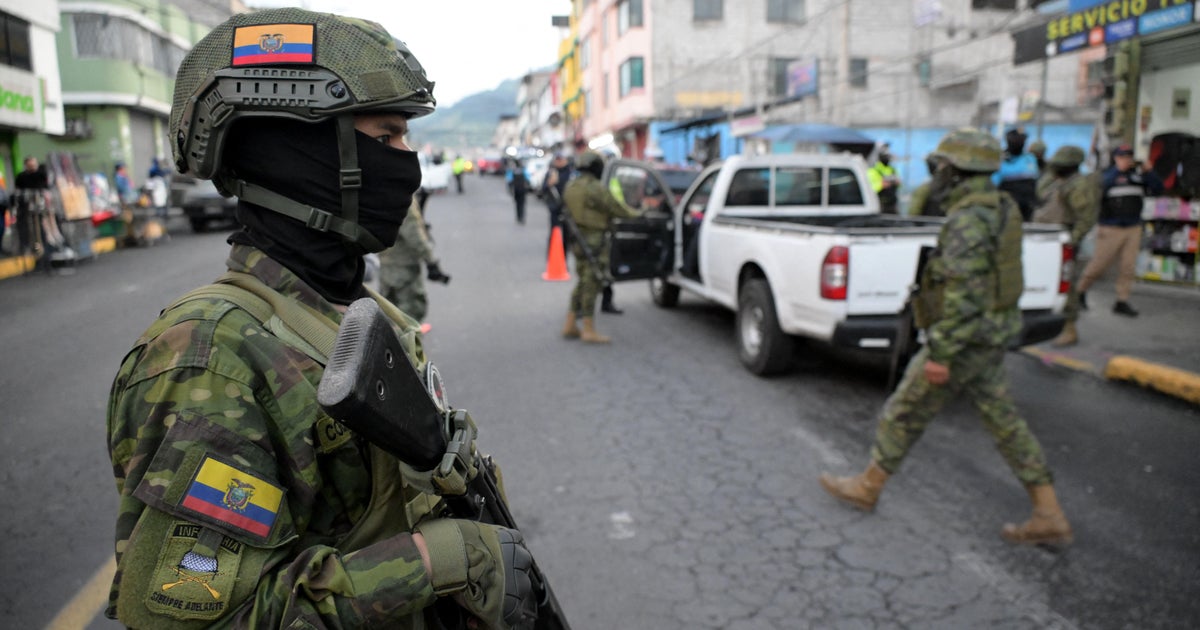
Nevertheless, the reality of violence is omnipresent, marked by frequent police and military operations searching for contraband and culprits.
As new power structures form, the situation may further deteriorate, warns Carolina Andrade, a municipal security official.
There is a trend of smaller groups seeking alliances with larger syndicates to boost their influence and control over territories.
This year, high-profile figures from notorious gangs have captured media attention, such as a leader of "Los Cheronos" pursued for severe criminal activities including extensive drug trafficking to the United States.
In similar developments, Ecuador was rattled by the arrest of a major figure of "Los Lobos" in 2024, involving substantial law enforcement efforts to curtail their operations.
Leave a Reply