


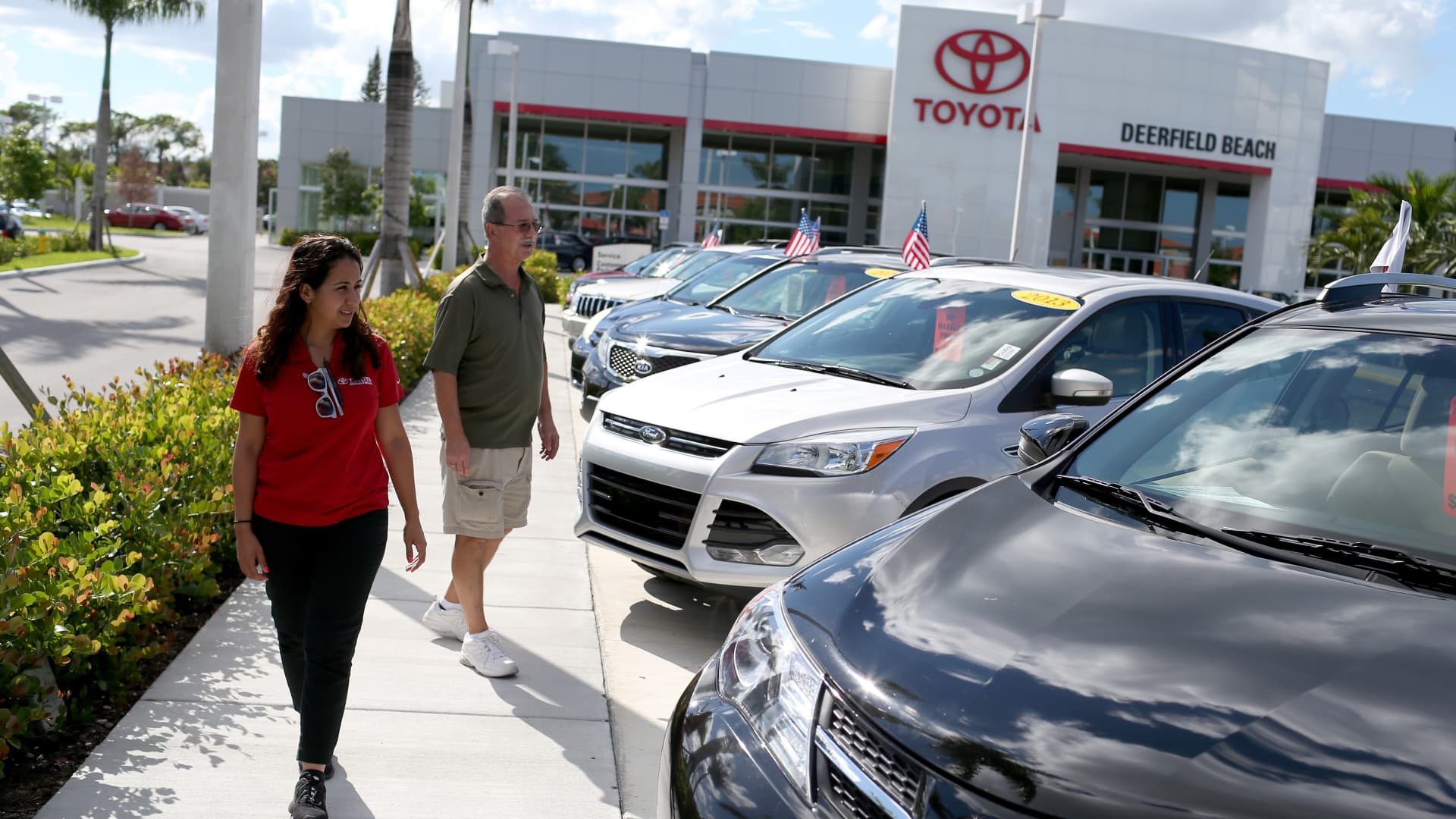
Fluctuating Auto Sales as Tariffs Drive Up Prices
DETROIT — The U.S. automotive market is bracing for significant price hikes both in new and pre-owned vehicles as President Trump enacts a 25% tariff on imported cars. This conclusion comes from experts at Cox Automotive, a respected source for industry insights.
These levies are anticipated to inflate the price tags of new vehicles—both foreign and American—by several thousand dollars. Additionally, used car prices will also see an upward trend, contradicting initial forecasts of less drastic price fluctuations.
Expectations have shifted following the enforcement of these tariffs on imported cars. Further, a new 25% duty on automotive parts is on the horizon, potentially taking effect by early May.
Jonathan Smoke, the Chief Economist at Cox Automotive, described the market's current trajectory as a 'roller coaster'. He explained that these tariffs, coupled with an erratic economic climate, are shaping the consumer landscape, influencing vehicle prices and availability.
Different automakers are employing varied strategies in response. Some, including domestic giants like Chrysler, offer temporary discounts to soften the impact on consumers. Conversely, Jaguar Land Rover has halted U.S. shipments entirely, while others pledge to freeze prices temporarily to alleviate customer apprehensions.
According to Cox, impacts on pricing are tangible: imported cars will cost an additional $6,000, while U.S.-assembled vehicles could see a $3,600 rise, due to both vehicle and parts tariffs. Existing steel and aluminum tariffs are adding $300 to $500 more to the equation.
Wall Street analysts suggest that while some cost absorption may occur within the automotive industry, consumers will inevitably bear much of the increase.
Although used car sales aren’t directly impacted by these tariffs, their market dynamics shift when new car prices and demand change. This is pertinent since most Americans buy used vehicles.
Cox Automotive projects an increase in wholesale prices of used cars, estimating they'll rise by 2.1% to 2.8% by year-end. This is a steeper climb than the formerly predicted 1.4% stability.
Potential Price Volatility and Market Reactions
The average price of a used car hovered around $25,000 in mid-March, but predictions align with significant fluctuations in coming months due to the tariffs.
Consumer price adjustments traditionally trail wholesale changes, with recent years showing a gradual alignment to wholesale price declines.
Jeremy Robb, a senior director at Cox, cautions that price volatility is likely to persist. He remarked that sales might peak shortly after the tariff announcements, given recent patterns.
According to Cox, market shifts won't mirror the drastic price hikes seen during the pandemic, which were fueled by high demand, favorable interest rates, and restricted vehicle availability.
Ryan Rohrman, CEO of Rohrman Automotive Group, sees the used vehicle sector as tumultuous, paralleling the disruptions witnessed during the health crisis, with inventory shortages compelling increased auction activity.
While production cuts and import halts are part of the strategy under current tariffs, these adjustments aren't expected to replicate the severity of early 2020 actions, due in part to altered market conditions.
Smoke adds that a downturn in vehicle demand might moderate the potential surge in used car values, evening out some of the anticipated appreciation.
Leave a Reply