


Challenges in Employment: The Impact of a Trade Dispute
An escalating tariff confrontation could transform an already difficult job market into an even more challenging one.
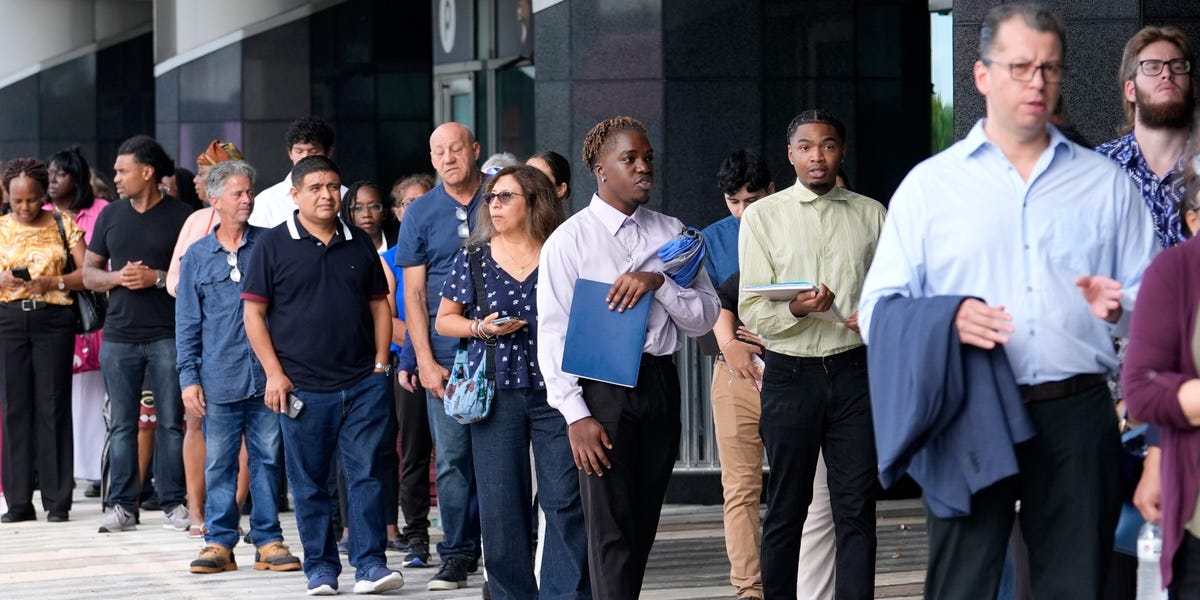
Michelle Budnick, a documentarian based in New York, fears her quest for steady work will become increasingly difficult. This 47-year-old professional has been actively pursuing a stable production position for more than two years.
Budnick explained to Business Insider that heightened trade restrictions and the associated risk of declining consumer spending will probably lower businesses' willingness to invest in creative endeavors.
"It's like pouring sludge over syrup. We're just going to get stuck," Budnick said, commenting on how workers like herself might be affected.
Although it is premature to predict the exact repercussions on the job landscape following President Trump's tariff declaration on April 2, experts suggested that the uncertainty might cause some employers to shrink hiring plans.
"It's somewhat like a stalled market," commented Andrew Flowers, chief economist at Appcast. "Expect fewer job opportunities and potentially more layoffs."
For a considerable duration, the potential for a trade conflict has loomed ominously near the corporate strategies of several companies. With Trump’s proceed with tariffs, which include a minimum 10% duty, the effects could be significant.
According to Cory Stahle from the Indeed Hiring Lab, "We're beginning to notice a sentiment that this is more than a negotiation tool, and these tariffs are probably here to maintain."
Potential Spread of Hiring Challenges
Some of the sluggish trends seen in white-collar job sectors for years may start affecting other areas of employment, according to Flowers.
Sectors that have remained resilient, such as healthcare, are predicted to hold steady. However, previously robust industries like retail, transport, and specific aspects of manufacturing could face difficulties, Flowers observed.
The current hiring trend in the U.S. marks the slowest increase in almost ten years, as noted by Stahle. Concurrently, the number of job listings has decreased.
Spotting Positive Sides in a Challenging Environment
Despite low rates of layoffs, the most considerable effect on workers may be the stagnation in hiring, as Flowers suggested.
"The tariff-related layoffs might occur, but what is more consequential is the limited hiring," he stated.
In a scenario where retaliatory tariffs develop into a global trade conflict, job cuts could become common.
"The dramatic tariff rates have unsettled investors and startled business executives," Flowers mentioned.
These effects add to the planned reductions in jobs and spending within the government, involving Elon Musk's Department of Government Efficiency initiative.
Uncertainty: A Major Risk
Stahle indicated that the unpredictability produced by tariffs can potentially pose a more severe risk than the tariffs themselves, as it might cause businesses to cut back on hiring and expenditure and prompt consumers to restrain spending.
"If the general sentiment is one of imminent disaster, actions based on this could become a reality," he remarked regarding the uncertain climate created by tariffs.
The unstable situation was evident, as the employment report showed better-than-expected job growth in March but noted reduced estimates for growth at the year’s beginning.
Meanwhile, stock markets worldwide fell sharply, with the S&P 500 losing over 10% across two days.
Many investors now view earlier data as outdated, choosing to focus on the potential for a restrictive international trade landscape.
"Data from just a month ago seems old news now," Stahle commented about the reaction to the March employment report.
For individuals like Budnick, there's concern that tariffs could lead to a decrease in business spending on the kind of work she produces. She’s faced challenges; prior to February 2023, she enjoyed over a decade of uninterrupted full-time employment.
"The uncertainty makes you question future prospects," she said. "How will families manage if financial support does not come through?"
Leave a Reply