


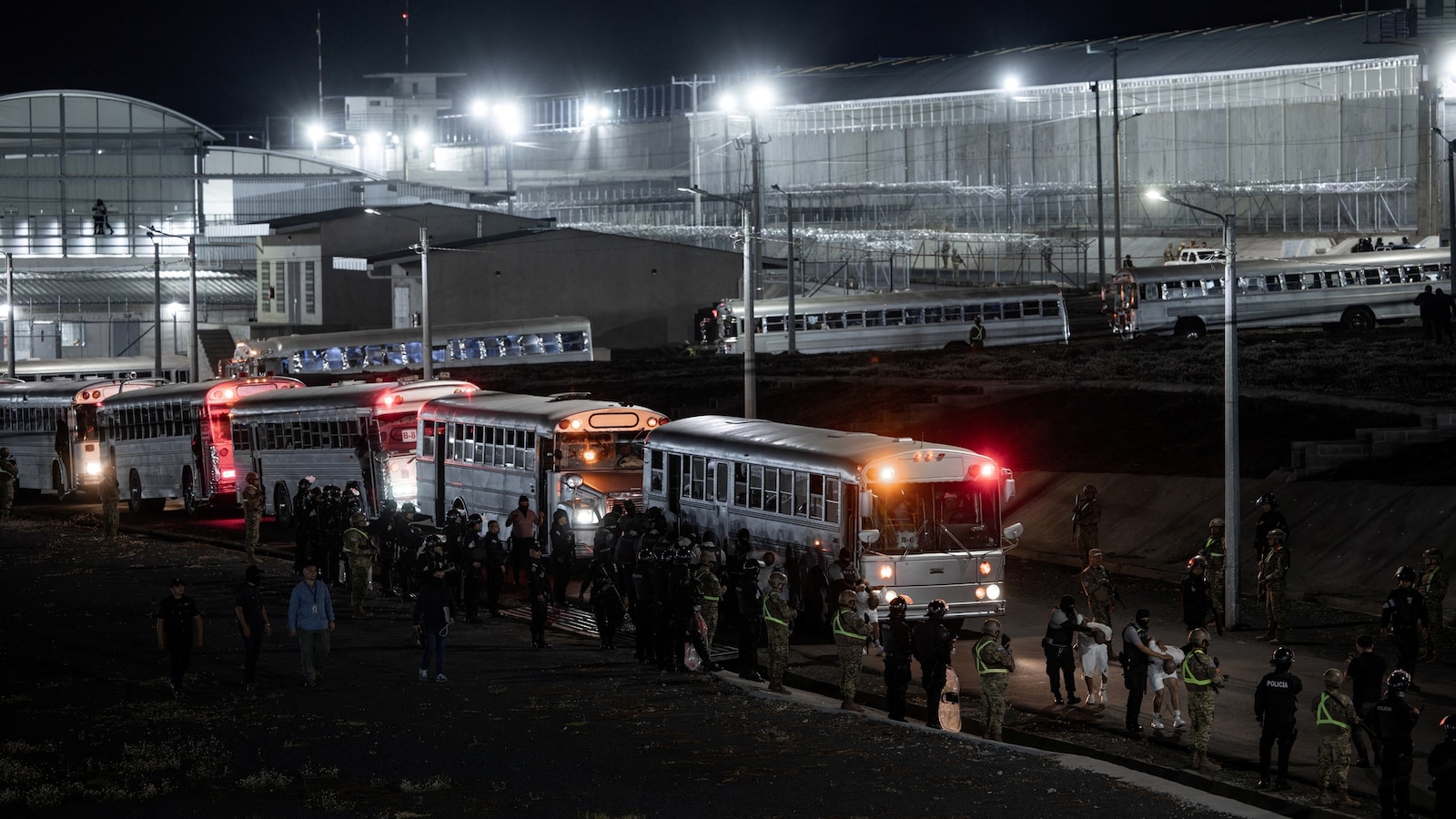
ICE Mistake Sends Maryland Resident to El Salvador Prison
A man from Maryland, holding a legal protection status, ended up in a notorious Salvadoran prison due to a mistake by U.S. Immigration and Customs Enforcement (ICE) as revealed in a formal statement on Monday.
The individual, Kilmer Armado Abrego-Garcia, who has a spouse who is a U.S. citizen and a five-year-old child, is currently being held in CECOT, a well-known correctional facility in El Salvador.
This situation is the focal point of a new legal action initiated by Abrego-Garcia’s representatives. They are demanding his repatriation to the United States, asserting that his deportation was a consequence of purely bureaucratic mishandling.
While the authorities admitted the mistake, they emphasized in legal documents that Abrego-Garcia, now outside U.S. jurisdiction, cannot be ordered back by the court, nor can the court compel Salvadoran authorities to release him.
Allegations and Legal Proceedings
His attorneys assert that in 2019, a covert informant accused Abrego-Garcia of being involved with the criminal organization MS-13. Yet, despite his initial designation as deportable, he was granted protection from deportation to El Salvador by an immigration judge.
In a sudden turn of events earlier this month, ICE agents informed him of a shift in his immigration status. Subsequent to detention linked to alleged gang ties, he was relocated to a holding facility in Texas and subsequently deported to El Salvador on March 15.
Robert L. Cerna, acting ICE field office director, confirmed in documentation that Abrego-Garcia, a native of El Salvador, was mistakenly repatriated on the third available deportation flight, labeling the incident an oversight.
Abrego-Garcia’s legal counsel argues he holds no connections to gangs like MS-13, suggesting that the U.S. government has never provided concrete evidence substantiating such claims.
Challenges in Proving Innocence
The government countered that Abrego-Garcia had the opportunity to dispute the allegations in the legal process. They claimed he could have introduced evidence to disprove his connection to MS-13, which he failed to do.
In legal files, Yaakov M. Roth, Acting Assistant Attorney General for the Civil Division, stated the court lacks authority to revisit the deportation decision and mentioned that the petitioners are seeking his release through diplomatic and economic avenues.
Government's Stance on Potential Danger
Roth noted there is insufficient evidence to suggest Abrego-Garcia faces immediate harm or death within the CECOT facility.
"Despite potential reports of abuse in certain Salvadoran jails, there is no direct evidence pointing to torture or fatal risk specifically against Abrego-Garcia in CECOT," stated Roth, emphasizing the government's prediction of his safety in El Salvador.
Cerna asserted that the organization acted on existing deportation orders and supposed gang connections, albeit erroneously.
Leave a Reply