


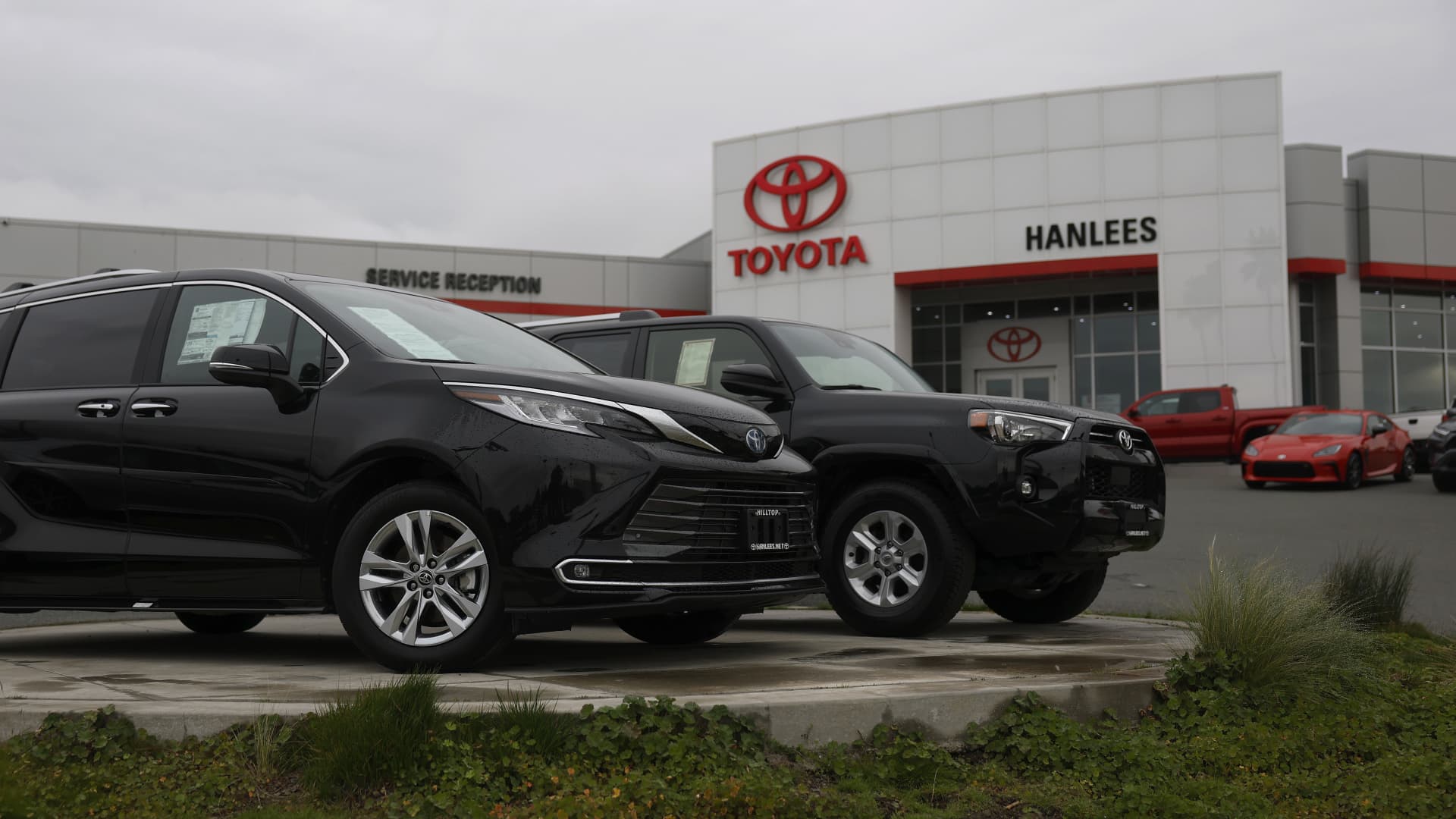
Asian Car Manufacturers in Turmoil Over Trump Tariffs
The sweeping announcement by U.S. President Donald Trump to impose a 25% tariff on imported vehicles has sent ripples of concern through the Asian automotive industry. These tariffs are part of the administration's effort to encourage domestic manufacturing.
Toyota's stock has been significantly affected, dropping by a remarkable 9.4% in the days that followed Trump's declaration, with Nissan also experiencing a similar downturn of 9.3%. Hyundai faced an 11.2% slide, reflecting widespread anxiety across Asian brands.
Toyota, heavily reliant on the American market for sales, stands to lose the most, according to Vivek Vaidya from Frost & Sullivan. The U.S. remains a pivotal market for these companies, with Toyota leading in sales volume domestically in 2024, outperforming even American giants like Ford and Chevrolet.
Economic Impact on Asian Automakers
The Japanese automakers occupy prominent positions in terms of U.S. market share, with South Korean brands not far behind, suggesting that these tariffs could drastically alter their revenue which is majorly generated from North American customers.
Toyota and Nissan have chosen to withhold immediate comments, highlighting the industry's cautious stance following the tariff recommendations.
U.S. Automotive Import Dynamics
In 2024 alone, the U.S. imported vehicles and parts valued at several billion dollars. South Korea emerged as the second largest vehicle exporter to America, only surpassed by Mexico, with Japan not far behind.
Challenges in Relocating Production
Shifting manufacturing facilities to the U.S. to avoid tariffs isn't a quick fix. Joe McCabe from AutoForecast Solutions emphasizes the impracticality of such a move, given the exorbitant costs and time involved.
Richard Kaye, from Comgest, believes that while Toyota and Nissan have substantial U.S. operations, these cannot be scaled up easily to negate the tariff impact. Moreover, any changes would be ridiculously costly given existing cross-border supply lines.
Kaye also speculates on whether these companies will bear the additional costs themselves or pass them onto consumers. Either way, it poses financial difficulties.
Toyota's Resilience and Suzuki’s Benefit
Kaye posits that despite being the largest, Toyota might better endure this tariff impact, although still expecting profit reductions. In contrast, Suzuki, unaffected by U.S. tariffs due to their non-U.S. sales focus, has seen its shares fare better, highlighting its unique advantage within this competitive sector.
Leave a Reply