


US Navy Adopts 'SpaceX Methodology' for Underwater Drones
The US Navy is pushing forward with novel underwater drone technologies to integrate them seamlessly with its submarine fleet. The approach, inspired by SpaceX, focuses on deploying these systems swiftly to gather feedback and make real-time improvements.
During a recent panel at the Hudson Institute, Submarine Forces Commander Vice Adm. Robert Gaucher elaborated on the continuous initiatives to blend uncrewed underwater vehicles into navy operations. He emphasized that the potential applications for these drones in naval tasks are limitless.
The development involving Virginia-class submarines has opened new avenues for operations, allowing the force to maintain stealth and enhance intelligence gathering. The utilization of uncrewed underwater vehicles (UUVs) increases the operational range of the Navy's missions.
Due to their versatile surveillance abilities and compact design, UUVs can be sent to challenging-to-access areas, which conventional assets might find inaccessible. They are cost-effective compared to traditional, pricier submarines, highlighting the significance of their deployment.
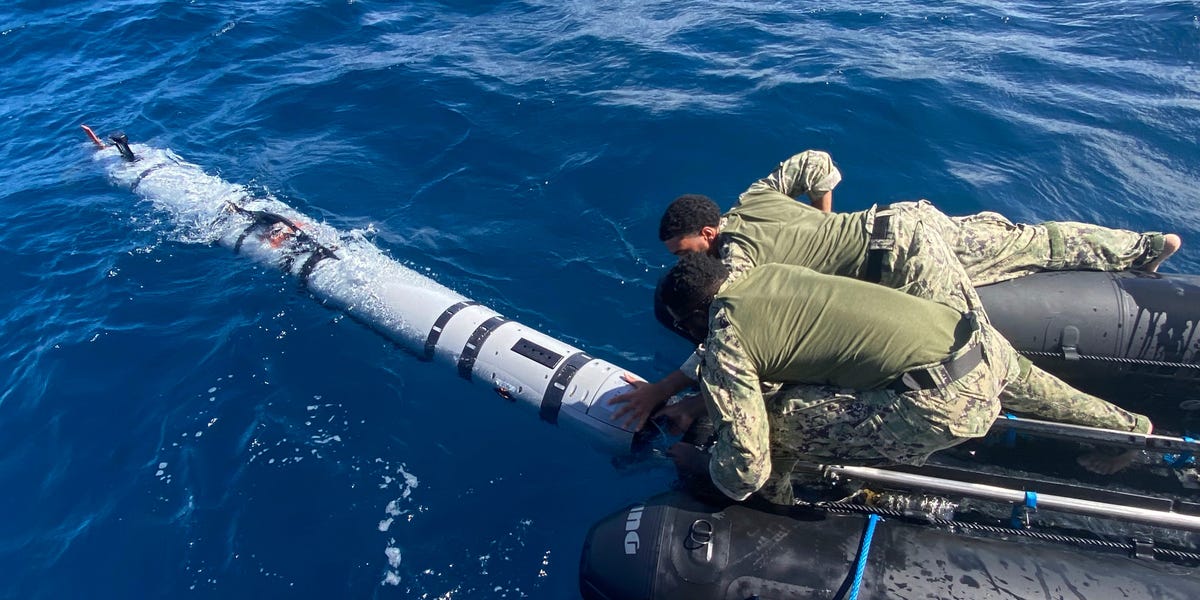
While challenges remain, the Navy has witnessed favorable outcomes, especially with the Virginia-class submarine USS Delaware conducting exercises in Europe. Vice Adm. Gaucher mentioned the testing of a Huntington Ingalls Industries' Remus UUV 600 in the Norwegian fjords.
The Remus drones, manufactured by HII, offer variability in depth, mission length, and speed and have been applied commercially in ocean research.
Innovative Development Inspired by SpaceX
Gaucher likened the Navy’s strategy to the rapid iterative development famously used by SpaceX, where technologies are promptly deployed to gather actionable feedback from real usage.
The Navy's own adjustments to the Remus drones underscore this philosophy. Deployments in the Indo-Pacific also include UUVs in a similar testing cycle, underscoring a focus on iterative enhancements.
SpaceX's method involves accepting that technology might encounter failures during testing, which helps in quick iterations and design refinements. This strategy has set records in SpaceX's operations, highlighting both successes and failures.
Collaborative and Adaptive Approaches
The Navy’s learning from tech companies isn’t uncharted territory. At Keyport, Washington, an underwater testing course was established for evaluating UUVs, drawing a parallel to Google's mock urban areas for autonomous vehicle trials.
Since mid-2024, nearly 60 different UUV models have been assessed, showcasing the Navy's priority to incorporate uncrewed systems into conventional operations. An upcoming joint exercise with NATO, titled Dynamic Messenger, will further explore underwater drone technology.
Continuous Advancement and Future Prospects
Duane Fotheringham, from HII's Mission Technologies Development Division, confirmed the critical need for adaptable upgrades on UUVs such as the Remus. The ability to interchange payloads, energy reserves, and propulsion is fundamental to persistent advancement.
Leave a Reply