


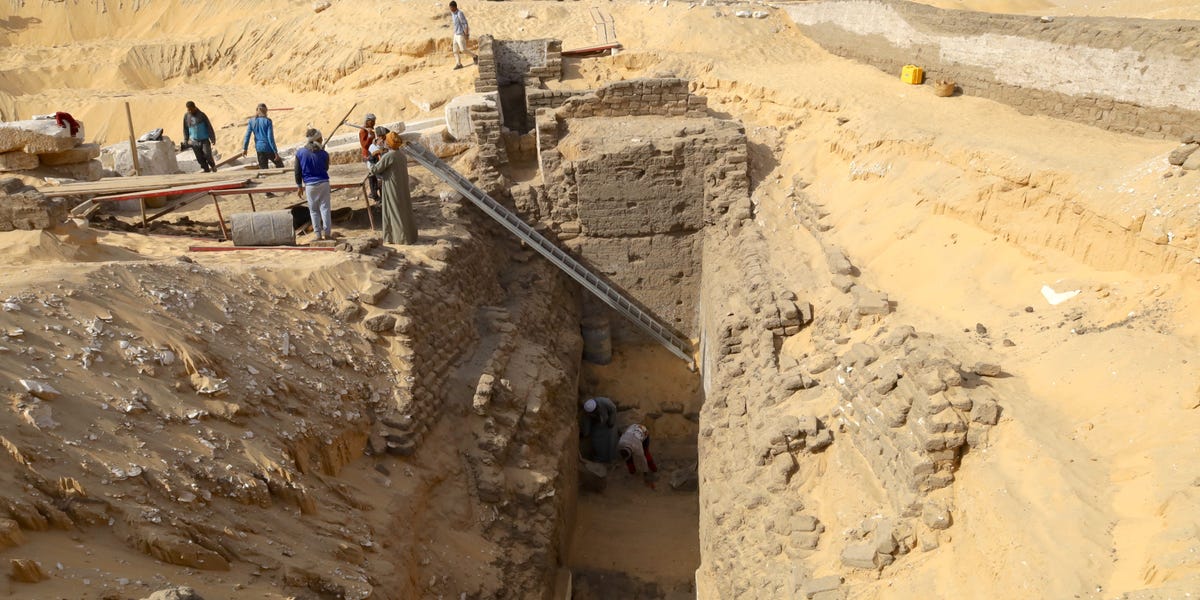
Unveiling the Tomb of a Mysterious Egyptian Ruler from a Turbulent Past
Hidden within the tomb networks of Anubis Mountain, a new pharaoh from Egypt’s enigmatic past has been unearthed.
Josef Wegner, the lead archaeologist responsible for the discovery, mentioned to Business Insider, “Finding new tombs of kings is a rarity in our field.”
The identity of this pharaoh remains an enigma. It's believed that ancient looters defaced the inscription of his name. Yet, this discovery could shine a light on a largely forgotten epoch of Egyptian history—between 1640 BCE and 1540 BCE—marked by noble skirmishes over land.
Dr. Wegner, who lectures on Egyptian archaeology at the University of Pennsylvania, remarked, “It was a time brimming with volatility and battles.” This era is credited with ushering in the famous New Kingdom, home to renowned pharaohs like Tutankhamun and Ramses.
Excavation of the Ancient Burial Site
Situated beneath 23 feet of desert sand, the newly discovered tomb was found in the necropolis of Anubis Mountain, once part of the ancient city of Abydos. This locale is thought to have belonged to the Abydos Dynasty, known for its fierce rulers during Egypt’s Second Intermediate Period.
A Hidden Royal Lineage
Wegner describes this as a ‘dynasty of mysteries.’ This marks the ninth royal tomb his team has located in this ancient city, now a vast archaeological ground and once a royal necropolis.
Previous Discoveries
In 2014, the team unearthed the tomb of Seneb Kay, a king from the same era. His remains showed signs of a violent death, with wounds inflicted by weapons, suggestive of the warfare common to his time.
Seneb Kay’s resting place was adorned with vivid artwork and hieroglyphs detailing his name. Nearby are seven other unadorned tombs, indicating the presence of other Abydos kings.
The New Tomb's Significance
Wegner explained that their latest finding is noticeably larger than previous discoveries. Although decorative elements like hieroglyphs were in place, time and pillagers have rendered much of it unreadable.
The tomb’s grandeur, with its towering vaulted ceilings leading to a limestone chamber, might have attracted the attention of ancient robbers.
Anticipating New Revelations
The identity of the deceased might be one of two known but yet-to-be-located Abydos monarchs, Senaiib or Paentjeni. Excavation efforts are ongoing to uncover more.
Wegner is hopeful about locating canopic jars, which could contain inscriptions indicating the king’s name—leading to a definitive identification of the current mystery pharaoh.
Plans for Future Exploration
With a significant portion of the site yet unexplored, Wegner plans to return for further excavation. He believes there might be more undiscovered tombs in Anubis Mountain, unearthing more fragments of Egypt’s royal history.
Initially underestimated, the site proved more bountiful than anticipated. “This place is a royal cemetery,” Wegner stated, akin to the Valley of the Kings in its importance.
Leave a Reply