


Transformations at the California-Mexico Border
In the past month, humanitarian workers have noticed a stark emptiness at the California-Mexico border, leading them to dismantle their once-essential tent facilities set up beside the border wall.
A year ago, as migrants surged across the border in record numbers, organizations such as the American Friends Service Committee, a group rooted in Quaker principles of human rights, stepped forward to provide crucial assistance. The influx of donations enabled them to establish three shelters stocked with food, clothing, and medical supplies.
Today, however, the flow of migrants has slowed dramatically, resulting in a profound shift along California's southern boundary.
Shelters that used to welcome new arrivals have shuttered their doors, and impromptu encampments once bustling with activity now lie empty. Nonprofit organizations have redirected their resources to support immigrants in the U.S. facing deportation, or those stranded in southern Mexico.
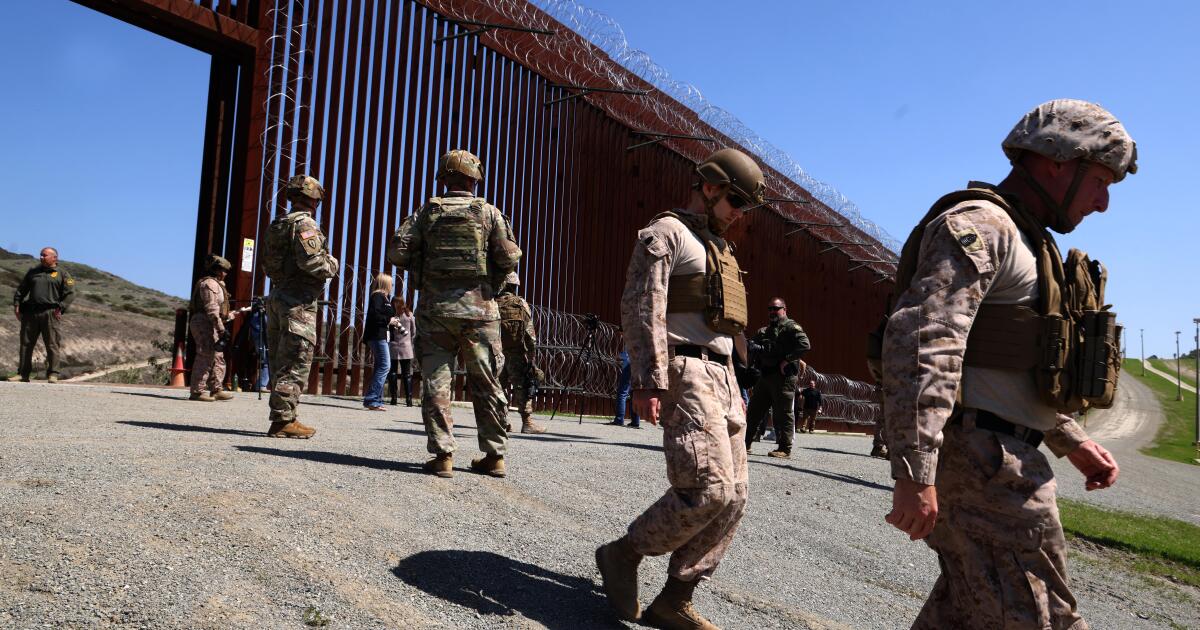
At the same time, the Border Patrol, bolstered by 750 U.S. military personnel, has fortified six miles of the border wall with concertina wire.
A Decrease in Border Activity
At a Service Committee post located a few miles from the San Ysidro crossing, only one sparse canopy remains. Inside, three workers wearing blue gloves are packing supplies labeled for children and basic needs. Yet, demand has vanished.
Daily arrests by Border Patrol agents in the San Diego area have plummeted from over 1,200 a day last April to just 30 to 40 now.
Reflections from Aid Workers
Adriana Jasso, a coordinator for the Service Committee's U.S.-Mexico program, looks back at the hectic days with a mixture of sentiments. For them, it was a formidable challenge in delivering humanitarian services. Today, as the need diminishes, she reflects on the unpredictability of future events.
A previous U.S. policy that rapidly expelled migrants was revoked by the Biden administration in May 2023. This change led to a surge of asylum seekers at the border, anticipating new procedures.
In one section of the border near San Diego, parallel fences became a waiting area for asylum seekers. Here, individuals often waited for extended periods before officers returned to process them.
A Significant Policy Shift
The last documented group Jasso encountered at the border comprised individuals from India and China. After a storm damaged the canopy structures further, Jasso and her team decided to dismantle what remained.
At that time, a poignant moment occurred when a young girl passed a cherished Minnie Mouse toy to Jasso through the fence, unable to take it with her.
During this transitional period, Border Patrol conducted a media briefing. Amidst enhanced security measures, including the addition of concertina wire, collaboration with military forces was highlighted.
Collaboration Between Forces
Military forces reinforced the infrastructure with strategic barriers and concertina wire, aligning with policy shifts aimed at curbing unlawful border crossings.
Jeffrey Stalnaker, chief patrol agent for the San Diego region, cited the reduction in cross-border crime, attributing it partly to Mexico's heightened enforcement following trade negotiations with the U.S.
Military involvement has allowed border agents to focus more on fieldwork and less on surveillance tasks.
Adjustments in Community Assistance
Further away, changes have resonated in places like Jacumba Hot Springs, where local residents once provided essentials to hundreds of migrants camped amidst undesirable conditions.
Sam Schultz, previously active in delivering support, notes the emptying campgrounds and the cessation of needs for sustenance and warmth.
Organizations offering legal and humanitarian assistance along the border have since altered their focus.
Evolving Legal Support for Migrants
The Immigrant Defenders Law Center, notably, has pivoted to defending detained immigrants within Los Angeles as border arrests decreased.
Erika Pinheiro of Al Otro Lado describes their organization's strategic redeployment of efforts to regions in Mexico, supporting migrants from varied backgrounds who find themselves unable to enter the U.S. or return safely home.
Despite these shifts, the American Friends Service Committee remains committed to foundational support and awareness campaigns within communities.
The possible resurgence of migrants taking dangerous routes due to legal entry restrictions suggests that the humanitarian demand, albeit deferred, might arise once more.
Leave a Reply