


The Ascension of Women’s Basketball
Caitlin Clark played a pivotal role in elevating the sport to new levels, but she was part of a larger movement.
Changing Perceptions
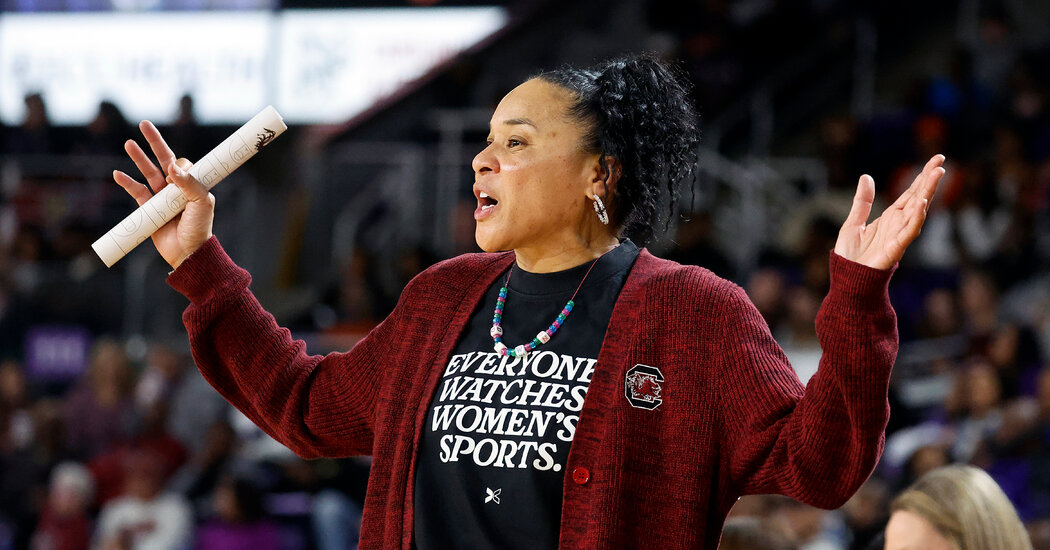
As fans gather to support women's sports, a powerful message is displayed on their attire: 'Everybody tunes in for women's sports.'
The recent N.C.A.A. women’s basketball championship showcased this growing interest vividly. For the first time since the N.C.A.A. women's championship began in 1982, the women's final attracted a larger audience than the men's counterpart, with 18.9 million people watching compared to the men's 14.8 million.
Basketball Championship Viewership Over the Years
In terms of viewership, the women's event saw a steep rise compared to the previous year, when nearly 10 million tuned in. Meanwhile, the men's championship has been witnessing a gradual decline, having about half the audience it did in 2015.
Caitlin Clark and The Momentum
Caitlin Clark, with her remarkable performance at Iowa Hawkeyes over four years, has been a significant force behind the sport's new heights. Yet, the growth in women's basketball started before Clark's influence, with continuous progress over the years.
Historical Context and Growth
Initially, men’s basketball had a significant head start. Established in 1906, the N.C.A.A. didn't offer a full range of leagues for women until after the enactment of Title IX in 1972, a law advocating for equal opportunities in school sports. During those early decades, men’s sports benefited from more investment and exposure, carving out a dominant presence.
Leave a Reply