


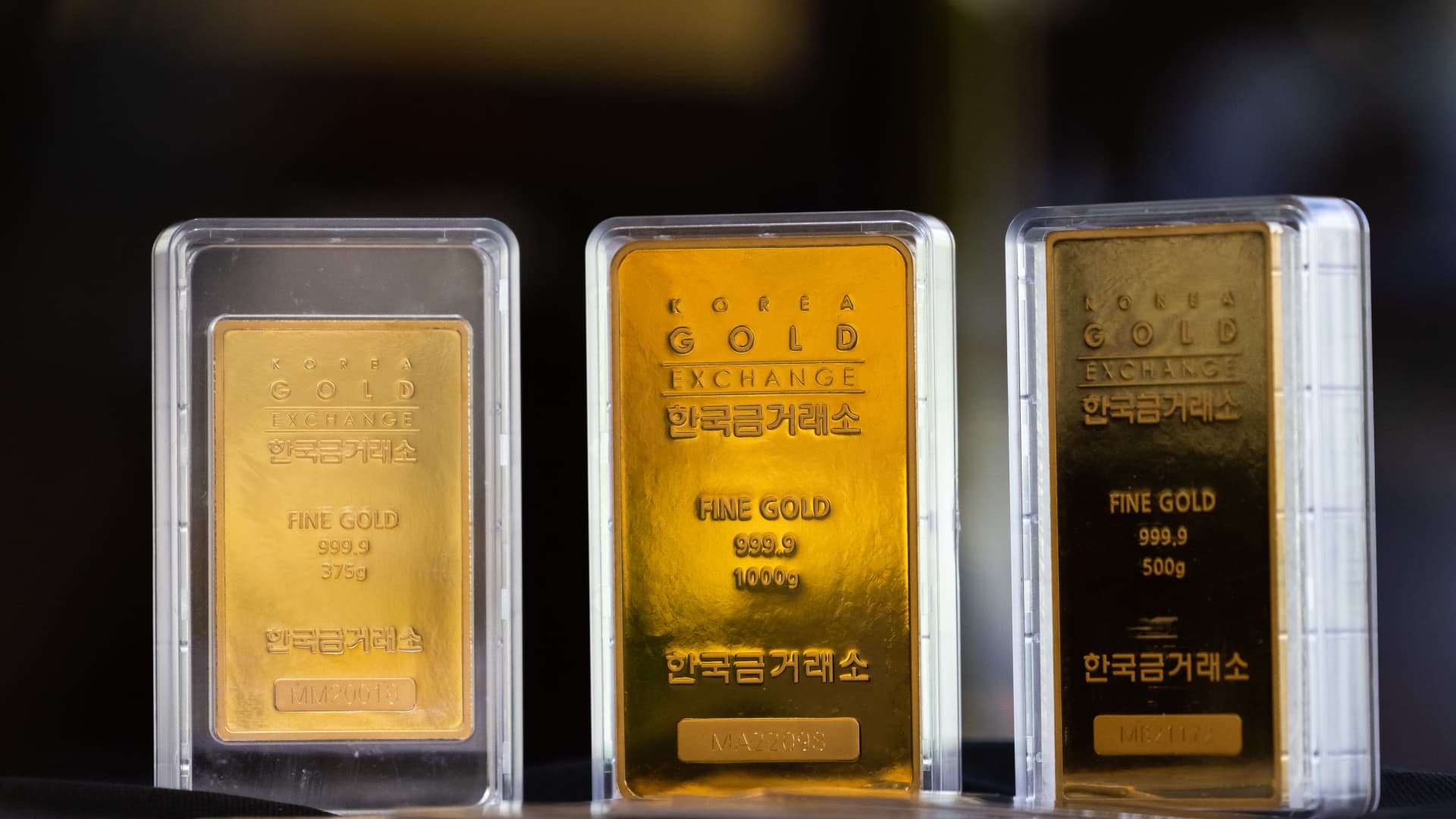
Gold Bar Scarcity Hits South Korea's Mint
The Korea Minting and Security Printing Corporation (KOMSCO), South Korea's government mint, finds itself in a dilemma, struggling with an insufficient supply of gold bars amid soaring demand.
Recently, KOMSCO announced a halt on gold bar distribution due to difficulties in acquiring the necessary raw gold. The suspension impacts commercial banks, retail stores, and online platforms that rely on the mint for supply.
In Seoul, gold bars, small enough to fit on a fingernail, have flown off the shelves as customers seek secure investment options.
Robin Tsui, Asia-Pacific gold strategist at State Street Global Advisors, observed that South Korean banks have temporarily ceased gold sales upon KOMSCO’s request, as national reserves fall short of meeting the burgeoning local demand.
The heightened interest in gold is largely driven by retail investors looking for a safe investment in the face of domestic political instability and unease over global economic tensions exacerbated by U.S. tariffs.
Political and Economic Instabilities
Political unrest in South Korea, including an impending impeachment decision for President Yoon Suk Yeol following a controversial martial law declaration, has fueled this rush into gold.
The political landscape is further complicated by the removal of former acting president Han Duck-soo, bringing fresh waves of political uncertainty. Public dissatisfaction is also directed at current acting president Choi Sang-mok.
Add to this the potential escalation in international trade tensions following Trump's reelection, which introduces additional economic uncertainties for South Korean investors.
Ray Jia, from the World Gold Council, pointed out that the substantial depreciation of the Korean won, especially in late 2024, has prompted more investors to turn their savings toward gold, seeing it as a reliable hedge.
Investment Trends and Market Reactions
In the last quarter of the previous year, South Korean investments in gold bars and coins soared by nearly a third, in parallel with the won’s significant drop compared to the U.S. dollar.
Meanwhile, South Korea’s stock market has not offered enticing alternatives, which has only intensified the shift to gold. Bernard Dahdah from Natixis noted that skepticism about any asset often drives investors to seek refuge in gold.
Though the Korean stock index enjoyed a small rise since December, gold outshone these gains, prompting a significant exodus of local investors from equities.
Global Supply Challenges
While South Korea experiences strong gold demand, the bigger picture involves widespread shortages exacerbated by international factors.
Increased U.S. demand due to anticipated tariffs on North American goods has led to gold being redirected, decreasing availability in markets like South Korea.
Nicky Shiels from MKS Pamp highlights the shifting dynamics where gold is increasingly pulled towards U.S. markets, resulting in scarcity within other regions such as London and Seoul.
Strategies have emerged where South Korean dealers receive offers to sell entire stocks domestically, only to transport them to markets like New York for better premiums.
John Reade from the World Gold Council explains that attractive incentives might encourage local refineries to produce larger gold bars for export, mirroring shifts in global supply chains.
Leave a Reply