


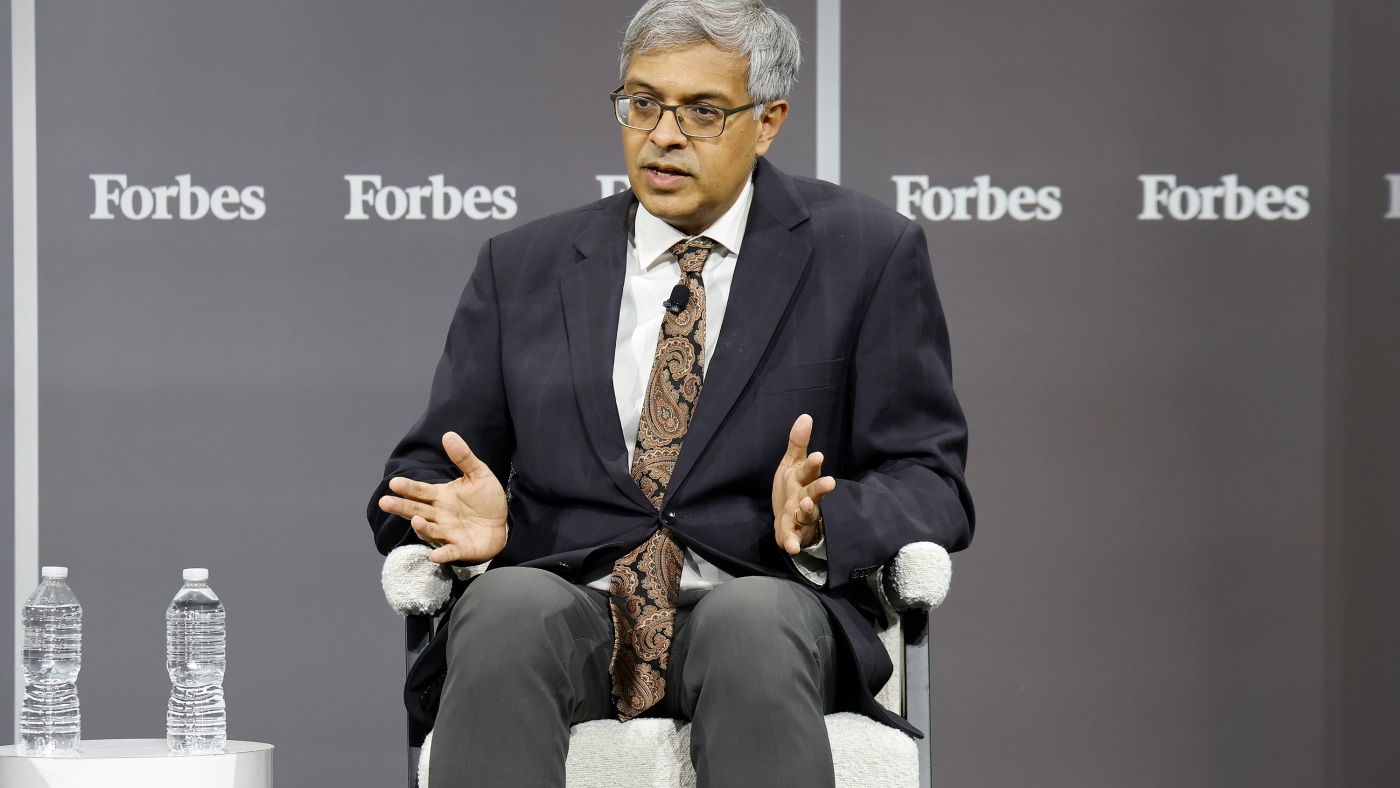
Senate Examines Nominee for NIH Leadership
President Trump has put forward Dr. Jay Bhattacharya, a well-regarded Stanford University health policy scholar, as the candidate to oversee the National Institutes of Health (NIH).
Dr. Bhattacharya has openly criticized the NIH's recent culture, describing it as one marred by concealment and a lack of openness to differing opinions. He is slated to express these views during the confirmation process.
He intends to bring about a shift in agency culture by prioritizing free academic discourse and encouraging varied scientific opinions within NIH.
Acknowledging the importance of diverse viewpoints in scientific inquiry, Bhattacharya aims to cultivate an environment where even young NIH scientists feel comfortable expressing dissent.
Previously, Bhattacharya has been at odds with NIH policies, especially around strategies implemented during the pandemic.
As Bhattacharya prepares for questioning by the Senate Health, Education, Labor and Pensions Committee regarding his strategic vision for advancing global biomedical research, he has refrained from engaging with media inquiries.
Acknowledging the NIH's historical role in major scientific breakthroughs, he pledges to uphold and continue this legacy.
He begins his potential tenure amidst a politically charged landscape in health and biomedical sciences.
Emphasizing the necessity for rigorous, replicable scientific research, Bhattacharya points to current deficiencies in how biomedical research meets these standards.
Detractors highlight Bhattacharya's economic expertise over healthcare as potentially inadequate for leading NIH's diverse scientific mission.
On the other hand, his academic supporters praise his research background and believe his questioning nature might lead to beneficial reforms.
Some acknowledge that while Bhattacharya might disagree with Trump or Kennedy, his leadership could fortify NIH against certain partisan directives.
He identifies a critical juncture for NIH, highlighting public skepticism and advocating a strategic focus on chronic disease research, a perspective aligned with Secretary Kennedy’s views.
Proposed NIH Transformations
As the NIH manages roughly $48 billion in research funding, changes under the current administration have led to significant employee turnover and restricted agency functions, affecting morale.
Efforts to curtail NIH expenditures have sparked legal debates, with potential to dramatically reshape its funding mechanisms.
The administration's decisions have led to concerns among NIH’s researchers about future funding stability.
While a traditionally bipartisan institution, NIH faced unprecedented scrutiny during the pandemic.
During this time, Bhattacharya contributed to a notable document challenging mainstream public health measures such as lockdowns.
Despite criticism describing his approach as outside mainstream science, he stands by the call for open debate.
Bhattacharya has critiqued the NIH for favoring established researchers over innovative, younger scientists.
His goal is to guide NIH towards investing in transformative research rather than incremental advances.
He has garnered support from several academic peers advocating for a streamlining of the NIH's grant processes.
Reforming Governance and Funding Structures
Republicans and conservative groups have put forward plans for overhauling NIH's operations, including a substantial restructuring.
Proposals include reducing NIH's operating centers and possibly shifting funding discretion directly to states, raising concerns among biomedical researchers.
Bhattacharya stresses the importance of closely monitoring risky research, ensuring transparency, and upholding public safety in biomedical studies.
The NIH's approach to contentious studies, like those on embryonic stem cells, may face additional scrutiny amid these proposed changes.
Leave a Reply