


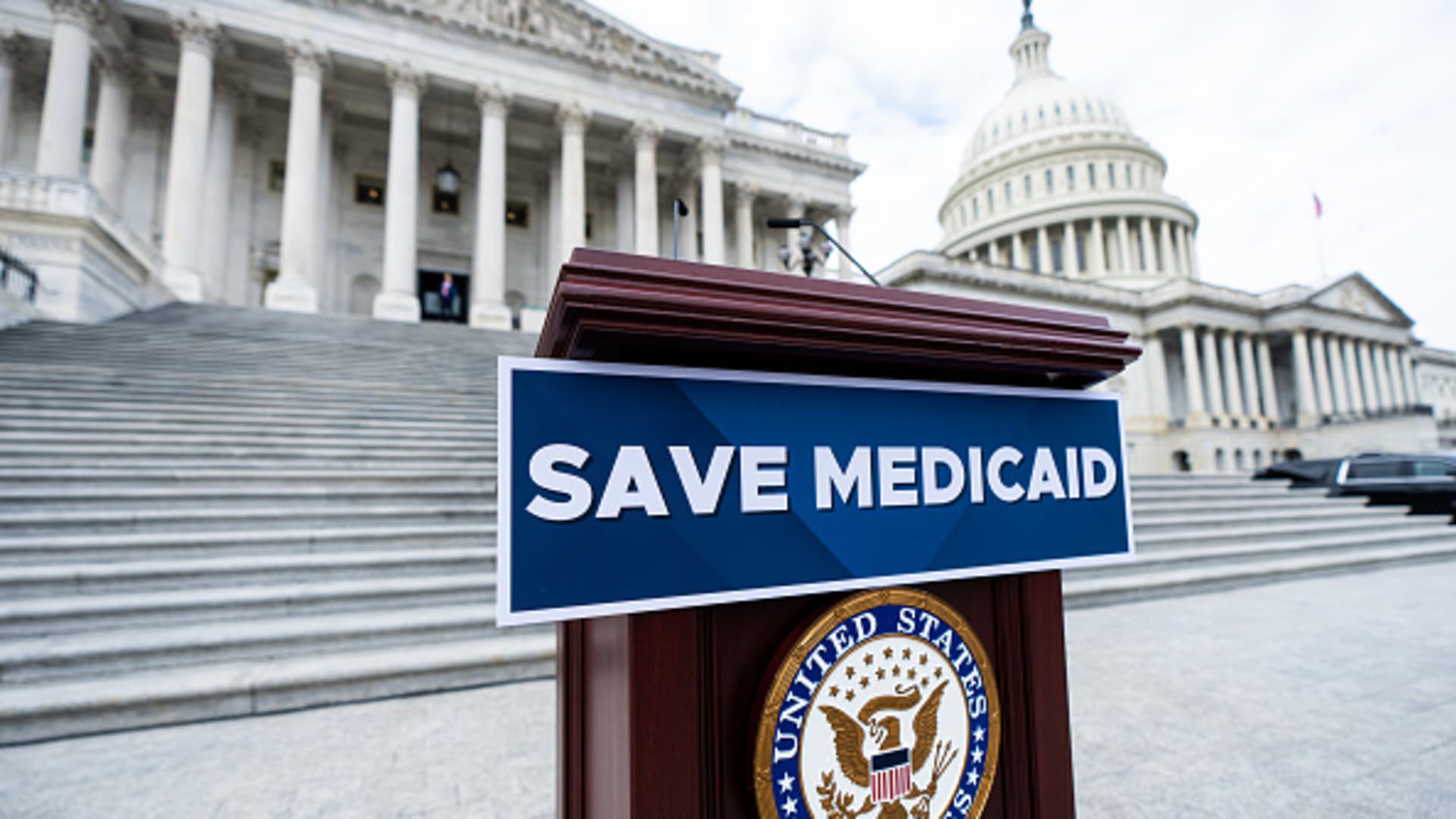
Proposed Congressional Cuts Could Threaten Medicaid and the U.S. Economy, Study Reveals
House Republicans are pushing for substantial budget reductions over the next ten years that might affect Medicaid, a key healthcare program serving millions across the nation.
The House's newly adopted budget plan aims to slash spending as a way to fund the renewal of certain tax cuts ending this year. Tasked with identifying these savings, the House Energy and Commerce Committee oversees Medicaid, though the budget does not specifically mention Medicaid by name.
"It's challenging to identify enough savings under their jurisdiction without significantly cutting Medicaid due to its large scope," explained Josh Bivens, the chief economist at the Economic Policy Institute.
House leaders like Speaker Mike Johnson have articulated a desire to maintain Medicaid funding, aligning with former President Donald Trump's pledge to preserve the program.
The White House and the Energy and Commerce Committee have not yet responded to requests for comments.
Medicaid cuts would affect over 80 million monthly beneficiaries, including working-class people and elderly individuals who utilize its long-term care services, according to Bivens.
As the primary federal initiative targeted at poverty alleviation, reductions in Medicaid funding would intensify challenges faced by economically disadvantaged families, according to findings from the Economic Policy Institute.
Furthermore, cuts of this magnitude could increase the United States' susceptibility to a financial downturn, the research indicates.
Significant Economic Impacts of Medicaid Cuts
The Economic Policy Institute notes that reducing Medicaid spending to support tax breaks from the Tax Cuts and Jobs Act would substantially affect national expenditure.
Opinions diverge along party lines regarding the consequences of extending these tax benefits. Democrats contend that such an extension favors wealthy individuals, while Republicans argue it might provide significant gains to low and middle-income earners. Reports identify high-income groups as primary beneficiaries.
EPI anticipates that any financial savings high-income earners accrue from tax cuts would likely not translate into increased spending.
Conversely, Medicaid beneficiaries facing cutbacks might lower their healthcare spending, potentially skipping medical appointments, as noted in the EPI report. Those with less extensive Medicaid coverage could face higher costs, limiting their spending power in other areas.
Every dollar reduced from Medicaid holds greater economic consequences than an equivalent tax cut for affluent individuals, Bivens highlighted. Assistance freed by Medicaid often enables spending elsewhere by low-income earners, while cuts inhibit their spending capacity.
A proposed $880 billion reduction in Medicaid could lead to a 0.5% economic slowdown, surging the unemployment rate by 0.3 percentage points, potentially resulting in 550,000 more unemployed individuals.
The Federal Reserve might lower interest rates from 4.25% to around 2.5% to combat this slowed growth, yet this limits their ability to counter any additional economic risks.
Research by the Commonwealth Fund suggests that Medicaid expansions bring extra federal funds that boost state economies. Such expansions enhance state outputs, gross products, and personal incomes, benefiting the wider national economy.
Leave a Reply