


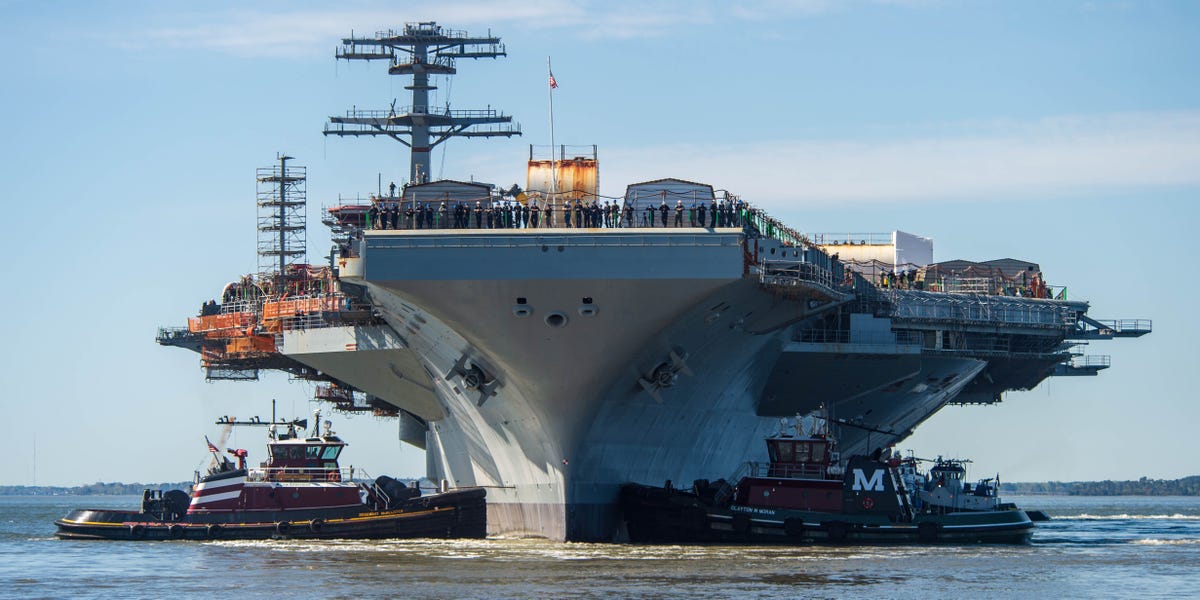
Challenges Ahead for Trump's Shipbuilding Ambitions
President Donald Trump has articulated a vision for the United States to rapidly increase its ship production. Tackling the impediments in military shipbuilding presents significant challenges that are not swiftly remedied.
In his address to Congress, President Trump revealed his aspiration to rejuvenate the American shipbuilding sector, encompassing both civilian and military shipbuilding. He introduced the establishment of a dedicated office within the White House to spearhead these efforts.
"We used to produce a vast number of ships," Trump mentioned. "Though production has dwindled, we aim to ramp up quickly, impacting national security positively."
While specifics of this new strategy remain sparse, Trump mentioned forthcoming tax incentives designed to bolster domestic manufacturing. The White House has provided limited additional insights on this matter.
Revitalizing a Faltering Industry
The objective is to address longstanding issues plaguing U.S. shipbuilding, particularly significant financial overruns and delays that have troubled the Navy.
As China forges ahead as a major shipbuilding force, revitalizing the U.S. industry is crucial, though challenges are deeply rooted. Complexities in restoring shipbuilding have been a concern in Washington, DC, within the military, and across the defense industry.
The sobering assessment by National Security Advisor Mike Waltz labeled American shipbuilding as severely troubled, with delays and rising costs being critical issues.
An examination by the Navy last year revealed extensive delays and budget overruns in major programs, like key submarines and surface ships.
Historical and Financial Challenges
The exorbitant costs are a significant barrier to increasing ship output, noted Bryan McGrath, a defense consultant and former Navy commander. He added that Trump-era tariffs might exacerbate this issue.
However, the problem extends beyond finances, harkening back to the gradual decay of the industrial base post-Cold War, which diminished the domestic shipbuilding industry for both new vessel construction and current fleet maintenance.
"Even with limitless funding today, the Navy faces a bottleneck due to a weakened industrial base," remarked Senator Roger Wicker. Efforts are needed to reestablish this foundational capability.
Perspectives and Potential Solutions
Trump administration officials, including those awaiting confirmation, emphasized restoring shipbuilding as a priority. John Phelan, nominee for Secretary of the Navy, highlighted initiatives to stimulate industry investments and attract skilled talents through competitive wages.
Labor shortages are notable; insights from Tom Moore, of Hudson Ingalls Industries, highlighted the dwindling experienced workforce over recent decades. Current workers possess significantly less experience compared to previous generations.
Learning from successful international shipyards, such as those in Japan and South Korea, might offer insights. Although Trump pledged to revitalize the domestic industry, he did not delve into specifics.
Potential Pitfalls and Strategic Focus
While the move to boost U.S. shipbuilding receives lukewarm support, McGrath raised concerns about scaling both commercial and military shipbuilding simultaneously, given workforce limitations. He suggests concentrating on military shipbuilding.
Ultimately, the financial implications are daunting. McGrath underscored that aligning Navy's growth with changing geopolitical needs may render expanding the fleet unjustified unless strategic shifts necessitate it.
The Navy has embarked on a long-term strategy to increase its fleet from the current 296 to 381 crewed ships by 2045. This massive undertaking could entail annual costs upward of $40 billion, according to the Congressional Budget Office.
Leave a Reply