


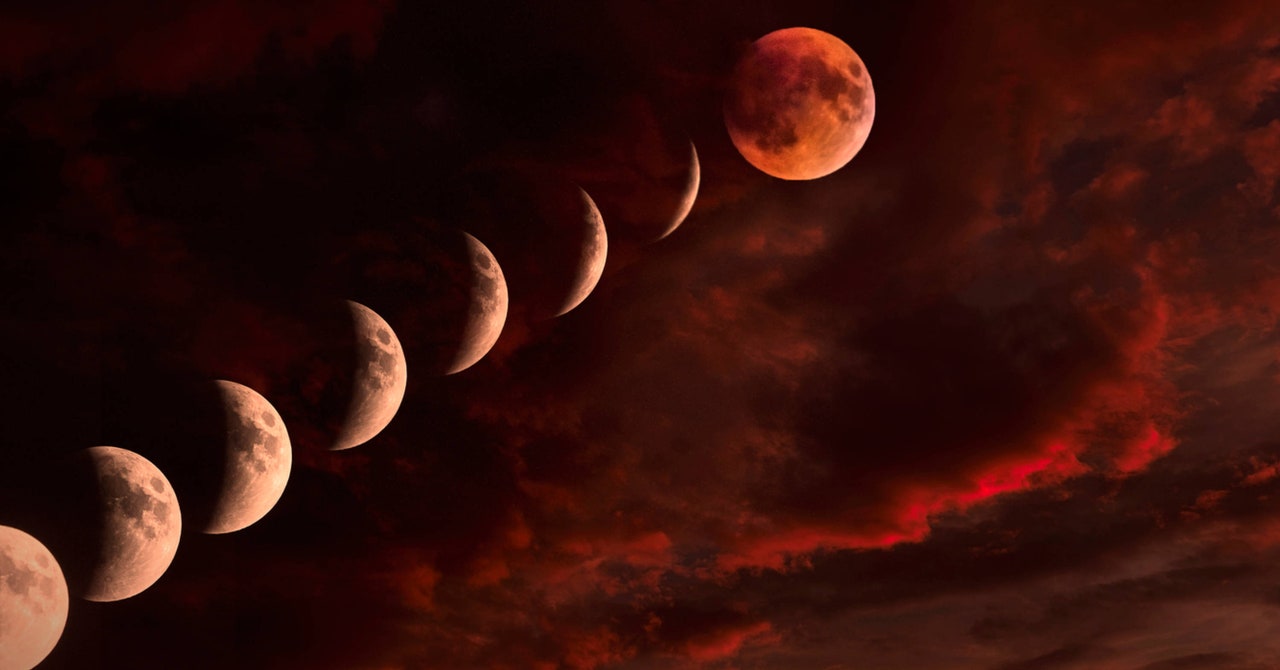
Witness the Total Lunar Eclipse and the Stunning Blood Moon This Month
Sky enthusiasts in the Americas are in for a celestial treat this month. In the wee hours of March 14, they'll have the chance to observe a striking total lunar eclipse. Rather than vanishing, the moon will don a deep red hue.
A lunar eclipse occurs when Earth obstructs the sunlight that usually brightens the moon. On the evening of March 13 and early morning of March 14, our planet's darkest shadow, known as the umbra, will cloak the moon during a full moon phase. While partial lunar eclipses happen regularly, the ones coinciding with a full moon are far less frequent. Typically, any specific area on Earth can expect to see a total lunar eclipse only once in about 2.5 years.
This year offers another chance to witness a total lunar eclipse on September 7, which will be visible in regions such as eastern Africa, much of Asia, and the western side of Australia.
Understanding the Blood Moon Phenomenon
The moon takes on a reddish hue during a lunar eclipse due to interactions with Earth's atmosphere. White sunlight is a mixture of different colors and frequencies, which can scatter or bend depending on the distance they traverse through the atmosphere. This scattering effect explains why the sky appears blue when the sun is overhead but shifts to red at sunset, as the sun's rays travel further through the atmosphere.
During the eclipse, sunlight passing through Earth's atmosphere scatters, and shorter wavelengths in the blue spectrum are redirected away from the umbra. Meanwhile, the longer wavelengths, found in the red part of the spectrum, bend and illuminate the moon.
When and Where to Catch the Eclipse
Based on NASA's schedule, the lunar eclipse kicks off at 8:57 p.m. Pacific Time. In Mexico, viewers will see it start at 10:57 p.m. CDT, while in Argentina it begins at 12:57 a.m. ART, and 5:57 a.m. CET in Spain. As Earth's shadow incrementally covers the moon, spectators will notice a gradual decrease in brightness, culminating in the distinct blood-red appearance of the total eclipse at approximately 11:26 p.m. PDT, lasting around an hour.
Here's a breakdown of when totality, or the full blood moon stage, will commence in other parts of the Americas:
For those in Spain, totality will hit at 8:25 a.m., posing daylight as a potential viewing obstacle. However, the phases preceding the eclipse can still be appreciated before daybreak.
Tips for Viewing the Lunar Eclipse
To fully experience this celestial display, astronomers suggest staying away from urban areas with significant light pollution. Head to higher ground without obstruction from structures or foliage. Utilizing binoculars or a telescope can enhance your view. For photography enthusiasts, use a camera on a tripod with extended exposure times for optimal images.
Leave a Reply