


TSMC to Pour $100 Billion into U.S. Chip Production, Trump Reveals
In a significant announcement, Taiwan Semiconductor Manufacturing Co. (TSMC) has committed to injecting $100 billion into semiconductor manufacturing in the United States, as stated by President Donald Trump. This investment is in addition to the previously declared $65 billion.
TSMC, renowned as the leading semiconductor producer globally, supplies essential chips to tech giants like Apple, Intel, and Nvidia. The firm has already initiated the construction of three fabrication plants in Arizona, spurred by substantial financial incentives from the Biden Administration. As a testament to this progress, the first Arizona facility is operational, producing cutting-edge 4-nanometer chips.
Economic and Strategic Motives
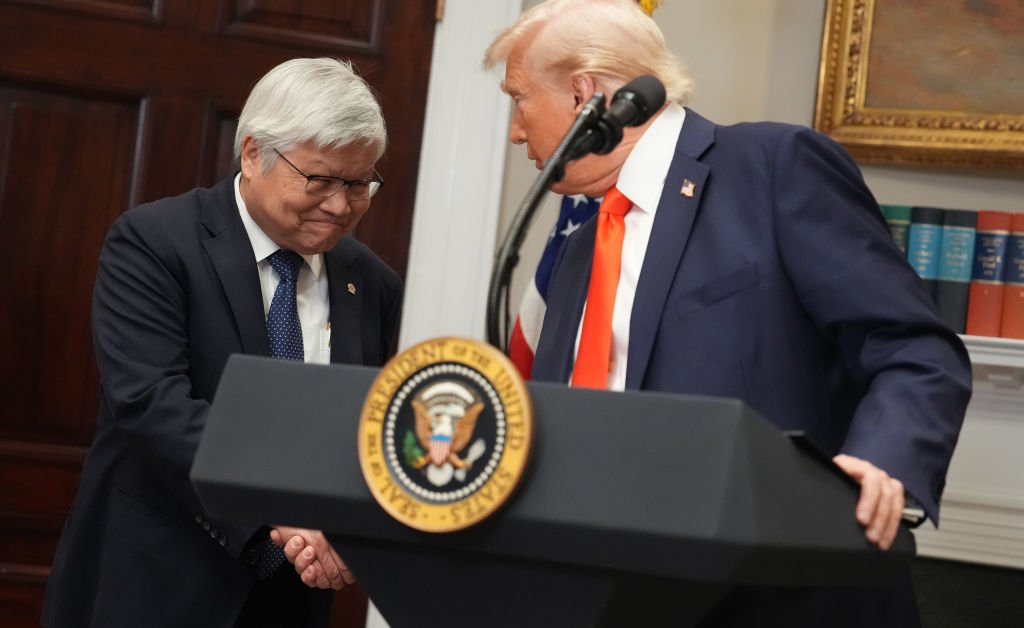
During a White House event, President Trump shared the stage with TSMC CEO C. C. Wei, hailing the investment as a seismic economic maneuver and a critical step toward national economic security. Trump emphasized the indispensable role of semiconductors in powering modern economies, from artificial intelligence applications to vehicle manufacturing.
Wei elaborated that the extensive investment would facilitate the construction of three additional chip factories and two packaging plants in the state of Arizona, projecting the creation of numerous high-paying jobs.
The Political Backdrop
Previous legislative efforts such as the CHIPS and Science Act, endorsed by former President Joe Biden in 2022, aim to boost domestic chip production following COVID-19 disruptions that exposed vulnerabilities in overseas manufacturing. The resultant supply chain issues had far-reaching economic implications, not least for the automotive industry.
Contrasting with Biden's approach, Trump criticized such subsidies, opting instead for potentially imposing tariffs on imported semiconductors to incentivize domestic production. Additionally, Trump suggested that firms like TSMC do not require federal tax incentives.
U.S.-Taiwan Relations in Focus
Amidst ongoing tensions, Trump was queried about whether this investment might reduce U.S. vulnerability in the hypothetical event of Chinese aggression towards Taiwan. Although he didn't downplay the potential gravity of such a scenario, he noted that having a significant portion of chip production stateside enhances America's standing in this critical industry.
The Taipei Economic and Cultural Representative Office in the United States expressed satisfaction with the expansion of Taiwanese investments, noting that such ventures strengthen economic and trade ties between the nations.
Strategic Implications and Future Outlook
Bonnie Glaser from the German Marshall Fund of the U.S. highlighted Taipei's strategic engagement to ensure a robust U.S.-Taiwan partnership. This initiative aligns with Trump’s domestic economic goals by leveraging TSMC’s substantial investment to foster strong bilateral relations.
Trump's broader economic strategy has frequently featured engagements with corporate leaders to showcase the influx of foreign investments as beneficial to the U.S. economy. His discussions often touch upon leveraging tariffs as a motivating factor for these business decisions.
Leave a Reply