


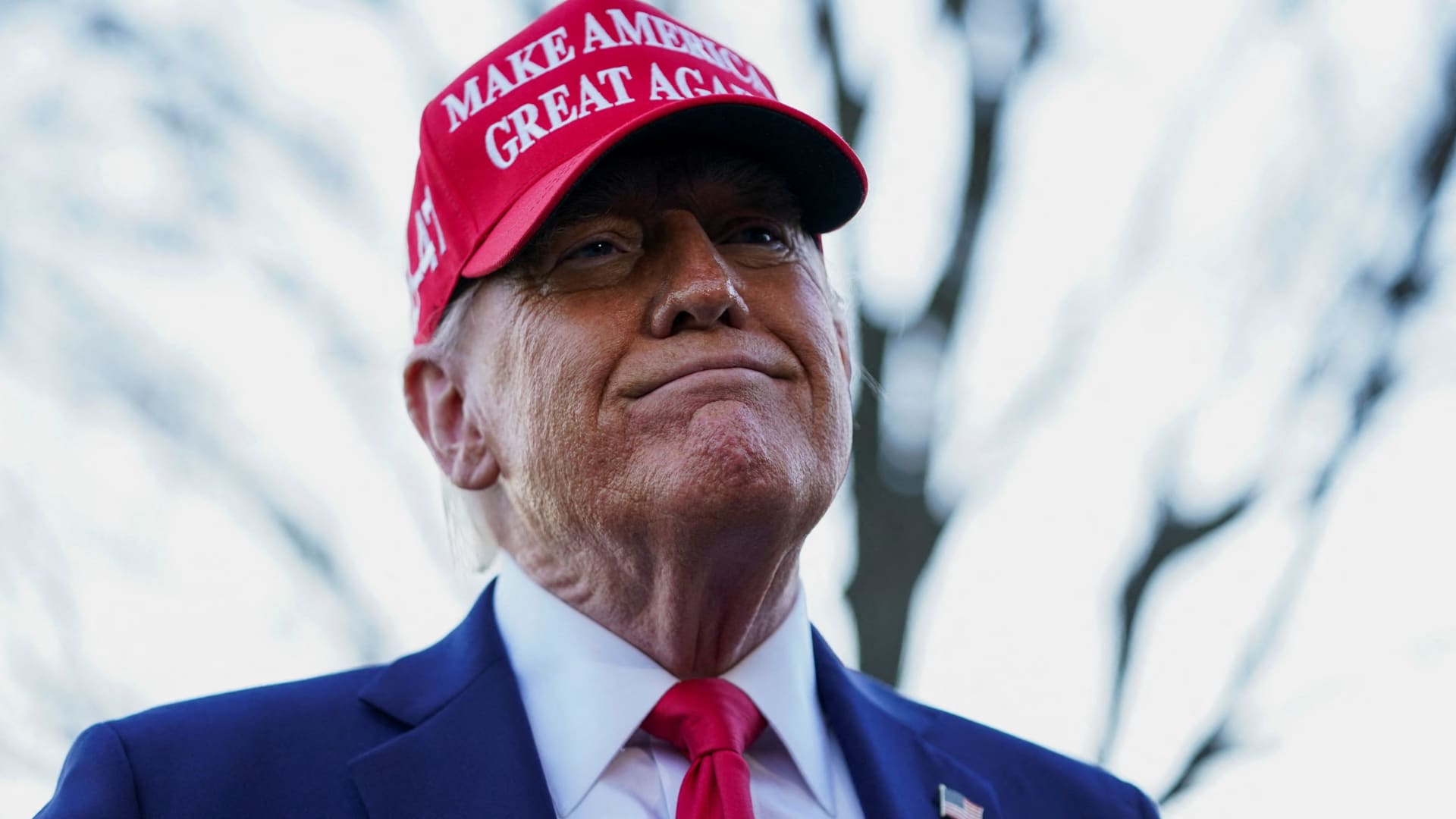
Trump's Tariff Moves: Unprecedented Power with Inherent Challenges
Importers in the United States are now grappling with the immediate consequences of President Trump's bold decision to implement emergency economic measures.
As of Tuesday midnight, imports from the nation's neighboring countries, Canada and Mexico, face a 25% tariff. Concurrently, an additional tariff of 10% was imposed on goods from China. Energy products from Canada will see a more moderate tariff of 10% as well.
The scope and speed at which these tariffs impact trade is immense and will quickly ripple throughout the economy.
Immediate Economic Impact
Last year, trade between the U.S. and Canada, Mexico, and China formed a significant portion of global commerce in goods. These new tariffs aim for immediate economic impact, as trade analysts explain.
Daniel Anthony, head of Trade Partnership Worldwide, draws a simple analogy: tariffs are like a switch that can be turned on instantly, levying additional costs for importers overnight.
For instance, when limes from Mexico totaling $100,000 entered the U.S., the cost for the importer soared by $25,000, a sum to be paid to U.S. Customs as soon as they cross the border.
Even in cases where tariffs weren't collected as scheduled, importers can anticipate being billed later, a situation akin to adding a forgotten tip to an Uber receipt.
Exercising Presidential Authority
These actions underscore the vast powers the President wields under the guise of national security, utilizing the International Emergency Economic Powers Act (IEEPA) in a novel manner.
Traditionally reserved for imposing sanctions on overseas dictatorships or terror groups, the Trump administration claims the IEEPA's activation is justified by threats such as global fentanyl trafficking and border immigration issues.
This unprecedented deployment of the law invites potential legal challenges due to its expansive application.
Economic Consequences on Consumers
For everyday Americans, these tariffs could translate into increased household expenses, which the Tax Policy Center predicts might rise by nearly $930 annually by 2026 due to the levies on Mexican and Canadian imports.
While President Trump's tariffs emphasize his command over international trade, they highlight limits when facing logistical hurdles, such as those encountered with de-minimis shipments.
De Minimis Dilemma
The issue of 'de minimis' imports—shipments valued at $800 or less and traditionally exempt from tariffs—presents significant logistical difficulties.
Major e-commerce platforms leverage this exemption, shipping directly to U.S. consumers, a trend that complicates the collection of tariffs on these low-value goods.
Nicole Collinson, with her background in trade negotiations, notes that the infrastructure to manage typical imports doesn't exist for de-minimis goods.
To process over 1.3 billion shipments last year alone that bypassed tariffs, experts suggest a need for increased customs staffing.
Despite this, an order was issued in February to start collecting tariffs on these smaller shipments, causing disruption within international postal frameworks.
The USPS, after suspending and resuming these deliveries, had to relent on immediate tariff collections, pending sufficient systemic readiness.
The broader economic strategy may sound viable, yet actual enforcement remains uncertain until infrastructures are equipped to handle increased loads.
Achieving the intended impact of these tariffs fundamentally depends on the capacity to implement them efficiently.
Leave a Reply