


Trump's Second Term: Key Developments and International Relations
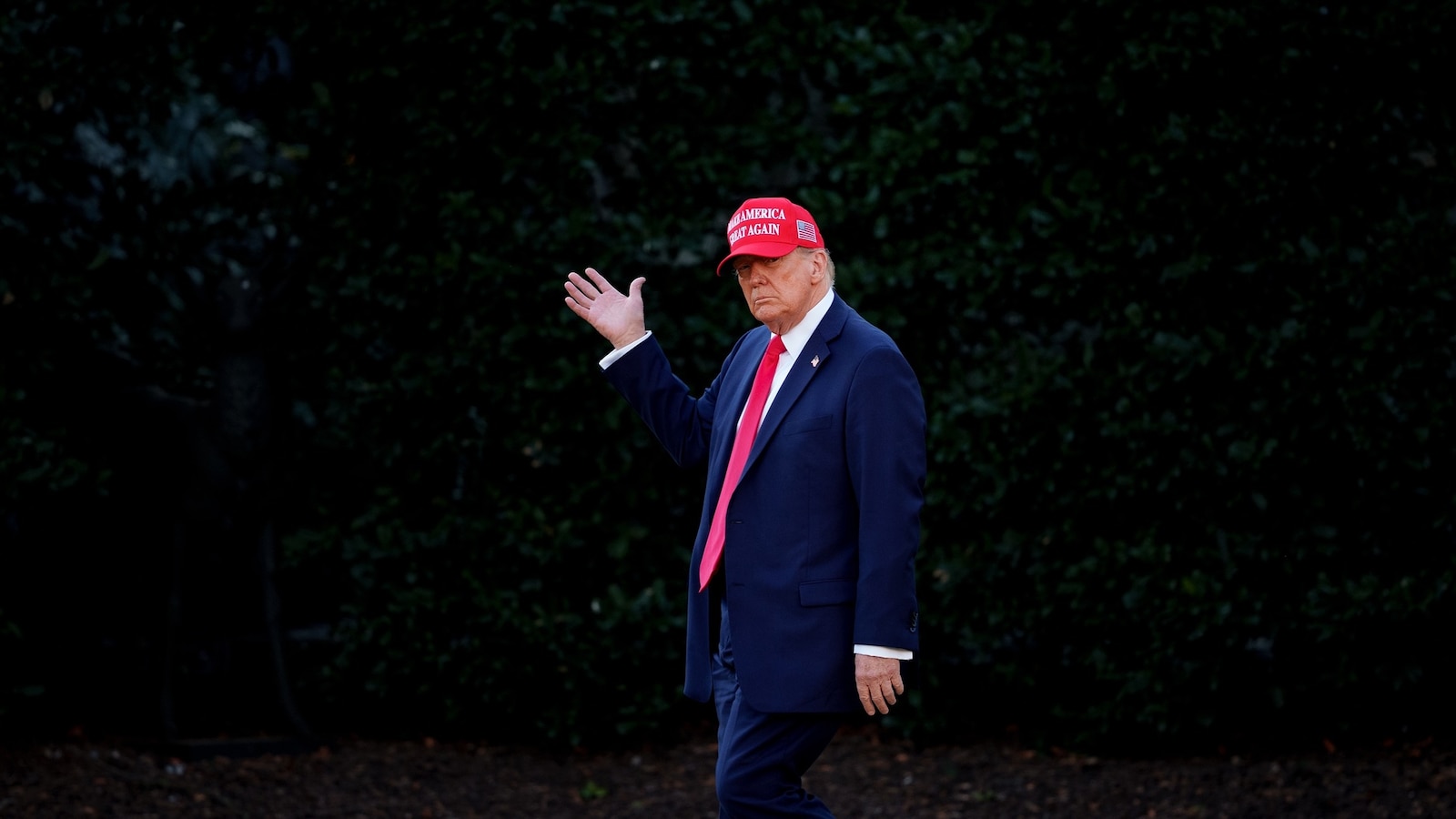
In President Donald Trump's second term, his administration maintains its ambition to reform the U.S. federal structure and emphasize the 'America First' agenda, significantly affecting assistance to Ukraine.
Supporters from within Trump's team and his Republican allies advocated robustly for his strategies over the weekend, particularly after his interaction with President Volodymyr Zelenskyy. Concurrently, European officials have been establishing their frameworks for potential peace solutions.
International Trade Policies Adjustments
Anticipation builds as President Trump prepares to enforce postponed tariffs on products from Mexico and Canada, alongside elevated duties on Chinese imports, expected to be enacted on Tuesday.
Intelligence Community Concerns
Tulsi Gabbard, the Director of National Intelligence, claims President Trump is singularly capable of terminating Russia's involvement in the Ukrainian conflict. She stresses that President Zelenskyy's aspirations remain firmly tied to achieving a discernable victory for Ukraine.
During an interview on Fox News, Gabbard remarked that Trump's awareness of the ongoing war's dire situation positions him uniquely to resolve the tensions after a prolonged three-year conflict.
Despite Gabbard's comments, she acknowledges Zelenskyy's contrasting objectives, expressing that the Ukrainian leader's determination to finalize this war stems from securing a resolution perceived as beneficial for Ukraine, potentially risking the escalation to global or even nuclear conflict.
Gabbard also proposes that revitalizing mutual goodwill in negotiations is crucial and could serve as a foundational element for any future dialogues between Trump and Zelenskyy.
Trade Tariffs on Mexico and Canada
On Sunday, President Trump made amendments to two executive orders, which now exclude shipments of lower value from the forthcoming tariffs targeting imports from both Canada and Mexico.
Originally intended as a pause to allow negotiation periods, the decision suggests a potential determination by the White House to proceed with the tariffs.
These amendments, impacting previous initiatives to curtail drug trafficking into the U.S., create a window for exempting Canadian and Mexican goods valued below $800, until a robust infrastructural system to regulate these imports is established.
The new policy grants the Commerce Secretary, Howard Lutnick, the authority to implement tariffs once the corresponding system is deployed.
Concern arises amongst intelligence communities about the recruitment of recently dismissed federal workers by foreign threats such as Russia and China, triggering discussions and warnings within agencies, as reported by ABC News.
John Cohen, former acting undersecretary for intelligence at the Department of Homeland Security, highlighted the risk, illustrating how foreign espionage easily identifies disgruntled, financially struggling individuals online for recruitment.
Cohen compared the U.S. response to potential foreign recruitment with proactive strategies the U.S. would employ if roles were reversed with countries like Russia or China, underscoring the security complexities posed by large-scale layoffs.
Leave a Reply