


The Perilous Plight of Florida Panthers: The Costs of Expansion
An incident occurred early January involving a young male Florida panther, aged two, known to researchers as UCFP479. It marked the year's first road fatality for this endangered species in a rural area of southwest Florida. Two weeks passed, and another incident claimed the life of a ten-year-old female panther approximately 70 miles from the first one.
These unfortunate events won't mark the end of panther fatalities this year.
Throughout 2024, state wildlife officials have projected a rise in panther deaths, the highest since 2016. Most of these tragedies are linked to vehicle collisions, with rare incidents involving trains.
Currently, between 120 and 230 adult panthers reside in southwestern Florida's wild, grappling with rising human populations and the subsequent habitat encroachment.
According to an organization dedicated to reducing vehicular deaths among panthers, over the past ten years, 239 Florida panthers have fallen victim to vehicle collisions—surpassing the current estimated population of adult panthers.
Vanishing Habitats
Once wandering vast stretches of the southeastern United States, the Florida panther has dwindled due to hunting and habitat destruction. Now, they've been relegated to a constrained area of approximately two million acres.
Large-scale developments are transforming what were once secluded roads in Collier and Lee counties, promising thousands of homes and an inevitable surge in traffic.
Sierra Club's Michael McGrath affirmed the looming crisis during a tour of panther habitat for journalists and activists, emphasizing, "We're reaching a turning point. Sprawl claims lives."
Environmental advocates continue to resist unchecked development, vowing to persist in their efforts.
Amber Crooks of the Conservancy of Southwest Florida describes the struggle as crucial, stating, "Every piece of land here is critical for panthers—we must persevere until decisions are final."
With despair, Elise Bennett of the Center for Biological Diversity articulated, "Our increasing population, alongside growing infrastructure and traffic, is squeezing Florida panthers to the edges of their last territory." Most fatalities occur in southwestern Florida, right at the heart of this confinement.
Endeavors for Preservation
Florida panthers represent the sole established puma population east of the Mississippi, classified as federally endangered since 1967. A refuge encompassing 26,600 acres was founded in 1989 near the Big Cypress National Preserve, adjacent to the Everglades.
Starting in 1981, state efforts began capturing panthers to assess their health, administer vaccinations, collect genetic material, and equip them with tracking collars.
In the 1990s, the panther population dwindled to around fifty, partially due to inbreeding issues. To combat this, Texas pumas were introduced for genetic diversity, aiding in population recovery. These offspring are considered Florida panthers and are shielded under the Endangered Species Act.
Identifying the Panthers
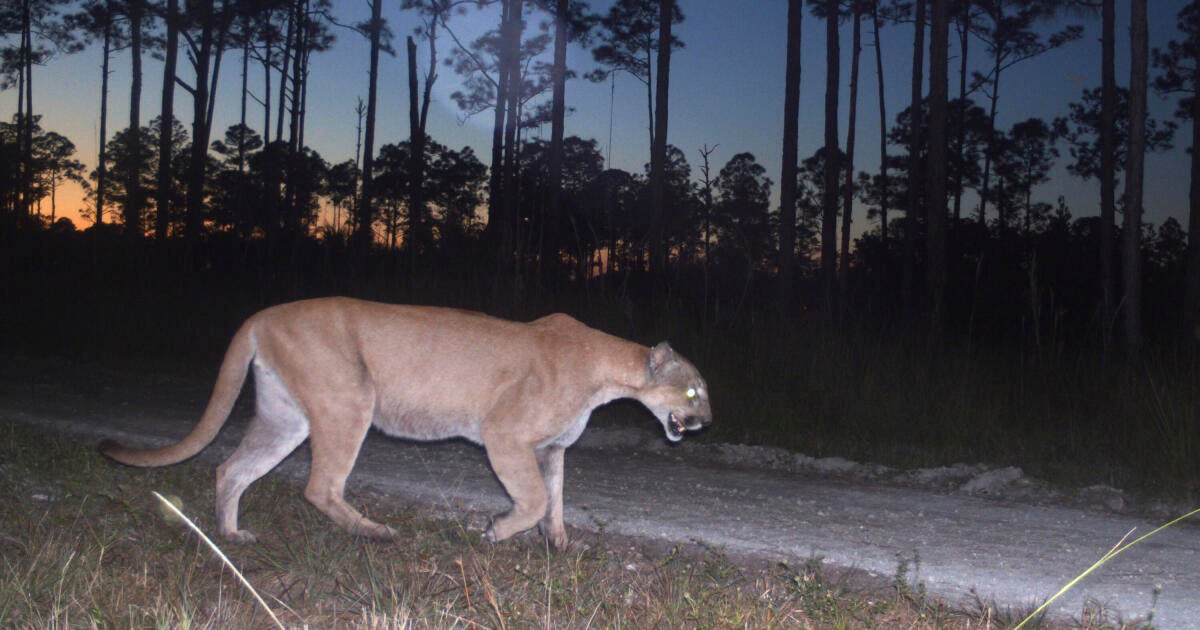
Having a resemblance to their western relatives, Florida panthers feature beige coats with white undersides. Their diet primarily consists of deer and raccoons.
Male panthers often journey farther than females to claim territory, sometimes wandering near Orlando. Unfortunately, this tendency exposes them to greater risks of vehicular accidents.
Additional Hazards
Panther populations are also at risk from diseases, including one akin to feline leukemia, usually contracted from domestic cats. Bobcats in the region face similar health threats.
In 2002, a bout of feline leukemia claimed the lives of at least five panthers, according to federal wildlife experts.
Another emerging ailment manifests as hind leg weakness among some panthers and bobcats, causing them to appear unsteady, as captured on trail cameras.
Authorities encourage the public to share any visual evidence of wildlife displaying rear-leg difficulties, providing valuable insights into these health challenges.
Leave a Reply