


Innovative Approach from Colombia: A 'Hotel for Cows' to Combat Amazon Deforestation
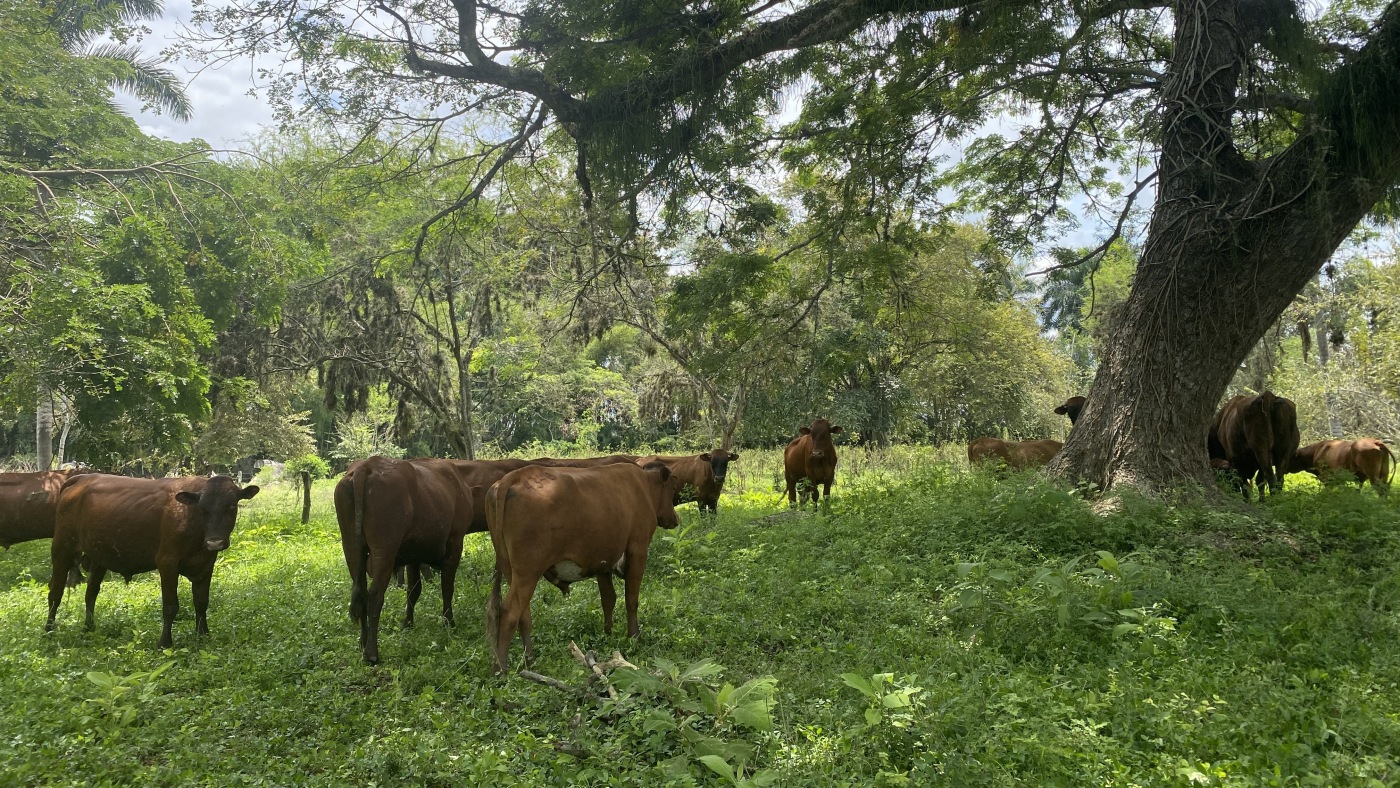
A collection of brown cows gathers under the shade of lush trees at the El Hatico farm close to Cali, Colombia. Researchers believe that this form of silvopasture could play a significant role in mitigating deforestation across Latin America.
Carlos Hernando Molina, strolling through the verdant surroundings of his ancestral family farm, now transformed into a pioneering agricultural model, signals his cows. The farm has been under the care of the Molinas since the 1700s. Historically, their cattle roamed open fields exposed to the sun, but over the past thirty years, the family has revolutionized El Hatico's landscape.
"This is like a luxury resort for cattle," says Molina, wearing a broad smile beneath his white straw hat. "We provide comfortable temperatures, high-quality meals, and peaceful resting conditions for the cows."
The sheltering trees, planted by the Molinas across the farm's 130 acres in 1993, offer the essential cooling shade. These trees offer more than comfort; they contribute protein-rich seed pods and leaves required for cow diets.
The farm has mastered a method known as silvopasture. This involves the deliberate blend of timber and pasture with livestock. Thanks to this system, the Molina family reports nearly doubling the livestock density per hectare while also increasing milk production.
The increased output observed through silvopasture is why it is perceived by climate experts as a substantial strategy in curbing deforestation throughout South America.
The Environmental and Economic Impact
Deforestation for cattle ranching poses a giant threat, shrinking biodiversity habitats and emitting significant volumes of CO2. The Amazon, crucial for maintaining regional precipitation, becomes less effective when too many trees are removed, exacerbating climate warming.
Reducing overall beef and dairy consumption is pivotal for preserving the Amazon and lessening global warming, according to Tim Searchinger from Princeton University. "A decreased reliance on beef directly benefits the climate," he contends.
Yet, by enhancing cattle farm productivity, silvopasture can alleviate the pressure to clear rainforests. "The unique opportunity in Latin America is maximizing silvopastoral techniques to significantly boost yield," comments Searchinger.
Most dairy and beef operations across Latin America are inefficient, illustrates Searchinger. Often, livestock graze sparse pastures, poorly fed and spread across substantial land.
However, in silvopasture setups enriched with grasses, leaves, and tree seeds, cattle can reach slaughter readiness more rapidly. A truncated lifecycle reduces land requirements, remarks Julián Chára, a researcher evaluating systems like El Hatico. Additionally, high-quality diets improve dairy outputs.
Research and Real-World Applications
Research at the International Center for Tropical Agriculture, led by scientist Jacobo Arango, contrasts two cattle groups – one in silvopasture and another solely in open pastures. Findings suggest silvopasture leads to improved performance and reduced methane emissions.
Fertile, dark soil, resultant from nitrogen-fixing bacteria in the farm's legumes, negates the need for synthetic fertilizers, says Molina. This approach not only conserves financial resources but drastically cuts climate pollutants associated with energy-intensive fertilizer production.
Tree cover also moderates temperatures and preserves soil moisture, reducing the need for irrigation which proved vital during recent droughts.
Challenges and Future Considerations
While silvopasture offers environmental benefits, it's no panacea, suggests an NYU environmental studies professor. Successful rainforest conservation requires supplementary policies and enforcement against deforestation.
Brazil and Colombia provide instructive examples, with deforestation policies needing to transcend beyond legal frameworks to enforcement mechanisms to effectively combat illegal activities.
Carbon offset strategies, promoting tree planting on pasturelands, face criticism too, mostly over the persistence needed to realize long-term atmospheric benefits.
The need to curb beef and dairy consumption remains a priority. "We must considerably lessen our intake," insists Hayek. These sacrifices, coupled with smart farming like silvopasture, offer hope for tropical ecosystems.
El Hatico demonstrates the promising biodiversity outcomes of silvopasture, boasting rich avian fauna, vibrant butterflies, and diverse ant species, serving both environmental and educational purposes.
Leave a Reply