


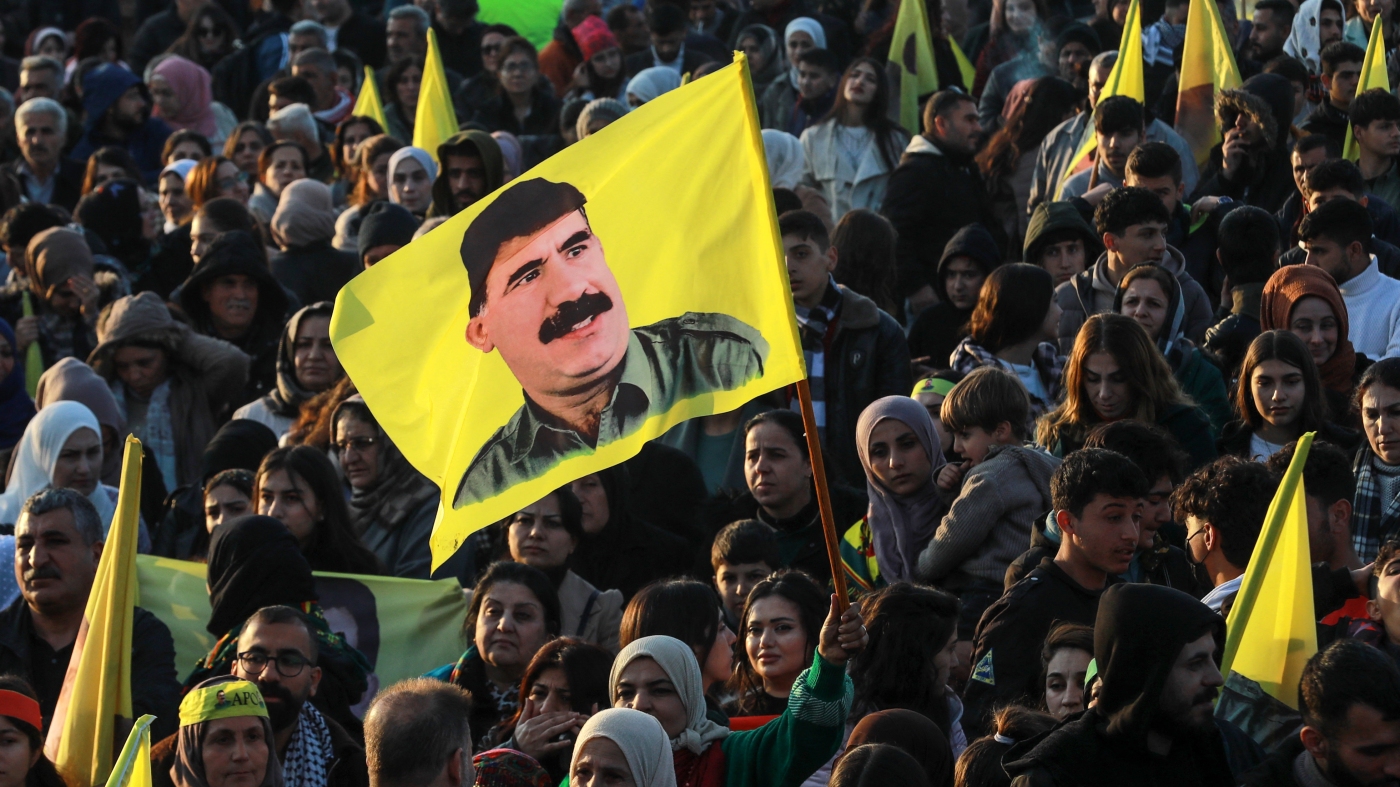
PKK Announces Ceasefire after Longstanding Struggle with Turkey
In a significant political development that could influence Turkish politics, Kurdish rebels from the Kurdistan Workers' Party (PKK) have declared a halt to their decades-long conflict with the state of Turkey.
This announcement follows a call by Abdullah Ocalan, the imprisoned leader of the PKK, who urged disarmament and cessation of hostilities.
The PKK, initially formed during the 1980s to challenge alleged mistreatment of Kurds by Turkey, has been involved in a protracted and deadly insurgency. Although Turkey's military operations have reduced the frequency of major uprisings within its borders in recent years, the group's defiance persisted.
President Recep Tayyip Erdoğan's political associates have driven recent efforts for peace, motivated by possible political dividends such as Kurdish electoral support which could be crucial for any potential constitutional reforms.
Political Context and Motivations
Given his popularity's dependency on various voting blocks, Erdoğan may view Kurdish support as essential. Analysts speculate that negotiation strategies, including Ocalan's potential release, might be central to engaging Kurdish constituents, mainly if they can help amend constitutional constraints limiting Erdoğan's political future.
However, the pro-Kurdish political factions in Turkey have recently faced increasing suppression from Erdoğan's administration, with several elected officials ousted and replaced by pro-government figures.
Challenges to Long-term Peace
While the ceasefire represents forward movement previously unimaginable since earlier disarmament dialogues failed years ago, skepticism lingers regarding the permanence of this peace. Observers note internal and regional complexities, suggesting a mix of hesitancy and hope.
Bill Park of King's College London remarks on the potential discord within PKK's ranks and affiliated groups in Syria who may not fully support the decision. The unity within the PKK around Ocalan's directives might be enforced by his historical influence rather than shared conviction.
Regional Dynamics and Their Role
Developments in Syria may have also prompted the ceasefire. According to Caroline Rose from the News Lines Institute, transformations such as the cooperation between the SDF and Syria’s nascent military forces could significantly influence the PKK's strategy.
A potential restructuring of Kurdish forces within Syria's new military configuration might make way for more cooperation with Turkey, aimed at eradicating remaining ISIS threats. Nonetheless, mistrust towards Erdoğan among Kurds in Syria suggests challenges in acceptance of such collaborations.
Historically, Kurdish communities span geographical regions across Turkey, Iraq, Syria, and Iran, indicating the complex interlinked nature of see peace efforts across these areas.
Leave a Reply