


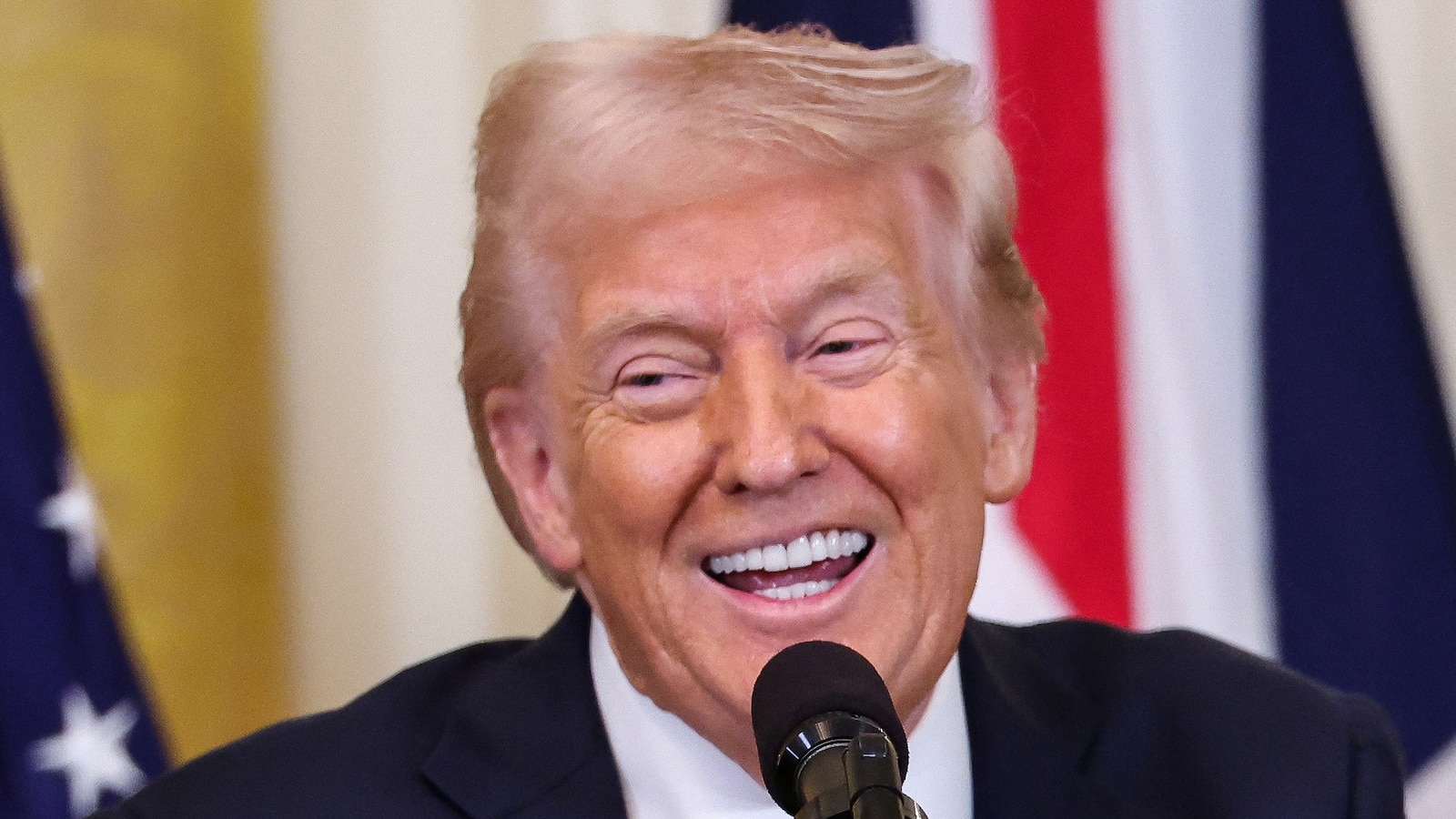
It has been confirmed by a White House representative that President Donald Trump plans to sign an unprecedented executive order making English the official language of the United States.
This directive will mark the inaugural designation of a national language for the United States.
The executive order will reverse a mandate from the Clinton administration that mandated government agencies and entities receiving federal funds to provide extensive language assistance services to individuals who do not speak English. The new directive will grant agencies greater discretion in determining how and when to provide services in languages other than English, as outlined in an information sheet released by the White House.
Despite facing criticism, the White House defends this decision by highlighting that although numerous languages are prevalent throughout the nation, English remains the most predominantly spoken. The administration argues that having an official language will bring cohesion among citizens and enhance collective identity.
"Designating English as the national language aids in fostering unity, optimizes government functions, and facilitates citizen participation," stated the White House in the provided information sheet.
The specific timing of when President Trump will sign the executive order has not yet been disclosed.
This initiative is part of ongoing measures under the Trump administration to alter certain policies. Notably, on his initial day in office, President Trump issued a directive ordering federal agencies to discontinue all grants or contracts related to "equity" and later mandated federal contractors to affirm that they do not endorse DEI practices.
According to data from the U.S. Census Bureau, Americans converse in over 350 languages, with Spanish, Chinese, Tagalog, Vietnamese, and Arabic among the most frequently spoken besides English.
A report revealed that from 1980 to 2019, the number of U.S. residents speaking a language other than English at home increased significantly, from 23.1 million (approximately one in ten) to 67.8 million (about one in five). The report also highlighted that the number of English speakers rose during that same period, from 187.2 million to 241 million.
Leave a Reply