


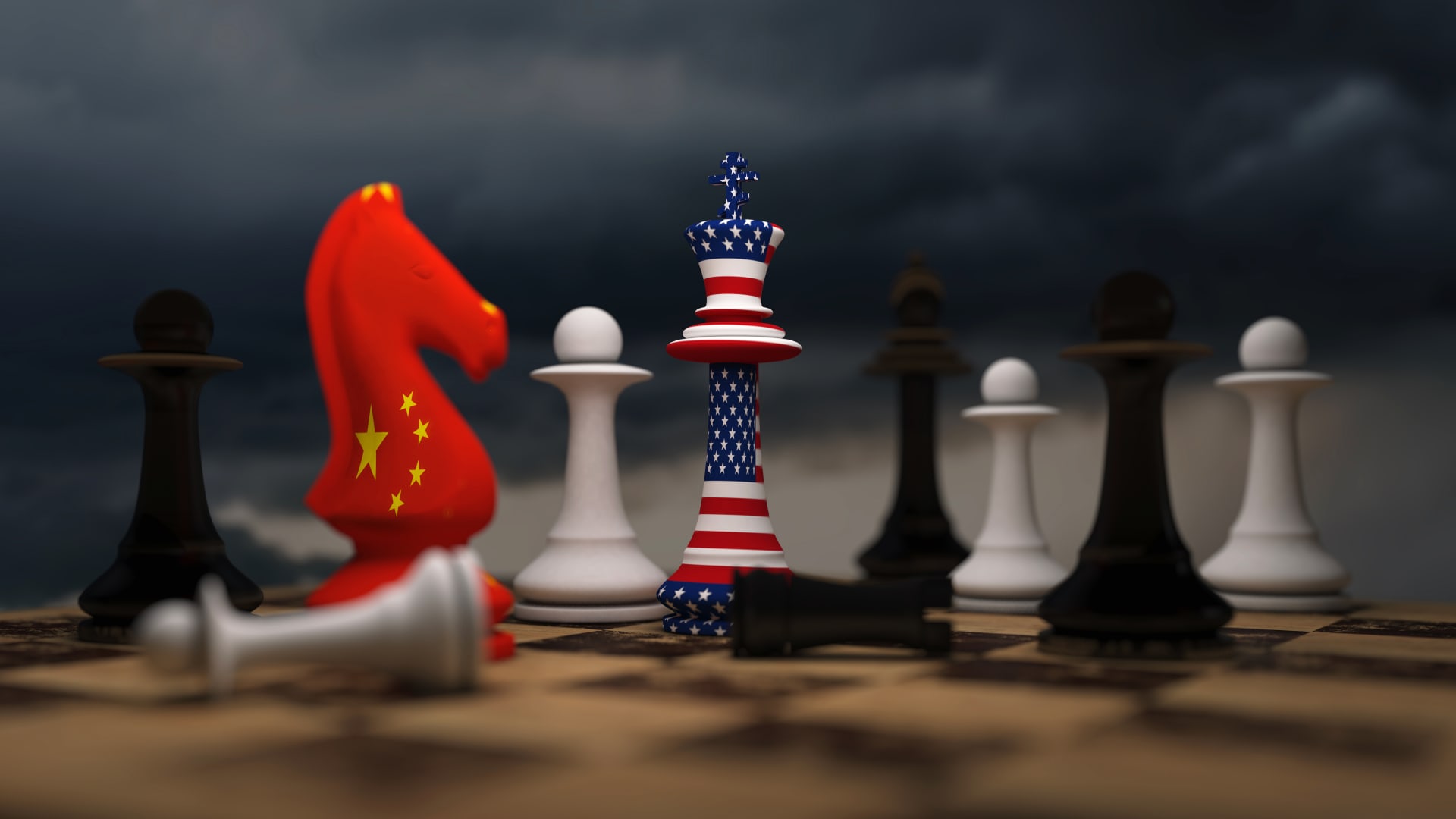
As Trump Diverges from Europe, Are Asia-Pacific Ties Under Threat?
In the early days of Donald Trump's renewed presidency, significant shifts have emerged in U.S. foreign relations, notably in Europe.
Under Trump's leadership, the U.S. has imposed tariffs on neighboring countries and criticized European allies, marking a departure from the stance of his previous administration.
Addressing the vitality of the U.S.-European transatlantic alliance, seasoned investor David Roche of Quantum Strategy expressed certainty, stating, "Essentially, it's concluded."
Roche elaborated by saying the Trump administration prefers transactional relationships to traditional alliances. "Trust has eroded, and alliances can't survive without trust," he emphasized.
This raises the question of how U.S. policies might shift towards its allies in the Asia-Pacific region.
Adam Garfinkle, who has served as a distinguished visiting fellow at Singapore's S. Rajaratnam School of International Studies, cautioned in February that Asian allies shouldn't expect U.S. resources reduced in Europe to be redirected to Asia.
Garfinkle advised that with a reduced U.S. global military presence, American security commitments in Asia could become more challenging, costlier, and potentially less believable.
The U.S. presence in the Asia-Pacific includes military bases in countries like the Philippines, South Korea, and Japan, with significant defense relationships with places like Singapore, though not a formal ally.
According to Garfinkle, it's unlikely that countries hosting U.S. military bases will gain stature or favor. Instead, they might face demands for increased "offset payments."
He also warned against assuming stability in regional forums such as the Quad and AUKUS, predicting that U.S. aid and capacity building could be abruptly halted.
The Quad refers to a strategic dialogue involving Australia, India, Japan, and the U.S., while AUKUS is a security pact between Australia, the U.K., and the U.S. Unlike NATO, these are not defense pacts.
Roche characterized Trump's approach as a "significant transformation." He argued that nations like South Korea, Japan, and even Singapore cannot bank on American protection as they might have in the past.
On February 12, U.S. Secretary of Defense Pete Hegseth highlighted a pivot in U.S. strategy, stating that America must prioritize securing its own borders over focusing mainly on Europe's safety.
Taiwan: A Potential Hotspot?
A critical issue is the tense relationship between Taiwan and China. Since 2016, China has intensified its stance towards Taiwan, not just through rhetoric but also through military exercises, reiterating its intention for "reunification."
Taiwan has governed itself since the Kuomintang retreat in 1949 following defeat by the communists in China. Chinese leadership, particularly under President Xi Jinping, views reunification as crucial.
Roche suggested that Trump's changing policies regarding Ukraine might embolden China, increasing the risk of military maneuvers against Taiwan by assuring China that the U.S. might not escalate conflicts into war.
Bernard Loo, from Singapore's S. Rajaratnam School of International Studies, indicated Taiwan's reliance on its "silicon shield" — a protective stance based on its vital role in the semiconductor industry — discouraging Chinese aggression.
This economic bulwark stems from Taiwan's dominance in the chip manufacturing sector, housing major companies like TSMC and Foxconn.
Despite China's superiority in military capacity, Loo argued that the obstacles presented by physical geography and adverse weather, such as typhoons across the Taiwan Strait, combined with historical lessons from other conflicts, could deter an all-out assault.
Evolving Security Dynamics
Frank O'Donnell from the Asian-Pacific Leadership Network posited in an analysis that Trump's emphasis on monetary contribution over strategic value could heighten disagreements between the U.S. and Indo-Pacific allies over financial commitments to defense partnerships.
He asserted that Trump's prior term signaled U.S. expectations for Indo-Pacific states to financially underwrite American strategic presence.
O'Donnell speculated that this unpredictability might drive these nations to enhance their own defense capabilities and pursue greater independence from U.S. military support.
Roche predicted that an alliance akin to "Asian NATO" could emerge, centering around countries like Japan, South Korea, and potentially Singapore and Taiwan.
Ultimately, this reflects a larger trend of declining global confidence in U.S. military and diplomatic influence, impacting not just Asia but international communities worldwide, including regions rich in resources such as Africa.
Leave a Reply