


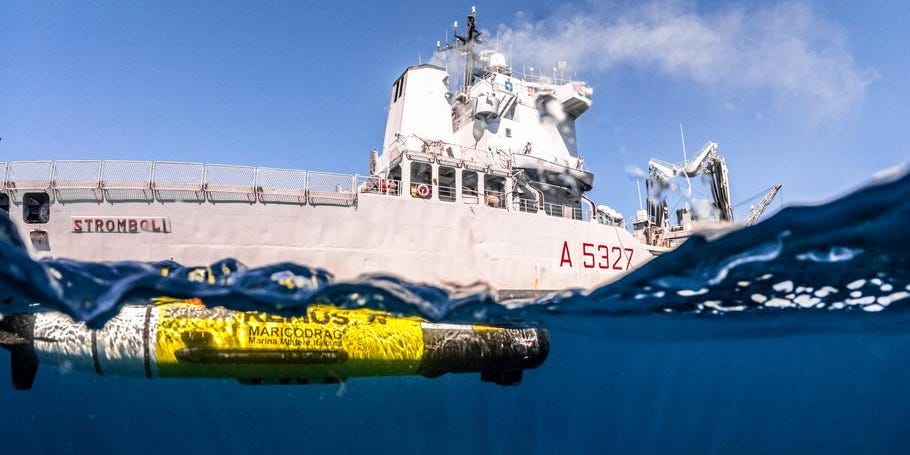
NATO's Task Force X: Testing Naval Drones to Counter Russian Sabotage
In a significant maritime exercise, NATO is trialing its new naval drones under the banner of Task Force X within the Baltic Sea, showcasing innovative capabilities of these autonomous units.
These advanced drones are designed to monitor Russia's movements in the area and to thwart any potential threats to crucial underwater infrastructures, such as data transmission cables.
According to NATO's Allied Command Transformation, demonstrated on Wednesday, these trials mark a pivotal moment in integrating uncrewed surface vessels (USVs) to protect key assets and ensure stability in a challenging scenario.
Adm. Pierre Vandier, leading NATO's transformation efforts, emphasized that Task Force X is poised to address surveillance shortfalls in this vital region. Bart Hollants from NATO's transformation division highlighted these tests as the inaugural achievements in mitigating Baltic security issues.
The exercises incorporated NATO's seafaring capacities, including participation from Denmark and Germany, to evaluate interaction between drones and manned ships. These drills included strategic maneuvers and live ammunition exercises to integrate autonomous vessels into NATO's naval strategy.
Inception of Task Force X
The inception of Task Force X was made public in January, with a primary objective to safeguard undersea communication lines from sabotage by various actors, while also providing a deterrent effect against Russian hostility.
The mission involves deploying a robust array of maritime autonomous systems to maintain continuous surveillance, assess potential risks, and improve knowledge of the maritime environment. This strategy is portrayed as a cost-efficient and swift solution against Russian operations.
This initiative follows recent events where undersea cables in the Baltic exhibited damage, suspected to be caused by vessels associated with Russia and China.
These incidents fall under Russia's hybrid warfare tactics — operations below the threshold of war but equally disruptive. Russia's involvement in European electoral processes and spreading misinformation are other examples of such tactics.
Global Comparisons and Concerns
NATO's Task Force X shares similarities with the US Navy's Task Force 59, which also employs drones but focuses on the Middle East region. Initiated in September 2021, this task force has conducted numerous drills, clocking over 60,000 operational hours.
Both US and NATO's endeavors highlight the growing shift towards automated systems for surveillance and deterrence, enabling military forces broader operational scope and flexibility in volatile regions.
However, there remains uncertainty concerning the assimilation of these autonomous tools into naval combat scenarios both for NATO and the US.
The Ukrainian conflict has demonstrated the tactical advantage of drone boats against Russia, presenting asymmetrical warfare options. Such strategies underscore the importance and potential of these emerging technologies.
Challenges and Future Directions
The deployment of autonomous systems is not without challenges, raising complex issues of command management, data security, and ethical implications tied to AI in military applications.
NATO is mindful of these hurdles and is actively working on establishing protocols and safety measures to govern the responsible use of these intelligent technologies.
Leave a Reply