


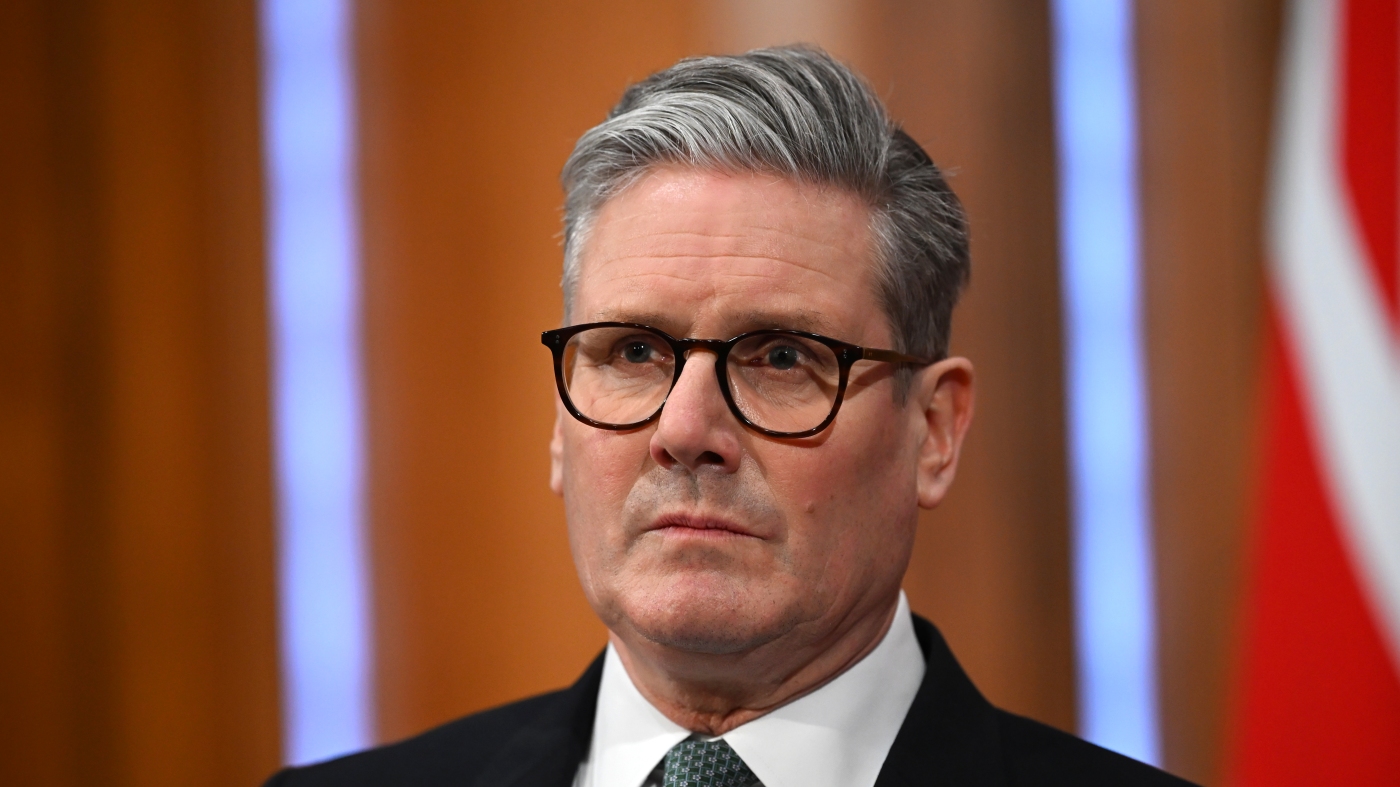
Prime Minister Keir Starmer's Upcoming Visit to the White House: Key Details
As Prime Minister Keir Starmer prepares to land in Washington, D.C., his recent statement in London about Britain's defense budget has drawn attention. On the Tuesday before his journey, he committed to raising defense spending to 2.5% of the GDP by 2027, highlighting it as the largest continuous increase since the Cold War era concluded. To accommodate this, the U.K. will significantly cut its international aid expenditure.
The relationship between the United States and European nations has faced strain in the first few weeks of President Trump's office, creating a visible divide over issues including Ukraine, relations with Russia, and trade matters.
Vice President JD Vance stirred controversy with an assertive address at the Munich Security Conference. His messages, describing a shift in leadership and critiquing European leadership, did not sit well, escalating the tension.
Amidst these challenges, Trump's recent approaches to a potential peace deal concerning Ukraine have caught European countries off guard. The absence of Ukraine and European allies from these discussions has raised concerns about America's commitment to European security.
Now enters Keir Starmer, who, since assuming his role as Britain's Prime Minister, has been perceived as a mediator. He aims to present himself as a conduit reconnecting the Trump administration with uneasy European allies.
Goals for Starmer in Washington
Prime Minister Starmer is intent on negotiating an exemption for the U.K. from tariffs imposed on steel and aluminum. These tariffs are a significant challenge for British industry, described by local producers as damaging and set to kick in shortly.
Concurrently, Starmer is expected to focus on urging more equitable negotiations over the conflict in Ukraine, emphasizing the potential global repercussions of a substandard resolution that may embolden Russian aggression.
Starmer’s diplomatic strategy may involve framing the issue to spotlight risks to American interests, using this angle to influence President Trump’s stance.
Approaching President Trump
Despite previously expressing reluctance toward Trump, Starmer had engaged in face-to-face discussions last year. Accompanied by U.K. Foreign Secretary David Lammy—who has openly critiqued Trump—they are expected to present a unified diplomatic effort.
Starmer has maintained a tactful position, avoiding direct confrontation with Trump’s policies ahead of their meeting, aiming to present a cooperative front.
Interestingly, Brexit might play in Starmer’s favor, as the U.K.'s move away from the EU could resonate positively with Trump’s critical view of European integration.
Brexit's Influence on the Dialogue
Brexit, having reshaped the U.K.'s economic landscape, may also redefine its strategic alliances. The U.K.'s alignment away from EU principles could parallel Trump's own disapproval of European unity, potentially positioning Britain advantageously in these talks.
Starmer is tasked with balancing his role as a mediator between Europe and the U.S. while striving to mend and maintain ties with both.
Evaluating Starmer's Potential Offers to Trump
Starmer, with an extended term anticipated, might be presented as a reliable long-term partner for Trump. He echoes calls for increased U.K. and European defense budgets, aligning with Trump’s demands.
Additionally, leveraging British cultural elements, such as ties with the Royal Family, might serve as informal diplomatic gestures to enhance rapport.
Historically, Trump's approach to international relations has often been viewed as transactional, expecting strategic benefits in return for diplomatic engagements. The current climate around Ukraine, however, reveals complex geopolitical stakes beyond mere transactional negotiations.
Experts assert an evolving dynamic where Trump's potential moves in Ukraine could inadvertently benefit Russia, presenting a broader risk to European stability.
High Stakes Meeting
Given the broader implications of the upcoming dialogue, it is widely seen as a pivotal moment in Starmer’s political journey. The outcomes from this visit could set the trajectory for his future and influence the U.K.'s standing with its transatlantic ally.
Despite any personal reservations from Trump about Starmer’s stance on various issues, the overarching narrative may shift depending on how effectively Starmer can advocate for mutual interests.
The balance between flattery and policy-driven diplomacy will be essential. Whether the historical 'special relationship' can steer Trump towards more cooperative policies remains the fundamental challenge.
Leave a Reply