


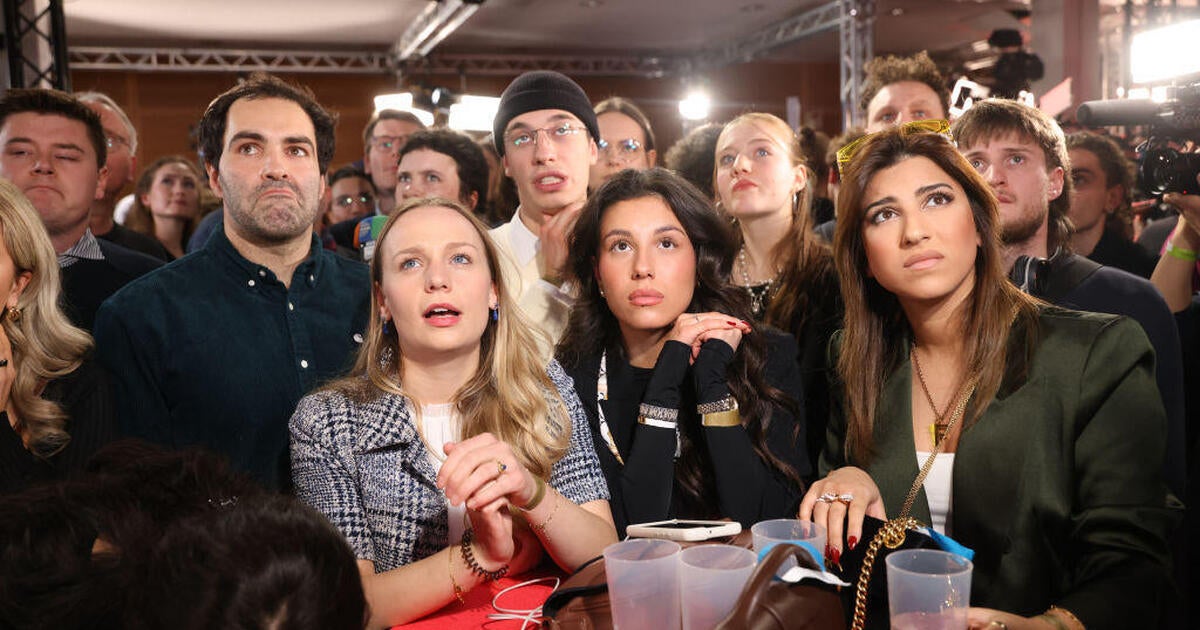
Conservatives Lead in German Election, Far Right Experiences Historic Surge
In a pivotal federal election, Germans have voted for change, potentially altering the nation's political dynamics significantly.
Initial polls indicate that Friedrich Merz, the opposition leader from the center-right Christian Democratic Union, is leading the charge with a substantial share of the vote. Simultaneously, the far-right is marking its potentially strongest performance since World War II.
Following these results, Merz confidently alluded to his win, acknowledging the challenges that accompany his prospective new role, stating that the journey ahead is far from simple.
Scholz Concedes as Coalition Breaks
Current Chancellor Olaf Scholz faced a setback as his coalition disintegrated last November, and he conceded following the poor showing of his Social Democrats.
Data from ARD and ZDF networks has pointed to the Social Democrats heading towards their least successful result in a post-war national vote, slipping to the third spot.
Poll Details and Political Implications
Exit polls recorded Merz’s Union bloc garnering between 28.5% and 29%, with Alternative for Germany, or AfD, achieving around 19.5% to 20%, effectively doubling their 2021 results.
Scholz’s Social Democrats now find themselves with diminished support of 16% to 16.5%, trailing behind the Green environmentalists, who captured 13.5% of the votes.
Among the smaller parties, the hard-left Left Party was on track for parliamentary seats with a vote share between 8.5% and 9%, while the pro-business Free Democrats and Sahra Wagenknecht Alliance hovered near the 5% threshold needed to gain seats.
Path to Governance and Challenges Ahead
With the largest share, Merz is positioned as the probable next Chancellor of Germany. However, he faces the task of assembling a governing coalition, potentially requiring partnerships with one or two other parties.
Germany's electoral system does not typically result in a single party obtaining an outright parliamentary majority. As such, parties are expected to forge alliances, with the leading party's head usually assuming the chancellorship.
The formation of coalition governments often entails parties negotiating compromises despite divergent policy goals to enable effective governance.
Despite the rise of AfD, mainstream parties, including the CDU under Merz, have firmly refrained from considering a coalition with this party, ensuring AfD’s exclusion from governmental formation.
Leave a Reply