


UK and Sweden Pledge Troop Support for Ukraine Amidst Trump's Influence on Europe's Security
Report provided by CBS News
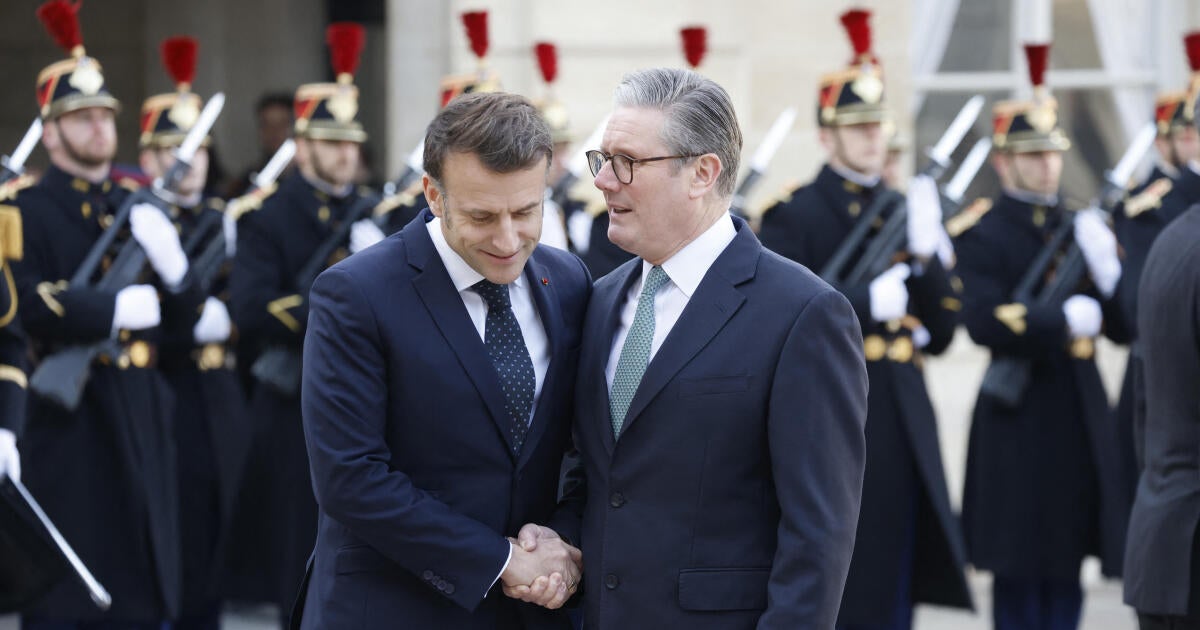
European nations gathered urgently in Paris this Monday to strategize responses to shifts in U.S. diplomatic efforts led by the Trump administration. Attendees included leaders from Poland, Germany, the UK, Denmark, the Netherlands, Spain, alongside EU representatives.
These discussions were prompted by announcements from the U.S. Secretary of Defense, indicating a pivot in U.S. security interests away from Europe, coupled with initiatives to resolve the war in Ukraine.
Ahead of these talks, UK Prime Minister Keir Starmer declared for the first time that Britain might station military personnel in Ukraine to ensure post-conflict stability. Starmer emphasized the need for Europe to demonstrate genuine commitment to its own defense responsibilities.
Starmer labeled this moment as critical for Europe's collective security, going beyond the immediate situation in Ukraine to challenge the continent's future. He insisted the UK is ready to spearhead efforts to bolster security guarantees for Ukraine, entailing heightened military support and potentially deploying British forces as peacekeepers.
This commitment wasn't made lightly, Starmer noted. He expressed the gravity of sending British forces into potential danger, underscoring the role this plays in securing both the broader continent and Britain itself. He stated that enduring peace hinges on continued U.S. support and unequivocal security assurances from the U.S.
Starmer cautioned that any cessation of hostilities must not simply serve as a prelude to further aggression from Russia.
A British official additionally confirmed Starmer's upcoming visit to Washington, being the first European leader to meet President Trump following his return to power.
On Sweden's part, Foreign Minister Maria Malmer Stenergard expressed a conditional readiness to contribute troops, emphasizing the establishment of a fair and lasting peace, compliant with international standards, as critical.
Stenergard highlighted the necessity of preventing Russia from recuperating to mount future assaults, highlighting Sweden's government stance of keeping all options open for maintaining peace.
While other European countries refrained from making firm commitments concerning peacekeeping deployments, labeling such discussions as premature, Polish Prime Minister Donald Tusk outright dismissed the idea of deploying Polish forces to Ukraine.
Nevertheless, Tusk made an urgent call for enhanced European defense spending, cautioning that neglecting this investment could lead to exponentially higher costs in the face of potential escalation.
Ongoing Conflict in Ukraine
Report compiled by Haley Ott, International Digital Reporter at CBS News, stationed in the London bureau.
Leave a Reply