


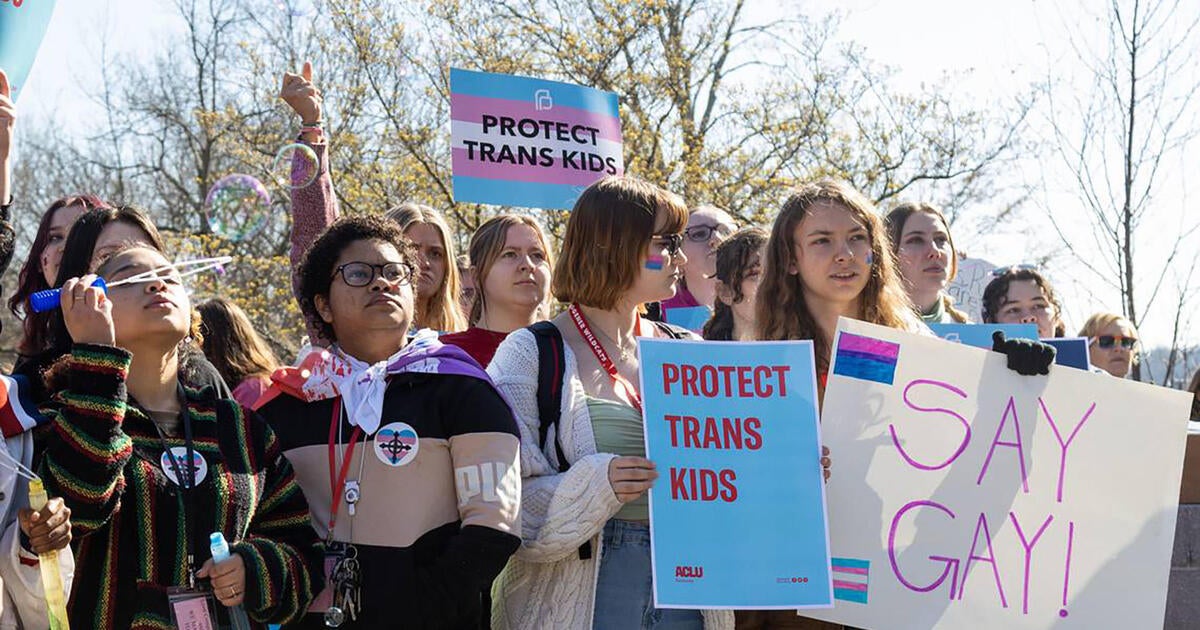
Judicial Halt on Trump's Gender-Affirming Care Order
A judge in Seattle has temporarily blocked President Trump's executive action that aims to limit minors' access to gender-affirming medical treatments, making her the second judge in recent days to do so.
This legal action was a response to a lawsuit initiated by Washington, Minnesota, Oregon, and three medical professionals who provide essential care for transgender youth experiencing gender identity conflicts.
Presiding over the case, Judge Lauren King, a Biden appointee, decided to issue a temporary restraining order following the states' appeal to halt the order’s enforcement aimed at restricting young people's access to necessary gender-related treatment.
The restraining order will stay effective while legal proceedings are underway.
A Maryland-based federal judge had earlier stopped the same directive for a fortnight. The case was brought forward by the ACLU and several LGBTQ organizations.
President Trump's order, introduced at the outset of his presidency, endangers the availability of research and educational funding to healthcare entities that supply gender-affirming treatments to minors under 19. These include interventions such as hormone therapies, surgery, and puberty suppression.
Opponents, including Democrat-aligned states that have sued the administration, argue the policy wrongfully deprives transgender young people of crucial medical care. They've labeled the executive order as a harsh and unfounded attack on transgender youth and those aiding them.
State representatives stated that the order promotes discrimination against vulnerable youngsters based on their gender identity. Furthermore, they claim it represents an overreach into congressional powers and intrudes into states' rights to regulate medical practice, breaching the Tenth Amendment.
Conversely, the current administration argues the directive is intended to protect minors from procedures they view as potentially harmful and with uncertain effectiveness. They classify the lawsuit as premature since no specific institutions have faced funding denial threats yet.
The administration asserts that Article II of the Constitution grants presidential authority to set broad policy goals for government agencies, and blocking this would intrude on executive powers.
Currently, numerous states have passed laws affecting minors' access to gender-affirming healthcare. The Supreme Court is set to evaluate these restrictions, specifically a Tennessee law, with a decision anticipated soon.
The Trump administration has shifted its stance in this legal situation, arguing Tennessee's law complies with the Constitution and calling on the Supreme Court to make a definitive ruling.
Melissa Quinn writes for CBSNews.com, specializing in coverage of U.S. politics and judicial matters. Her work has been featured in notable publications such as the Washington Examiner and Alexandria Times.
Leave a Reply