


Cargo Airlines Embrace Innovative Aircraft Design for Future Fleets
Nolinor Aviation, a charter airline based in Canada, has committed to incorporating an innovative aircraft model, the 'blended-wing body,' into its operations as part of its shift away from an exclusively Boeing fleet.
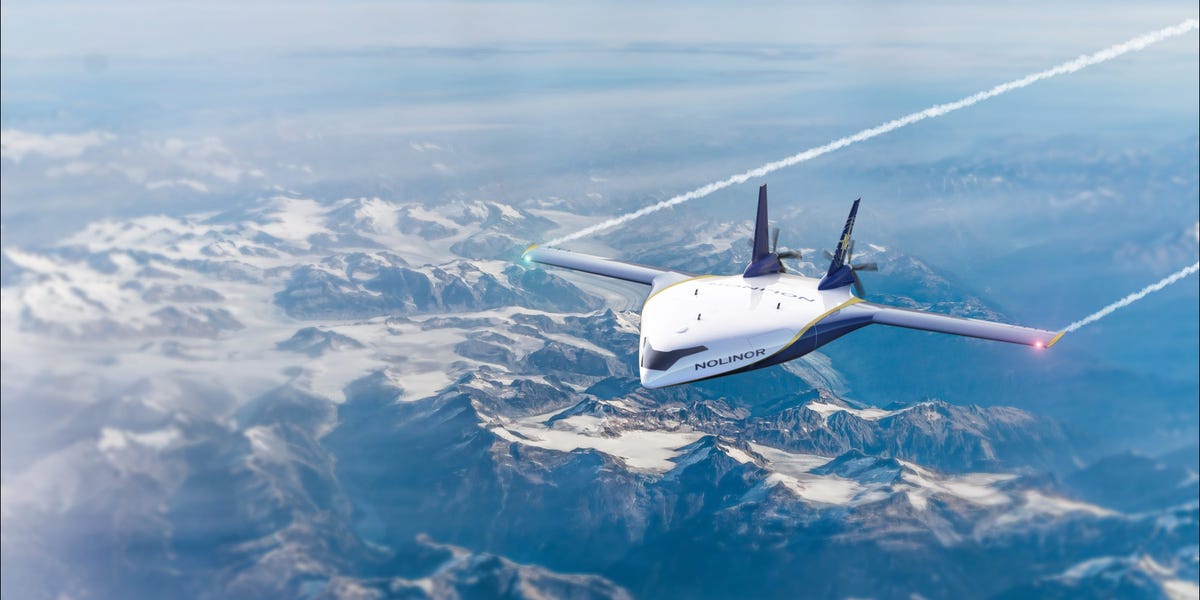
This avant-garde cargo aircraft, dubbed 'Kona,' is a brainchild of the California startup Natlius. It marries the aircraft's body and wings into a singular framework, a design that allegedly slashes fuel usage by 30%.
Though more compact than many current cargo planes, Kona is set to enhance Nolinor's existing lineup, which includes the aging Boeing 737-200 freighters, post-2028 when Kona is expected to take flight. Nolinor’s President, Marco Prud'Homme, shared insights with Business Insider about how Kona represents a new opportunity to service areas that were previously unreachable.
Prud'Homme remarked that the Kona would be ideal for locations where the Boeing 737-200's capacity was excessive, remarking that a weekly route serviced by the Kona is perfectly adequate for these communities.
The prospective efficiencies of Kona are notable; it promises operational costs up to 50% lower than comparable models, with the added benefit of navigating difficult terrains and transporting larger or more cumbersome loads.
Navigating Challenging Terrains
The core operations of Nolinor focus on serving mining sectors in Northern Canada, which require regular flights to undeveloped areas that typically feature rough runways composed of gravel, grass, or ice. Traditionally, these routes were covered by the adaptable 737-200 model, which could be fitted with special equipment for such conditions.
The airline boasts the largest fleet of 737-200s, which have been retrofitted to handle debris from unpaved surfaces. Yet, newer 737 models lack this capability, thus constraining fleet choices.
Kona, presently under design by Natlius, aims to meet these specific needs. According to Natlius CEO Aleksey Matyushev, the aircraft is engineered to perform well on gravel, dirt, and grass terrains, although ice may present challenges.
Matyushev highlights the fuselage, made of carbon-fiber, which will have a protective finish to withstand rough terrain impacts, and the strategically positioned propellers that minimize exposure to airborne particulates.
Unique Engine Configuration Offers Advantages
One significant aspect favoring Kona over its propeller-driven rivals, such as the De Havilland Canada Otter and the Pilatus PC-12, is the placement of its engines. By mounting them at the aft, the aircraft itself serves as a shield for the engines, offering protection from debris—something Prud'Homme views as a considerable advantage.
Though Kona's freight capacity is approximately 8,500 pounds, notably less than the nearly 30,000 pounds the 737-200 can carry, its compact size and expansive range open up untapped market segments.
Exploring New Business Opportunities
Despite its limited cargo weight, Kona's operational characteristics, such as its 900-nautical-mile range and spacious loading volume (close to 1,200 cubic feet), are poised to unlock new opportunities that outstrip those offered by its competitors.
Prud'Homme illustrated how a proposed mining operation would ideally suit Kona's capacity, requiring between 5,000 and 6,000 pounds of freight, which can be delivered promptly and efficiently.
An additional benefit of Kona is its fuel-efficient design, reducing the need for frequent refueling, thereby saving costs and turnaround time. The side-loading feature promises streamlined cargo handling.
Typically tasked with transporting perishables, the Kona's design can accommodate an array of cargo, including oversized items unsuitable for conventional aircraft configurations.
Pursuing the Broader Commercial Market
Natilus has broader ambitions beyond Kona, eyeing the creation of a 200-passenger blended-wing body (BWB) airliner called Horizon, to rival stalwarts like Boeing and Airbus in the passenger sector.
This project, expected to be market-ready by the early 2030s, aims to address market gaps that Natilus believes current aerospace giants have overlooked. Horizon is anticipated to eventually supersede Nolinor's 737 aircraft, given its formidable fuel efficiency.
Discussions are ongoing between Natilus and potential industry partners for these cutting-edge aircraft, with Kona already catching interest from U.S.-based Ameriflight, a cargo airline connected with FedEx, DHL, and UPS. This strategic interest underscores the broader business prospects, especially in remote regions like Alaska, Africa, and India, where air travel is crucial for connectivity.
Leave a Reply