


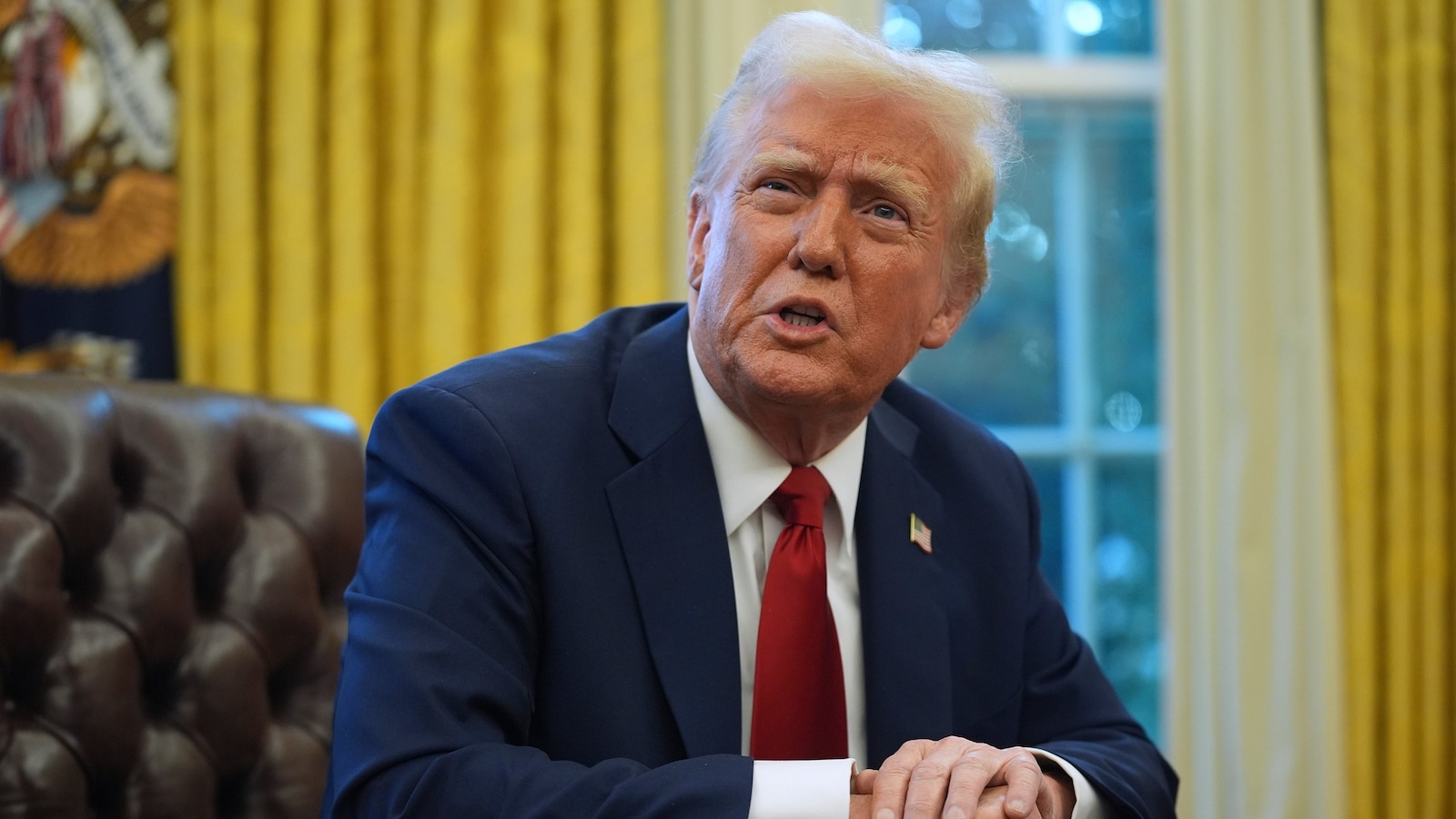
Trump's New Tariff Policy on Canada, Mexico, and China
In a major policy shift, President Donald Trump has decided to enforce steep tariffs on imports from three key trade partners – Canada, Mexico, and China. This move is bound to impact prices for everyday necessities in the United States.
The President's decision to levy these tariffs was formalized through a series of executive orders targeting each nation specifically.
Canadian and Mexican exports to the United States will be subject to a hefty 25% tariff, while exports from China will see a 10% tariff imposed. However, Canadian energy goods are somewhat spared with a reduced tariff of 10%.
Government leaders from Canada and Mexico have already hinted at possible retaliatory measures, showing strong opposition to these new tariffs.
The administration has included a clause allowing for increased tariffs if any of the affected countries respond with their own trade barriers or actions.
Experts warn that such tariffs are likely to push up costs for American consumers, as businesses often transfer increased trading fees to shoppers.
Potential Price Increases
A wide range of products could see price hikes, from food items like avocados and tequila to car parts, creating a ripple effect across various markets.
The precise impact on prices might vary since some businesses might decide to absorb part of the costs rather than passing them entirely onto consumers.
The U.S. administration has justified the tariffs on grounds that these nations facilitate the entrance of illegal drugs into America, a point emphasized by Press Secretary Karoline Leavitt.
International Reactions
Following the announcement, Canadian President Justin Trudeau promptly declared on X, the platform formerly known as Twitter, that his country would respond aggressively to any tariffs.
Meanwhile, Mexican President Claudia Sheinbaum expressed skepticism regarding the implementation of such tariffs and assured that plans were in place if they were enacted.
Implications for U.S. Economy
As significant importers of crude oil, Mexico and Canada play a crucial role in the U.S. energy landscape, with tariffs potentially increasing gasoline prices considerably.
Rumors of possible exemptions for oil surfaced, though clarity over such exceptions was still pending as of the eve of the tariffs' implementation.
Analysts cautioned that tariffs could affect not only gasoline but also a variety of fresh produce, such as tomatoes and mangoes. Trade experts noted the difficulty in quickly finding alternative suppliers.
The automobile sector also faces risks, given its extensive ties to Canadian and Mexican markets, which tariffs could disrupt, affecting vehicle and part prices.
Economic Outlook
Recent economic efforts have struggled to curb inflation, with current price levels still above the Federal Reserve's target, though somewhat moderated since the previous year.
The Trump administration credits previous tariff policies with maintaining low inflation rates in the past, asserting confidence in handling potential economic turbulence.
Leave a Reply