


Trump Imposes Tariffs on Mexico, Canada, and China
The President of the United States has decided to implement tariffs on imports coming from Canada, Mexico, and China, advancing a long-held plan.
Peter Navarro, the senior adviser on trade and manufacturing for the Trump administration, announced on Saturday that the president is enforcing a 25% tariff rate on imports from Mexico and Canada. For China, a 10% duty is applicable, with Canadian energy resources also being subject to the lower 10% tariff.
Tariffs are taxes imposed on imported goods and are shouldered by U.S. importers. Economists are largely against tariffs, as they tend to drive up prices for consumers in the United States.
Nonetheless, Trump views tariffs as a strategic tool to forge better trade agreements with U.S. partners, safeguard domestic businesses from foreign competition, and generate government revenue.
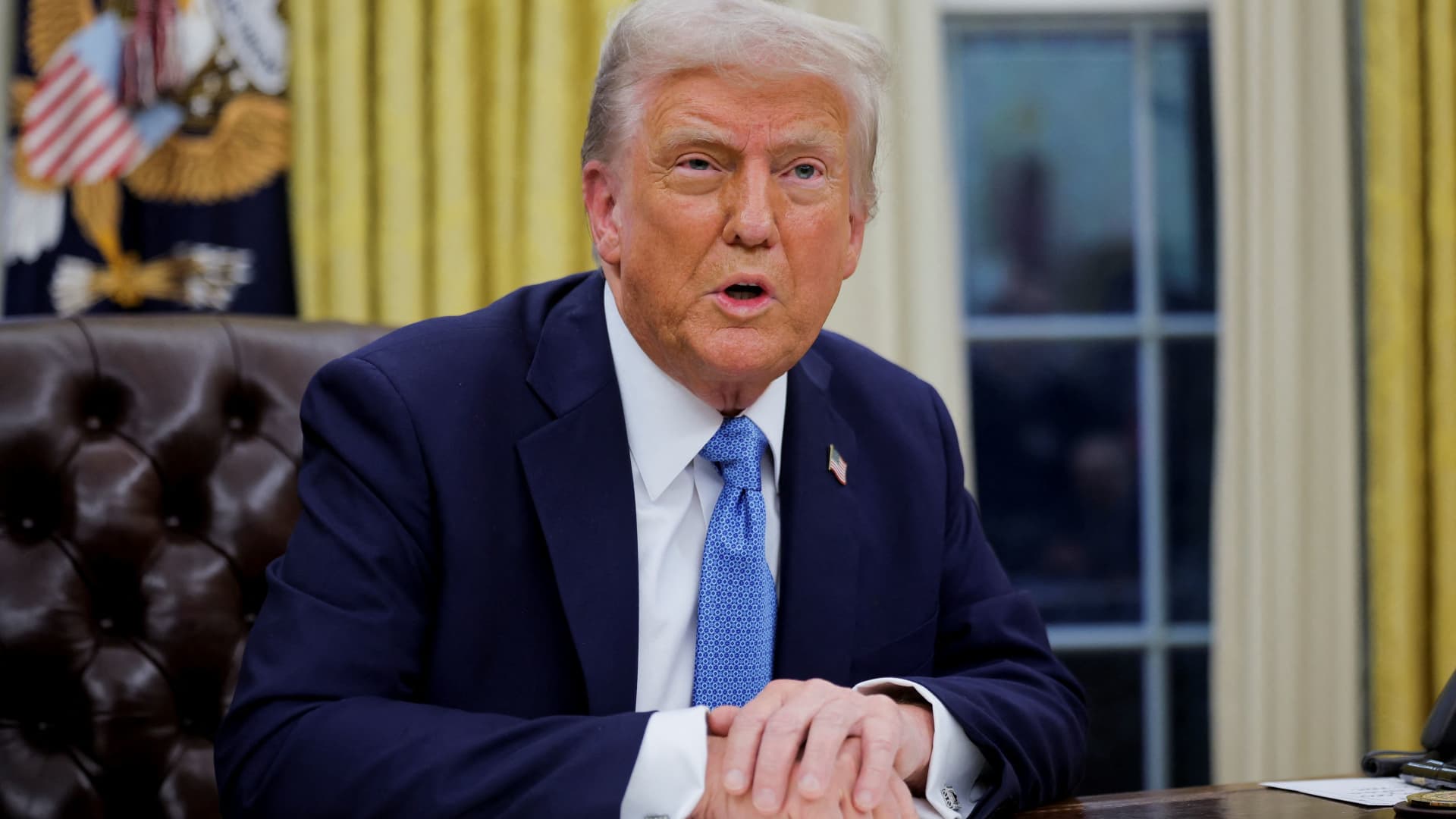
Speaking from the Oval Office on Friday, Trump described the tariff imposition on Canadian, Mexican, and Chinese imports as being grounded in 'pure economic' rationale.
He not only cited the trade imbalances with these nations but also attributed to them some responsibility for the spread of the deadly opioid, fentanyl, within the United States.
The President further pledged the introduction of new or increased tariffs on a wide array of foreign imports. This list includes microchips, energy products like oil and gas, as well as metals such as steel, aluminum, and copper, extending to pharmaceuticals across all categories.
In addition, Trump made it clear that he would 'absolutely' target the European Union with tariffs at a later date.
Leave a Reply