


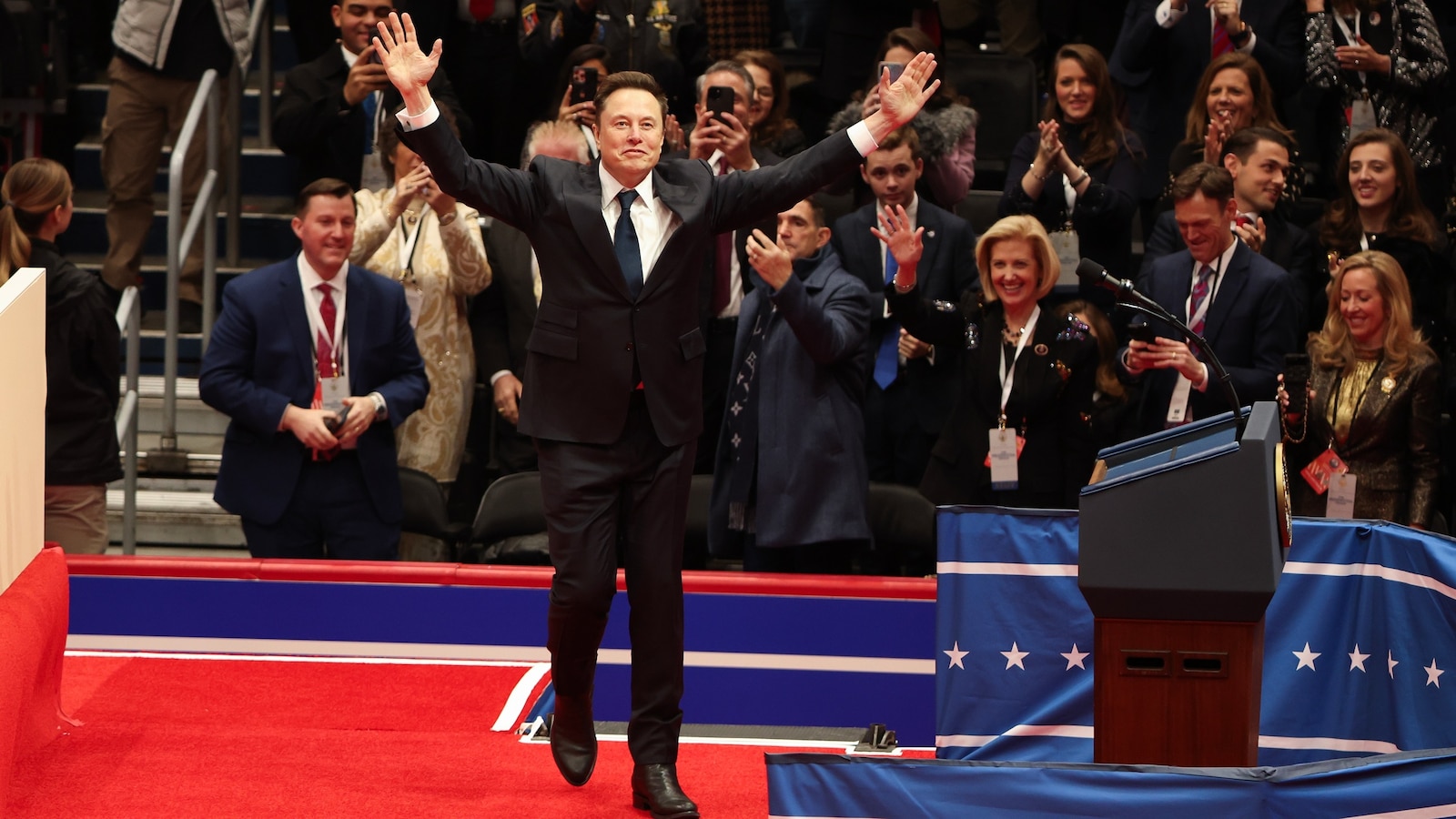
Examining the New DOGE Agency's Ambitious and Unclear Operations
As Elon Musk readies the unveiling of the novel Department of Government Efficiency (DOGE), increasingly complex details about its functioning are surfacing. Nonetheless, watchdog organizations focusing on government integrity are voicing concerns regarding the agency’s actual mandate and the transparency of its operations.
Details from the Executive Mandate
An executive directive signed by President Donald Trump highlights that DOGE will be set up within the Executive Office of the President. It is planned as an 18-month interim body nested within the repurposed United States Digital Service, now designed as the United States DOGE Service (USDS).
Interestingly, this policy focuses DOGE’s mission on streamlining "federal technology and software to enhance governmental productivity," diverging from the broad mission of overhauling the federal framework, a vision tirelessly promoted by both Trump and Musk.
Concerns from Ethics Experts
Some ethics specialists worry that the narrowly defined directives within the executive order could be a tactic to bypass the Federal Advisory Committee Act of 1972. This law binds advisory bodies to undergo a thorough approval process specifying their activities and mandates the disclosure of their proceedings to the public.
Kedric Payne, leader of the Campaign Legal Center's oversight team, urged focus on DOGE’s adherence to the precise boundaries set by the executive order. While the order seems to present a limited agenda, Payne cautions that DOGE’s real aspirations appear much broader, thus potentially breaching the order's constraints, which could invoke further disclosure statutes applicable to advisory committees.
Transparency and Financial Disclosure Issues
Initially introduced in November, with Elon Musk and biotech startup visionary Vivek Ramaswamy at its helm—operating 'externally from government'—concerns have been raised over the absence of thorough disclosure policies for such affluent figures, who potentially possess extensive financial stakes.
While top-level federal leaders are burdened with the responsibility of disclosing personal financial status to guarantee individual transparency and to notify the public of any conflicts, ambiguity lingers regarding Elon Musk’s and his team’s obligations in disclosing their financial ties as they align closely with the White House and various governmental branches.
Donald Sherman, CREW's executive director, and principal attorney, via a statement, protested that Trump's mandate offers minimal assurance concerning Musk's compliance with ethical and transparency standards, committing to ongoing legal pursuit to rectify DOGE's activities in accordance with proper guidelines.
Musk's Promise to Transparency
Musk has endeavored to alleviate transparency anxieties. Shortly after Trump's announcement, he assured via X—it earlier known as Twitter— that every endeavor by the Department of Government Efficiency would be openly shared online to ensure the utmost transparency.
Brian Hughes, a representative for Trump’s transition team, communicated with ABC News in November, guaranteeing that the transition team is committed to ensuring DOGE’s conformity with all pertinent legalities concerning conflicts of interest.
Potential Legal Challenges Await
The administrative decree predicts that DOGE will be spearheaded by the USDS chief, overseen by White House Chief of Staff Susie Wiles, although Musk's appointment to this role remains unspecified. While the former USDS head, Mina Hsiang, shared her certificate of divestment, her complete financial disclosure remains non-public.
The decree also signifies the involvement of special government employees within DOGE, requiring internal financial disclosures for ethical review without the obligation of public transparency. These employees might be allocated across different agencies to facilitate DOGE's engaging agenda.
Kedric Payne remarked that if categorized as special government employees, Musk and colleagues will at least encounter the Office of Government Ethics' stringent vetting process, even if exempt from making their financial statuses public.
Earlier this week, CREW alongside National Security Counselors and various scrutiny organizations filed legal complaints advocating for DOGE’s transparent practices, urging compliance with the Federal Advisory Committee Act.
Jerald Lentini, an attorney for National Security Counselors, asserted that laws hold significance, workers possess rights, and substantial reform necessitates transparent accountability, reiterating the made filing's objectives.
Litigation and Accountability
The ongoing legal challenge demands judicial recognition of DOGE’s improper constitution, thereby imposing permanent restraints on Musk, Ramaswamy, and DOGE’s segments from conducting further workshops, gatherings, or official activity.
Donald Sherman remarked that Trump’s administration has decidedly enabled Musk’s capable operation of DOGE discreetly, without ordinary Americans’ participatory oversight. Responding to news on lawsuits, Musk humorously suggested initiating a lawsuit counter to track how swiftly they might accumulate.
Leave a Reply