


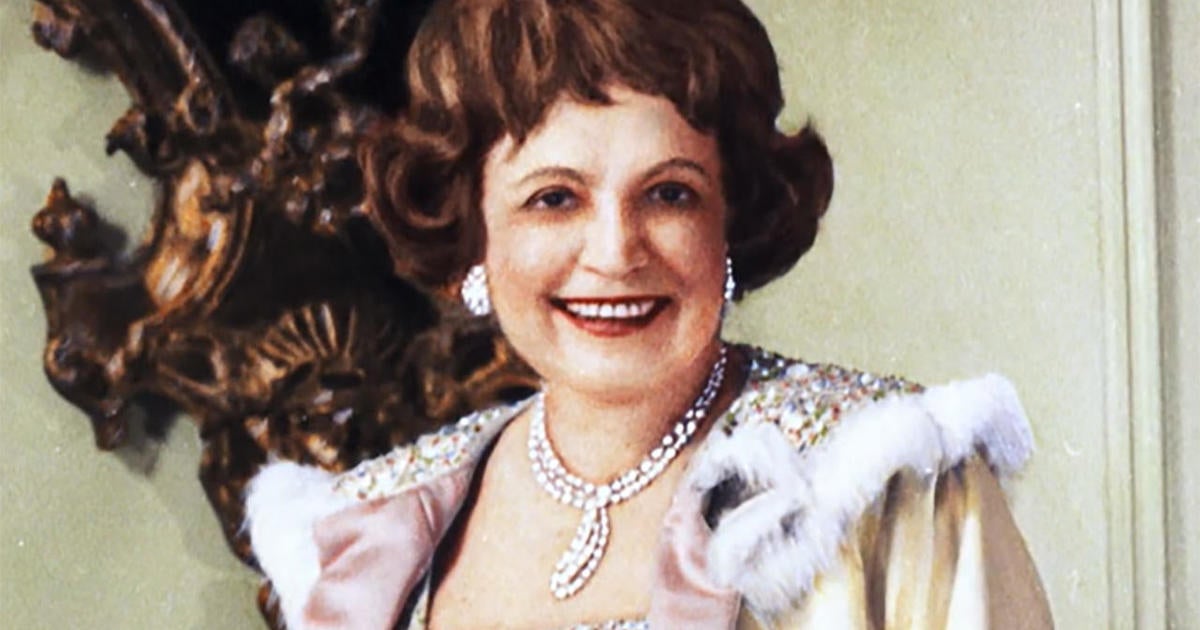
Perle Mesta: Washington's Celebrated Social Hostess
In the Broadway adaptation 'Call Me Madam,' Ethel Merman famously portrayed a character inspired by a real-life figure: Perle Mesta. In the 1940s and 1950s, she stood out as one of America's most recognized social figures.
Biographer Meryl Gordon expressed amazement at Mesta's prolific presence, noting that thousands of news articles were published about her annually.
The Social Dynamo
Gordon elaborates on Mesta's reputation, highlighting her knack for hosting stunning events in Washington. Her guest lists were a mix of political influencers, entertainment icons, and even Supreme Court justices.
During the 1940s and '50s, Mesta's social adeptness earned her the moniker 'the woman who knew everyone,' thanks to her strategic ability to form connections in high circles.
From Modest Beginnings to Social Stardom
Born Pearl Skirvan, she was the daughter of an oil and real estate magnate in Oklahoma who faced financial ups and downs. After marrying steel industrialist George Mesta, she inherited a massive fortune upon his death in 1925, making her eventual move to the capital possible.
Marie Ridder, an attendee of Mesta's parties, provided insight into Mesta's priorities: she invited Ridder for media exposure, viewing her as a gateway to publicity rather than for personal charm.
Mastering Washington's Social Scene
Sally Quinn, who chronicled events like Mesta's for the Washington Post, described Mesta as unparalleled in social orchestrations. Mesta understood that crucial interactions often happened outside formal political arenas.
By the end of the 1940s, Mesta had achieved a level of fame comparable to her notable guests. She was so well-known that she inspired a televised drama and graced Time Magazine's cover.
Despite her prominence, media descriptions of her were sometimes harsh, fixating on her physical appearance, which biographer Gordon remarked as gratuitously unkind.
Political Savvy and Social Influence
Mesta had a rare talent for anticipating political ascendancy, inviting future presidents Truman, Eisenhower, and Johnson to her events long before they reached their zenith of power.
Once Truman assumed the presidency, he appointed Mesta as a minister to Luxembourg in 1949, earning her the nickname 'Madame Mesta.'
A Diplomatic Challenge
Mesta described her tenure in Luxembourg, highlighting the gender challenges of her role, acknowledging the necessity to constantly prove her capabilities compared to her male counterparts.
Nonetheless, she thrived—hosting regular gatherings for American soldiers stationed abroad. Over four years, her events welcomed thousands of service members.
Championing Inclusivity Ahead of the Times
Gordon detailed Mesta's quiet yet impactful stand for civil rights, particularly her staging of racially integrated inaugural balls and her commitment to inclusivity in an often exclusive society.
Her mingling of diverse guests at events served as a testament to her forward-thinking social practices.
Legacy and Influence
During President Kennedy's era, Mesta's influence began to wane. By 1975, the year of her death, no equivalent figure had arisen to fill her shoes.
Quinn reflects on contemporary polarization, lamenting that current conditions lack the bridging social events Mesta adeptly facilitated, suggesting that her approach offered valuable conflict resolution potential.
Leave a Reply