


Years of Heavy Weaponry Exposure Linked to Brain Disorders in Marines
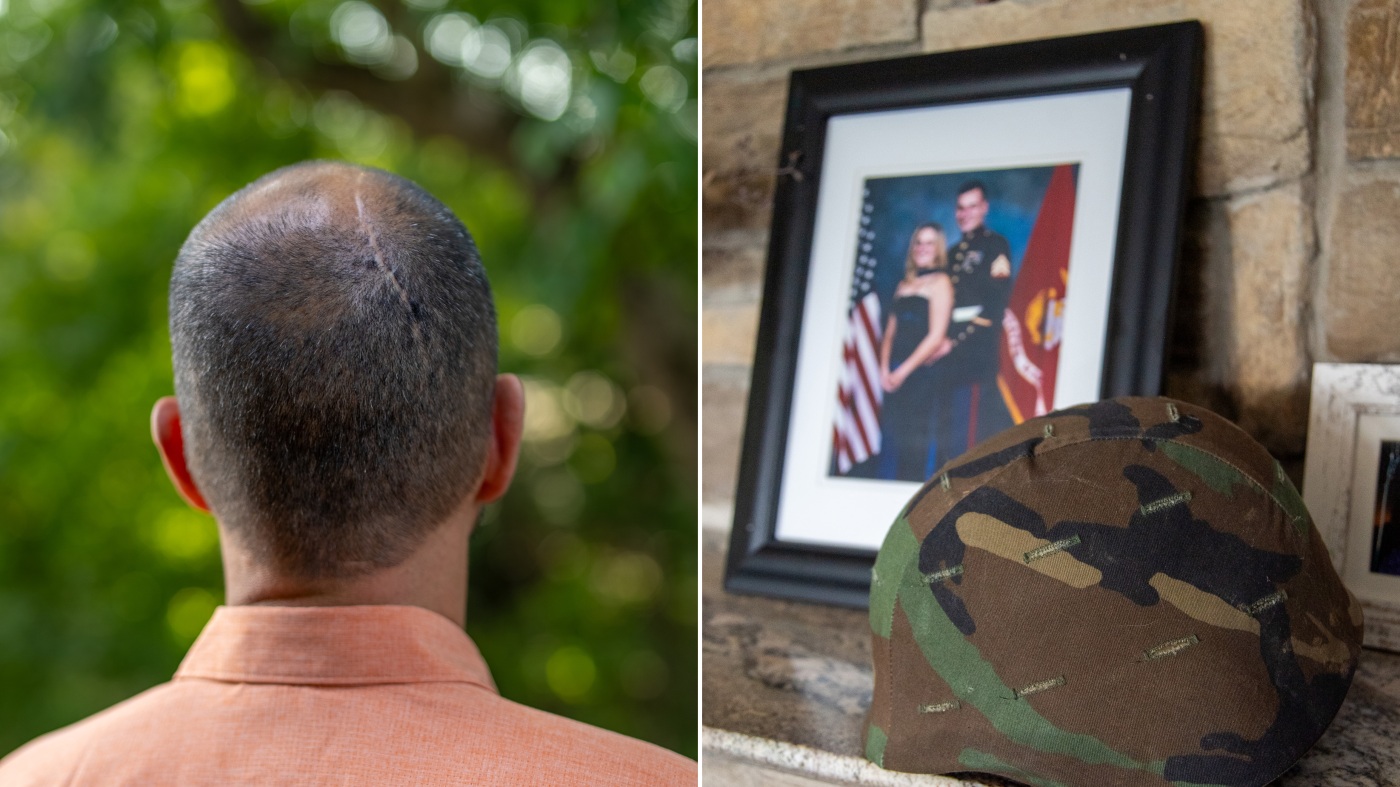
William Wilcox, during his tenure in the Marine Corps, operated a variety of heavy ordnance such as shoulder-mounted missile systems numerous times. It's suspected that the resultant shockwaves from these powerful weapons contributed to the formation of an arteriovenous anomaly in his brain. After surgery to address this issue, he now grapples with seizures, memory impairment, and several other distressing conditions.
For fellow Marine Michael Lozano, it all commenced with intense headaches that he described as 'piercing' pains through his skull.
Wilcox also experienced severe headaches and described a sensation akin to his head bursting.
Both men underwent operations to excise a brain mass made up of disorganized blood vessels susceptible to bleeding.
Wilcox and Lozano theorize that their ailments might be linked to the repetitive blast wave exposure as gunners in the Marines, particularly from anti-tank weaponry.
Wilcox notes that the likelihood of both having similar rare brain conditions due to their shared professional experiences in the 1990s appears slim.
Statistics suggest AVMs occur in less than one per 1,000 individuals, with a couple of hundred of Marine gunners active at any period.
While specialists in neurology acknowledge a coincidence, they also point to accumulating evidence that repetitive blast exposure can lead to alterations and damage in cerebral blood vessels.
Considering their experience and available research, it's reasonable for Wilcox and Lozano to speculate if their brain conditions relate to their weaponry use.
According to Stephen Ahlers, a neuroscientist engaged in extensive research on the brain and blast exposure, this suspicion is warranted.
Peter Cernak from Belmont University notes that ongoing research shows primary blast impacts can indeed result in vascular changes in the brain.
Both men, now in their early fifties, share more than just a military background—they both trained with intense weaponry like TOW missiles.
Both had assignments at Camp Lejeune and participated in military drills at locations like Twentynine Palms.
They were particularly familiar with the operations of rocket launchers potent enough to incapacitate tanks.
The SMAW device, known for its severe backblast, was notably daunting.
Describing the physical impact of operating such a device, Lozano likened it to the forceful collision of a hefty linebacker.
With each weapon activation, their heads were perilously close to the origin of explosive energy.
Studies underscore that SMAW operators are subjected to blast levels exceeding what the military marks as hazardous.
For Wilcox, military memorabilia holds sentimental value; among his keepsakes is a launch unit from the AT4, reminiscent of his service inception in 1992.
Despite early indicators like worsening headaches, Wilcox thrived in civilian employment after his 2000 discharge until an unforeseen event in 2014 unveiled the hidden AVM.
His wife, Cynthia, is pivotal in managing his ongoing health challenges, embodying daily vigilance against his frequent epileptic fits.
AVMs represent an aberrant vascular growth pattern, commonly congenital, yet can materialize later potentially worsened by trauma.
Wilcox recalls brain surgery and the intensive period of rehabilitation that followed as life-preserving measures.
Though the surgical resolution improved his condition, the operational scars, cognitive lapses, and persistent epilepsy present an enduring struggle.
Linking his medical predicament to his military trajectory only became evident when he learned about Lozano, a fellow veteran with a similar post-service diagnosis.
In the wake of service, Lozano encountered debilitating symptoms and a PTSD diagnosis that altered his personal life dramatically.
With persistence, he sought a fresh start in federal law enforcement, where his second wife recognized deeper underlying health concerns.
Neurological assessments revealed an AVM, analogous to Wilcox's, leading to preventative surgical intervention before it ruptured.
Both veterans have taken steps toward activism, striving to enhance military practices around blast exposure and advocating for veteran support.
Recent military instructions demand increased surveillance of personnel exposed to powerful armaments, alongside advocating for training innovations to mitigate risk.
Leave a Reply