


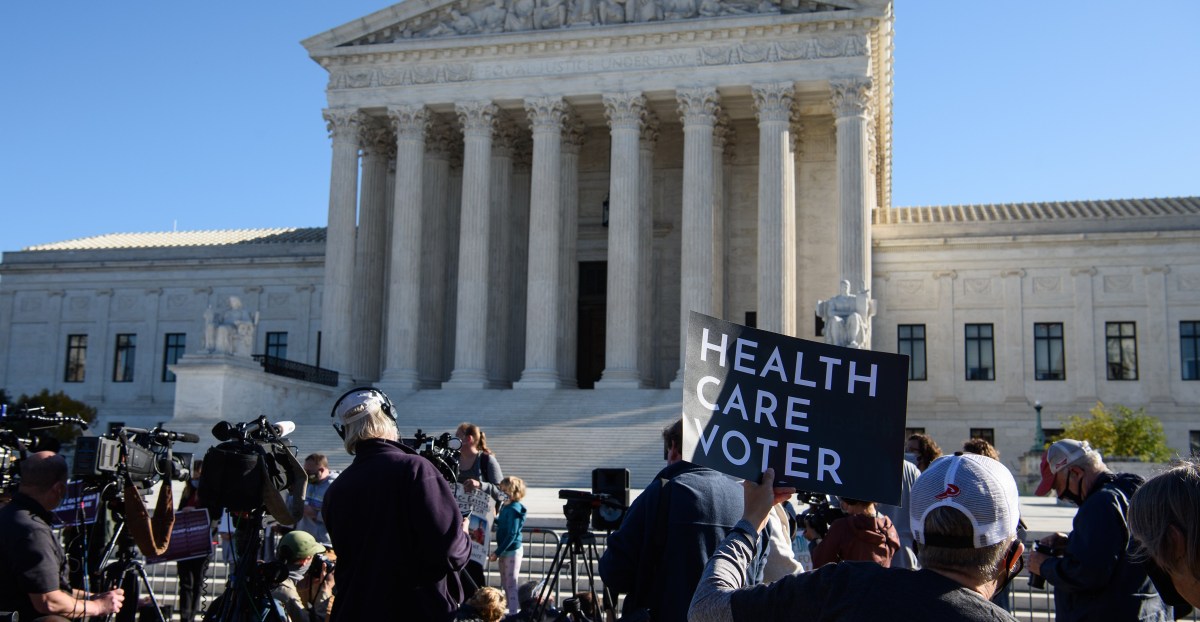
Supreme Court Case Could Restrict Cancer Screenings
The legal battle known as Becerra v. Braidwood Management may lead to significant changes in health insurance coverage.
The Supreme Court has agreed to review a lawsuit challenging parts of the Affordable Care Act (ACA), which was enacted during President Obama's tenure as a transformative health policy.
Potential Impact on Healthcare Coverage
While previous challenges have tried to dismantle the ACA entirely, this particular suit targets specific provisions allowing insurers to refuse covering certain medical treatments. Employers might also gain the ability to provide health plans lacking coverage for such procedures.
Despite the conservative leaning of the Supreme Court, it is plausible that this particular challenge could be rejected. The arguments presented by the Justice Department in favor of upholding current practices are compelling. Additionally, the appeals court, known for being overturned by the Supreme Court, did not favor many of the plaintiffs' claims.
Scope and Focus of the Lawsuit
The initial case, set against three divisions of the US Department of Health and Human Services (HHS) responsible for health coverage obligations, has evolved as it progressed through the judicial system.
An important object of contention is the requirement to cover anti-HIV medication. The legal assault faced an initial ruling by Judge Reed O’Connor, whose history includes attempts to repeal the ACA. His decision was revisited by the conservative Fifth Circuit Court of Appeals.
Though sympathetic judges have been predominant, acceptance of the plaintiffs' arguments has been limited. The case now prominently challenges the US Preventive Services Task Force (PSTF), pivotal in deciding coverage for preventive health services such as cancer screenings.
Legal Nuances Before the Court
The current legal evaluation questions a constitutional element regarding the appointment and authority of senior government officials, specifically the PSTF.
Constitutionally, high-ranking federal officials must be appointed through specified procedures. The classification of such positions into 'principal' or 'inferior' officers affects these processes, with principal officers requiring Senate confirmation.
Members of the PSTF are appointed by HHS agency heads rather than Senate confirmation, crucially distinguishing them as 'inferior' officers. The Fifth Circuit posited that the Secretary of HHS lacks explicit power to counter PSTF decisions directly, raising questions about the PSTF's conformity with constitutional requirements.
This argument is debatable, as functional authority often includes the capability to hire or fire, indicating a supervisory role. Moreover, the Secretary is empowered to oversee Public Health Service operations, potentially including reversing PSTF decisions.
Uncertain Legal Outcomes
The Justice Department argues firmly against lower court rulings. Whether these arguments will convince the predominantly Republican Supreme Court remains uncertain.
Leave a Reply