


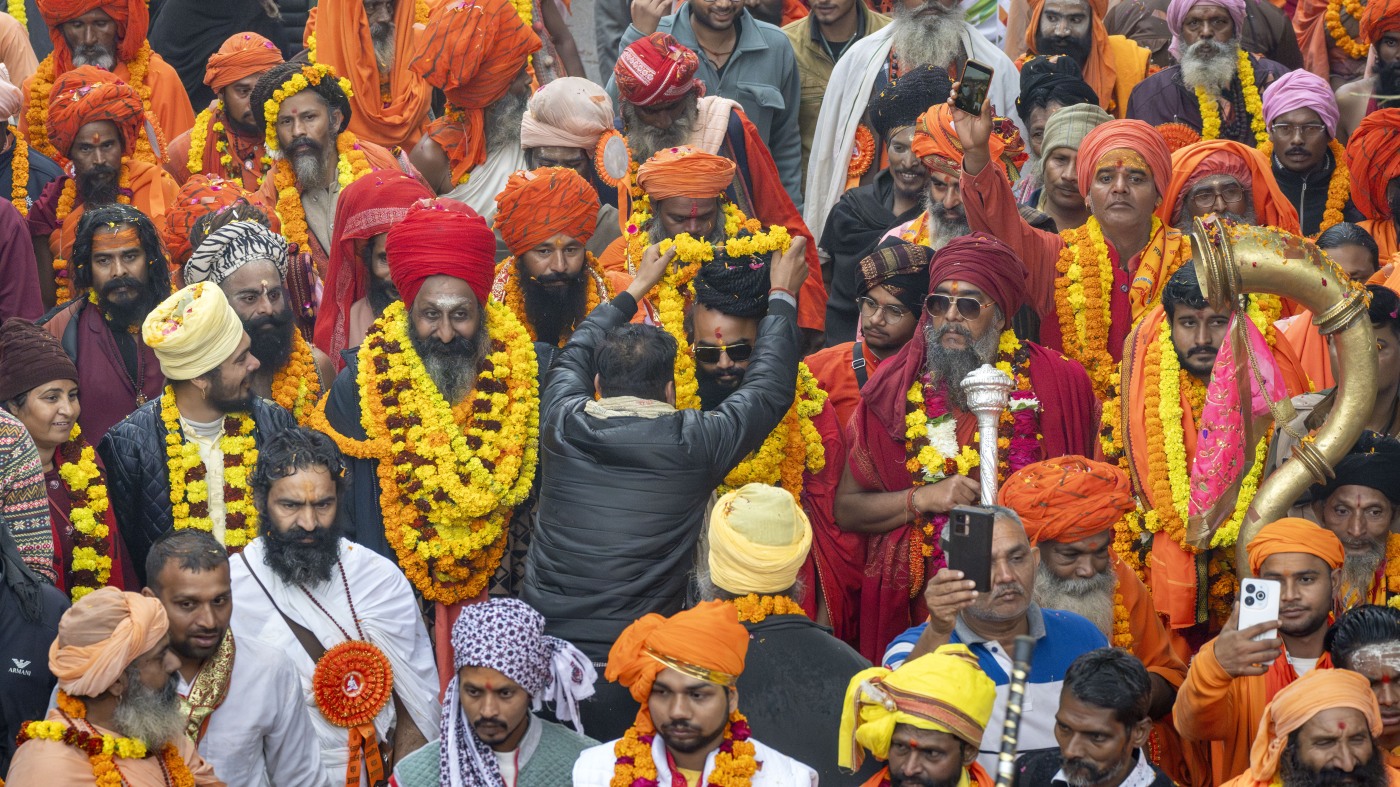
Inauguration of the World's Largest Religious Assembly in India
An illustrious Hindu festival has commenced in the northern city of Prayagraj, India, drawing countless devotees, mystics, and holy individuals from across the country.
For the upcoming six weeks, participants will gather where the Ganges, Yamuna, and the legendary Saraswati rivers meet, engaging in extensive ceremonies to embark on a spiritual quest toward liberation from the cycle of rebirth, known in Hindu philosophy as moksha.
The Sacred Confluence and Its Significance
Hindus hold rivers in deep reverence, especially the Ganges and Yamuna. The act of bathing in these waters is believed to purify one's past sins and halt the reincarnation cycle, particularly on days deemed auspicious. These significant days recur every 12 years during the Maha Kumbh Mela or the Grand Pitcher Festival.
Date back to medieval times, this festival involves ritual bathing by Hindu sages and pilgrims at the intersection of these holy rivers. Myth has it that the Saraswati River once flowed from the Himalayas to merge here with the Ganges and Yamuna.
Daily bathing is part of the tradition, but on sacred days, ascetics coated with ash sprint toward the water at daybreak. Many attendees remain for the festival's entirety, practicing austerity, donating alms, and engaging in dawn bathing.
"We find tranquility here and escape the endless cycle of life and death," said Bhagwat Prasad Tiwari, a devotee attending the event.
Historical Roots of the Kumbh Mela
The festival stems from the Hindu narrative in which the deity Vishnu claims a divine pitcher filled with the elixir of immortality from demons. It's believed that nectar droplets fell in four Indian cities: Prayagraj, Nasik, Ujjain, and Haridwar, where the Kumbh festivals have been celebrated for centuries.
Rotating among these cities about every three years based on astrological assessments, this year's Maha Kumbh is the largest, following the smaller Ardh Kumbh held in 2019, which saw 240 million visitors, including 50 million who bathed on the busiest day.
The Immense Scale of Maha Kumbh Mela
In anticipation of hosting over 400 million attendees, this year's gathering is slated to dwarf even last year's Hajj pilgrimage, which saw 2 million pilgrims.
This event is a crucial demonstration of India’s capability in managing religious tourism and colossal crowds.
The Tent City and Infrastructure
A massive tent city stretches along the rivers, packed with over 3,000 kitchens, 150,000 restrooms, and infrastructure such as electricity and water, painted with murals depicting Hindu scriptures.
The Indian Railways has introduced special trains to accommodate the influx of pilgrims, supplementing their regular services with around 3,300 trips.
Enhanced security with 50,000 personnel and 2,500 AI-powered cameras ensures that the festival maintains order and safety, alerting control centers to crowd dynamics to prevent mishaps.
Political Implications of the Festival
Traditionally, Indian politicians have used the Kumbh Mela to build connections with the Hindu demographic, comprising about 80% of the nation's populace.
Under the leadership of Prime Minister Narendra Modi and the Bharatiya Janata Party, the festival has cemented its place as a symbol of Hindu nationalism. The state of Uttar Pradesh, under Adityanath, a prominent monk and party figure, has dedicated substantial funds to this event while also promoting government schemes through prominent displays.
The festival helps bolster political support by aligning with cultural symbols central to many Hindus, but past events have not been without controversy.
In a move reflecting broader initiatives, Modi's administration renamed the city from Allahabad to Prayagraj before the 2019 festival. They forged ahead with celebrations in Haridwar during a COVID-19 surge, wary of religious backlash in this predominantly Hindu nation.
Leave a Reply